Debt
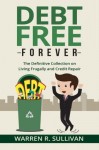
For anyone who wants to get out of debt…
Do your money problems keep you up at night worrying? Do you stress about not having any money left to pay your bills after buying basic necessities? Does it seem like no matter how much you pay off, your debt only increases? More and more people are finding themselves struggling with debt, whether it is from their massive student loans, the mortgage on their home, car loans, or credit card debt. Even those who have great paying jobs often will end up living from paycheck to paycheck.
Stop making choices that are driving you further into debt…
For the first time, two bestselling money management books have been collected into a single volume, Debt Free Forever. This definitive collection tackles some of the most serious problems those who are in debt suffer from, namely a poor credit rating and living well beyond their means. With Debt Free Forever, you will learn techniques that will help you repair your credit as well as strategies that will help you live much more frugally.
Debt Free Forever – The Definitive Collection on Living Frugally and Credit Repair contains the following two books:
Easy Credit Repair – Effective Strategies to Fix Even the Worst Credit Problems by Warren R. Sullivan Frugal Living – Learn Proven Techniques to Help You Live Within Your Means by Nicole Harrington
Take control of your life and finances today! Debt Free Forever is your first step to a better tomorrow!
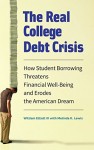
Is it still worth it for low-income students to attend college, given the debt incurred? This book provides a new framework for evaluating the financial aid system in America, positing that aid must not only allow access to higher education, but also help students succeed in college and facilitate their financial health post-college.
• Reveals the inadequacy of the scope of the current educational and economic policy debates, including moves to funnel low-income children toward two-year degrees, structure alternative debt repayment schedules, and constrain increases in college tuition
• Answers the question: “Does the student who goes to college and graduates but has outstanding student debt achieve similar financial outcomes to the student who graduates from college without student debt?”
• Examines an important subject of interest to educators, students, and general readers that is related to the larger topics of education, economics, social problems, social policy, public policy, debt, and asset building
• Provides empirical evidence and theoretical support for a fundamental shift in U.S. financial aid policy, from debt dependence to asset empowerment, including an explanation of how institutional facilitation makes Children’s Savings Accounts potentially potent levers for children’s educational attainment and economic well-being, before, during, and after college
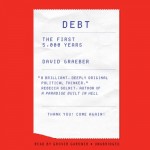
[Read by Grover Gardner]
David Graeber’s ”fresh . . . fascinating . . . . thought-provoking . . . and exceedingly timely” — (Financial Times) history of debt.
Anthropologist David Graeber presents a stunning reversal of conventional wisdom: before there was money, there was debt. For more than five thousand years, since the beginnings of the first agrarian empires, humans have used elaborate credit systems to buy and sell goods — that is, long before the invention of coins or cash. It is in this era, Graeber argues, that we also first encounter a society divided into debtors and creditors.
Graeber shows that arguments about debt and debt forgiveness have been at the center of political debates from Italy to China, as well as sparking innumerable insurrections. He also brilliantly demonstrates that the language of the ancient works of law and religion — words like ”guilt,’ ”sin,” and ”redemption” — derive in large part from ancient debates about debt and shape even our most basic ideas of right and wrong. We are still fighting these battles today without knowing it.
Debt: The First 5,000 Years is a fascinating chronicle of this little known history — as well as how it has defined human history and what it means for the credit crisis of the present day and the future of our economy.
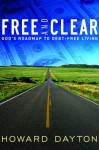
Overwhelmed with debt? There is hope and freedom for you no matter how big your problem. Skyrocketing debt has crippled and divided millions in this age of rampant credit, interest-only mortgages, and record loan defaults. The way out from under debt burdens is not a declaration of bankruptcy, but surrender to the Word of God. Becoming debt-free may seem an impossible dream for many, but it is actually an attainable goal according to Howard Dayton, president of Crown Financial Ministries. He overcame his own struggle with debt by applying God’s principles to managing his finances, principles he lays out in this practical, encouraging, never-give-up book.
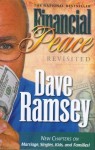
Dave Ramsey knows what it’s like to have it all. By age twenty-six, he had established a four-million-dollar real estate portfolio, only to lose it by age thirty. He has since rebuilt his financial life and, through his workshops and his New York Times business bestsellers Financial Peace and More than Enough, he has helped hundreds of thousands of people to understand the forces behind their financial distress and how to set things right-financially, emotionally, and spiritually.
In this new edition of Financial Peace, Ramsey has updated his tactics and philosophy to show even more readers:
how to get out of debt and stay outthe KISS rule of investing—”Keep It Simple, Stupid”how to use the principle of contentment to guide financial decision makinghow the flow of money can revolutionize relationships
With practical and easy to follow methods and personal anecdotes, Financial Peace is the road map to personal control, financial security, a new, vital family dynamic, and lifetime peace.
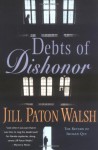
Imogen Quy–rhymes with why–is the witty, compassionate, and relentlessly inquisitive college nurse at St. Agatha’s College, Cambridge University. Unfortunately, St. Agatha’s has seen better days: Its financial affairs are in shambles, and the school is teetering on the verge of bankruptcy.
That is, until billionaire financier and St. Agatha’s College alum Sir Julius Farran decides to pay his alma mater a visit. Things are looking up for St. Agatha’s….but when Sir Julius suddenly dies in questionable circumstances, St. Agatha’s is in danger of closing forever. A nurse is a natural receiver of confidences, and Imogen soon learns that Sir Julius had far more enemies than friends. Her curiosity is initially piqued, but soon turns to alarm when Julius’s equally unpleasant son-in-law is found murdered. The case takes on particular urgency because Imogen’s former flame, Andrew Duncombe, had been working as Sir Julius’s right-hand man. Imogen must work what out really happened before Andrew is implicated in the murders–or becomes the next victim.
In her first case in more than a decade, Imogen Quy calls upon her clear thinking and insight into human nature to seek not only truth but justice. Readers will delight in the return of this “exemplary amateur sleuth” (Publishers Weekly) from a brilliant novelist in the best tradition of Dorothy L. Sayers and Josephine Tey.
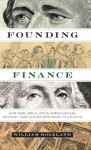
Recent movements such as the Tea Party and anti-tax “constitutional conservatism” lay claim to the finance and taxation ideas of America’s founders, but how much do we really know about the dramatic clashes over finance and economics that marked the founding of America? Dissenting from both right-wing claims and certain liberal preconceptions, Founding Finance brings to life the violent conflicts over economics, class, and finance that played directly, and in many ways ironically, into the hardball politics of forming the nation and ratifying the Constitution—conflicts that still continue to affect our politics, legislation, and debate today.
Mixing lively narrative with fresh views of America’s founders, William Hogeland offers a new perspective on America’s economic infancy: foreclosure crises that make our current one look mild; investment bubbles in land and securities that drove rich men to high-risk borrowing and mad displays of ostentation before dropping them into debtors’ prisons; depressions longer and deeper than the great one of the twentieth century; crony mercantilism, war profiteering, and government corruption that undermine any nostalgia for a virtuous early republic; and predatory lending of scarce cash at exorbitant, unregulated rates, which forced people into bankruptcy, landlessness, and working in the factories and on the commercial farms of their creditors. This story exposes and corrects a perpetual historical denial—by movements across the political spectrum—of America’s all-important founding economic clashes, a denial that weakens and cheapens public discourse on American finance just when we need it most.
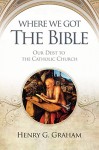
Traces the origin and preservation of sacred Scripture. This book includes the conversion story of the author, who converted from Calvinist ministry to Catholicism.
Product Features
- Used Book in Good Condition
Noreena Hertz, one of the world’s leading experts on economic globalization, looks at the history of third-world debt and its crippling effects on people in developing countries.
Drawing from her impressive debt-relief campaign, fact-finding travels, and meetings with top-ranking officials, Hertz offers a probing analysis of the origins of this rampant burden and its evolution through the decades. With clear principles of justice, she uncovers the imbalance of power and misuse of corrupt dictators and reckless lenders.
Maybe you’re thinking that the only thing worse than budgeting is reading a book about budgeting. And you may be right. But with this book, my hope is that I can change your mind. My hope is that by following this challenge, you will feel more in control of your spending habits, have clearer and more meaningful financial goals and, most importantly, have a little fun while doing it! In this book, we’ll look at ways to uncover your own personal psychology behind money, as well as practical methods to make and reach finance goals. From saving pennies here and there by cutting out mindless spending to rethinking your approach to saving entirely, we’ll tackle your money issues the simple way: day by day. We’ll consider realistic ways to save money, but also look in depth at what it really means to live a minimalist life and what the true value of the items in our lives actually is.