Debt
After fleeing a painful and compromising past, Emma Rose Howard settled eagerly into the role of a pastor’s wife. She and her husband, Abel, dedicated themselves to parenting a mega-church and influenced thousands of lives through its related ministries.
But when Emma Rose receives a phone call from a living, breathing remnant of her troubled past, she finds herself wondering if something in her life is woefully out of balance. The presence of this unexpected intruder soon threatens everything Emma Rose has believed about her calling, her marriage, and her relationship with God.
The Debt not only invites readers to embrace the painful heartache and incomparable joy that accompany a soul’s redemption, but it challenges us to follow Christ to new and unexpected places.
How can running improve your physical health and fiscal fitness? By combining what makes novice runners and struggling debt dumpers successful – The Power of Community. 76% of Americans are living paycheck-to-paycheck. By applying principles common in training for long distance races to personal finances, The Great Debt Dump will show you how to take your finances across the finish line and accomplish your goals. The GREAT Debt Dump… • Provides practical tips to help you break free from debt’s stranglehold • Teaches you how to leverage the Power of Community in order to win with money • Offers tools to help you successfully achieve your financial goals • Lays out how dumping debt will improve your credit • Highlights resources to make budgeting a regular part of your routine • Walks you through a step-by-step plan to build a solid accountability team
In need of a Money Makeover?
Let America’s most popular cheapskate show you how to go from financial chaos to freedom and security–painlessly and in less time than you ever imagined.
Mary Hunt has helped thousands live a debt-free life with her popular newsletter, “The Cheapskate Monthly.” In The Complete Cheapskate, Mary puts all the very best money advice she has in one place. Becoming a classy, dignified cheapskate is not all that difficult, and Mary shows how with her user-friendly principles of saving, restraint, and living debt-free.
This book will teach you how to:
– Create–and stick to–a monthly spending plan
– Live well off 80% of your income
– Climb out–and stay out–of debt’s hole
– Stretch every dollar to its absolute maximum
– Manage savings and investments
– Lower bills on clothes, food, and gifts without lowering living standards
– Live within a financial plan that includes a margin for fun and spontaneity
With hundreds of tips on cutting expenses, The Complete Cheapskate is the indispensable guide for people ready to regain control of their finances, relieve the stress money has created, and prepare for their future.
Tells students how they can stay out of debt by taking simple and easy measures, while still having the time of their lives at college.
You will learn:
* How to get a great summer job and make it pay.
* How to negotiate with a bank-and win.
* How to find affordable student housing.
* How to eat, drink, and be merry on a budget.
* How to graduate without a $25,000 to $40,000 student debt.
* How to cut costs with your telephone bill, utilities, laundry, and more.
Students need the kind of straightforward, accessible advice that Murray Baker delivers in this down-to-earth money management guide. This book will make you more aware of the “little things” you can do to help you cut costs, such as finding out the movies or restaurants that offer student discounts.
Product Features
- Used Book in Good Condition
GOODBYE DEBT—HELLO FREEDOM!
Most of us grew up with the idea that there is good debt and there is bad debt. Good debts are generally considered to be debts you incur to buy things that can go up in value—like a home or college education. Bad debts are things like credit card balances, where you borrowed money to buy things that depreciate or go down in value, like most consumer goods.
But as America’s favorite financial coach, David Bach, points out, in difficult times there is no such thing as good debt. There is only debt. And all debt is too expensive—if what you desire is FREEDOM! In fact, Bach believes the best investment you can make today is to pay down your debt, faster and smarter than you have ever attempted before—starting today!
In Debt Free for Life, #1 New York Times bestselling author David Bach has written his most groundbreaking and important book since The Automatic Millionaire, giving us the knowledge, the tools, and the mindset we need to get out of debt and achieve financial freedom— forever! Offering a revolutionary approach to personal finance that teaches you how to pay down your debt and adopt a whole new way of living – debt free. Bach unveils the Debt Wise program that empowers you to pare down your debt automatically. You’ll learn how to calculate your Debt Freedom Day – the actual date you will be completely free of debt. And you’ll discover that when you are debt free, you need a lot less money to live on. You can retire, even with a smaller nest egg — perhaps earlier than you expected.
David Bach has coached millions to pay off their debt and now he can guide you. Whether you have home loans, student loans, car loans, credit card debt—paying down your debt is truly a game you can win, if you know the rules. Debt Free For Life will teach you the rules and give you the tools to buy back your freedom.
Chronic debt takes a terrible toll on a life. Finances stagger, the spirit flags, family and friends feel the strain. For those who wake each day facing such a burden, this inspiring book of daily meditations offers respite, hope, and practical advice. Simple and positive, each day’s message helps put seemingly unmanageable debt in the proper perspective-and reminds us of our deepest debt to ourselves: to take heart and find strength in the daily struggle.
Written by the former wife of a compulsive gambler, these meditations hold a universal message of hope for anyone seeking the courage to live wisely with trying circumstances-one day at a time
Karen Casanova is the author of thirteen children’s books. She lives in Saint Croix Falls, Wisconsin.
“Hazelden has done it again-brief, insightful, and compassionate road to the land of living debt-free with spiritual calm.” –Tom Tucker, CCGC. Executive Director, California council on Problem Gambling
Collected here, the Massey Lectures from legendary novelist Margaret Atwood investigate the highly topical subject of debt. She doesn’t talk about high finance or managing money; instead, she goes far deeper to explore debt as an ancient and central motif in religion, literature, and the structure of human societies. By looking at how debt has informed our thinking from preliterate times to the present day, from the stories we tell of revenge and sin to the way we order social relationships, Atwood argues that the idea of what we owe may well be built into the human imagination as one of its most dynamic metaphors. Her final lecture addresses the notion of a debt to nature and the need to find new ways of interacting with the natural world before it is too late.
Product Features
- Used Book in Good Condition
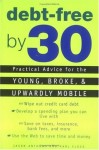
Are you limping towards the big three-oh one minimum payment at a time?
Are you “on your own” but still asking your parents for cash each birthday?
Do you crumple up your ATM receipts to avoid looking at the balance?
Are friends in the same income bracket beginning to pull ahead of you?
If you’re young, smart, and drowning in debt, Debt-Free by 30 offers a practical, step-by-step plan to help rescue you from the financial abyss. Written by two twentysomethings who found their way back from the horrors of overwhelming debt, this authoritative guide reveals the secrets of debt-free living:
*The Seven Debtly Sins-and how to avoid them at all costs
*Where Does All the Money Go?-taking your financial inventory
*Everything You Always Wanted to Know About Banking but Feared Being Bored out of Your Skull
*Beating Credit Cards at Their Own Game-how to save hundreds of dollars in interest in less than five minutes
Plus tips for
* Driving for less
* Keeping more of what you earn
* Life after debt
. . . and much, much more
Featuring financial IQ Quizzes, no-brainer savings advice, and painless ways to spend less, Debt-Free by 30 will put you back in control of your money-and your life.
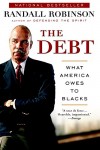
The national bestseller by the author of Defending the Spirit.
In this powerful and controversial book, distinguished African-American political leader and thinker Randall Robinson argues for the restoration of the rich history that slavery and segregation severed. Drawing from research and personal experience, he shows that only by reclaiming their lost past and proud heritage can blacks lay the foundation for their future. And white Americans can make reparations for slavery and the century of racial discrimination that followed with monetary restitution, educational programs, and the kinds of equal opportunities that will ensure the social and economic success of all its citizens.
In a book that is both an unflinching indictment of past wrongs and an impassioned call to our nation to educate all Americans about the history of Africa and its people, Robinson makes a persuasive case for the debt white America owes blacks, and the debt blacks owe themselves.
Randall Robinson, the founder and president of TransAfrica (a lobbying organization dedicated to influencing U.S. policy toward Africa and the Caribbean), recounted his heroic struggle to fight and overcome racism in the magnificent Defending the Spirit. In his triumphant follow-up, The Debt, he goes further than any previous black public figure in calling for reparations to African-Americans for the present-day racism that stems from 246 years of slavery. Citing compensation that Jews and Japanese Americans have received, he writes, “No race, ethnic or religious group has suffered as much over so long a span as blacks have and do still, at the hands of those who benefited … from slavery and the century of legalized American racial hostility that followed it.” In making his case, Robinson utilizes facts and figures that highlight the disparity between African-Americans and whites. While fully recognizing the monumental odds of this movement’s success, Robinson feels that the push for reparations will also greatly benefit African-Americans in nonmaterial ways: “Even the making of a well-reasoned case for restitution will do wonders for the spirit of African-Americans,” he argues. “It will cause them to at long last understand the genesis of their history–before, during, and after slavery–into one story of themselves.” –Eugene Holley Jr.
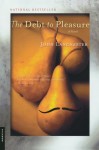
Winner of the Whitbread Award for Best First Novel and a New York Times Notable Book, The Debt to Pleasure is a wickedly funny ode to food. Traveling from Portsmouth to the south of France, Tarquin Winot, the book’s snobbish narrator, instructs us in his philosophy on everything from the erotics of dislike to the psychology of the menu. Under the guise of completing a cookbook, Winot is in fact on a much more sinister mission that only gradually comes to light.
A gorgeous, dark, and sensuous book that is part cookbook, part novel, part eccentric philosophical treatise, reminiscent of perhaps the greatest of all books on food, Jean-Anthelme Brillat Savarin’s The Physiology of Taste. Join Tarquin Winot as he embarks on a journey of the senses, regaling us with his wickedly funny, poisonously opinionated meditations on everything from the erotics of dislike to the psychology of a menu, from the perverse history of the peach to the brutalization of the palate, from cheese as “the corpse of milk” to the binding action of blood.