Debt
Developing country debt crises have been a recurrent phenomenon over the past two centuries. In recent times sovereign debt insolvency crises in developing and emerging economies peaked in the 1980s and, again, from the middle 1990s to the start of the new millennium. Despite the fact that several developing countries now have stronger economic fundamentals than they did in the 1990s, sovereign debt crises will reoccur again. The reasons for this are numerous, but the central one is that economic fluctuations are inherent features of financial markets, the boom and bust nature of which intensify under liberalized financial environments that developing countries have increasingly adopted since the 1970s. Indeed, today we are in the midst of an almost unprecedented global ‘bust’ The timing of the book is important. The conventional wisdom is that the international economic and financial system is broken. Policymakers in both the poorest and the richest countries are likely to seriously consider how to restructure the international trade and financial system, including how to resolve sovereign debt crises in a more effective and fair manner. This book calls for the international reform of sovereign debt workouts which derives from both economic theory and real-world experiences. Country case studies underline the point that we need to do better. This book recognizes that the politics of the international treatment of sovereign debt have not supported systemic reform efforts thus far; however, failure in the past does not preclude success in the future in an evolving international political environment, and the book thus puts forth alternative reform ideas for consideration.

Increase the odds you won’t run out of money in retirement – using debt!
Conventional wisdom is wrong – being debt free in retirement may actually increase your risk. The Value of Debt in Retirement teaches you how incorporating debt into your retirement strategy may increase your return, lower your taxes and actually lower your risk. You read that right. If handled correctly, debt—that thing we’ve all been taught to avoid—can play an integral role in your life, especially in retirement. New York Times Best Selling Author and nationally acclaimed financial expert Tom Anderson shows you how to use the time tested strategies of the best companies and the ultra rich to retire comfortably, minimize taxes, buy the things you have always wanted to have and do the things you have always wanted to do.
Thought provoking and against the grain, Anderson explains why your risk tolerance doesn’t matter, why being debt free may actually increase your risk and why rushing to pay off your mortgage may be a financial disaster. Full of shocking revelations and tricks high- net-worth individuals have used for years, The Value of Debt in Retirement opens the world to a new approach to wealth management in retirement, one that factors in both sides of the balance sheet as an integrated ecosystem.
Real-world case studies illustrate how informed debt strategies can lead to a happier, healthier retirement. See how an individual with a net worth of more than $5 million can spend $20,000 per month – after taxes – and pay less than $5,000 per year in taxes, how it is possible to increase your rate of return by 50%, and how a lower risk portfolio with debt could increase the chances you do not run out of money.
Specifically written to Baby Boomers, practical guides and checklists show how to use debt strategies to fund primary and secondary properties, refinance credit card debt, and finance hobbies, such as cars and boats and recreational vehicles. Additional guides show how you can help your children, help your parents and leave a bigger legacy for your heirs and favorite charities. Regardless of your net worth, The Value of Debt in Retirement provides tools to use to apply these concepts to your personal situation.
There is no free lunch: the book delivers a balanced perspective focusing on the potential risks and benefits of the strategies discussed. A discussion on economic history highlights some of the shocks the economy may face and provides important warnings that you should factor into your retirement plan. Anderson not only shows that your life expectancy may be longer than you think, but also illustrates that many investors may be on track to average returns well under 4% for the next ten years – a potentially devastating combination. Irrespective of your beliefs about debt, The Value of Debt in Retirement proves risk is more important than return for retirees and provides suggestions on ways to minimize that risk.
Not all debt is good and high levels of debt are bad. The Value of Debt in Retirement is about choosing the right debt, in the right amounts, at the right time. Perhaps most importantly, this book isn’t for everybody. This book requires responsible actions. If you can’t handle the responsibility associated with the ideas then this book then it isn’t for you. If you need a rate of return under 3% from your investments then you may not need this book. But if you can handle the responsibility and if you need a return above 3%, this book may offer insights into the best (and potentially only) way to achieve your goals.
Shipping imperfect software is like going into debt. When you incur debt, the illusion of doing things faster can lead to exponential growth in the cost of maintaining software. Software debt takes five major forms: technical, quality, configuration management, design, and platform experience. In today’s rush to market, software debt is inevitable. And that’s okay—if you’re careful about the debt you incur, and if you quickly pay it back.
In Managing Software Debt, leading Agile expert Chris Sterling shows how understanding software debt can help you move products to market faster, with a realistic plan for refactoring them based on experience. Writing for all Agile software professionals, Sterling explains why you’re going into software debt whether you know it or not—and why the interest on that debt can bring projects to a standstill. Next, he thoroughly explains each form of software debt, showing how to plan for it intelligently and repay it successfully. You’ll learn why accepting software debt is not the same as deliberate sloppiness, and you’ll learn how to use the software debt concept to systematically improve architectural agility. Coverage includes
Managing tensions between speed and perfection and recognizing that you’ll inevitably ship some “not quite right” code Planning to minimize interest payments by paying debts quickly Building architectures that respond to change and help enterprises run more smoothly Incorporating emergent architecture concepts into daily activities, using Agile collaboration and refactoring techniques Delivering code and other software internals that reduce the friction of future change Using early, automated testing to move past the “break/fix” mentality Scripting and streamlining both deployment and rollback Implementing team configuration patterns and knowledge sharing approaches that make software debt easier to repay Clearing away technical impediments in existing architectures Using the YAGNI (“you ain’t gonna need it”) approach to strip away unnecessary complexity
Using this book’s techniques, senior software leadership can deliver more business value; managers can organize and support development teams more effectively; and teams and team members can improve their performance throughout the development lifecycle.
Struggling with debt?
Frustrated about work?
Just not satisfied with life?
“Trent Hamm set out to boost his happiness by freeing himself from debt. This account of how he succeeded, and how he was able to construct the life he’d always wanted, will inspire readers to put his ideas to work in their own lives.”
–Gretchen Rubin, author of the #1 New York Times best seller, THE HAPPINESS PROJECT
“The Simple Dollar paves the way to an uncluttered financial and richly rewarding life. Trent’s experiential advice prepares readers for the expected–and most importantly the unexpected–complexities of the modern economic world. Live debt free, mind the gap, and find a framework to get the secure and happy life you desire.”
–Erin Rooney Doland, author of Unclutter Your Life in One Week and Editor-in-Chief, Unclutterer.com
“If you feel like your finances are out of control, read The Simple Dollar. Trent Hamm burns with the unforgettable fire of someone who has gone from debt to wealth, and this book can inspire you to do the same.”
–J.D. Roth, author of Your Money: The Missing Manual and editor of GetRichSlowly.org
The Simple Dollar can change your life.
Trent Hamm found himself drowning in consumer debt, working in a job he couldn’t stand… and figured out how to escape that debt and build the fulfilling career he’d always dreamt about, all at the same time.
Hamm shared his experiences at TheSimpleDollar.com—and built it into one of America’s top personal finance websites. Now, The Simple Dollar is a book: packed with practical tips, tools, and lessons you can use to transform your life, too.
This isn’t just “another” personal finance book: it’s profoundly motivating, empowering, practical, and 100% grounded in today’s American realities. Trent Hamm will show you how to rewrite the rules, creating healthier relationships with money… and with your loved ones, too. With his help, you can get out of debt, start moving forward, and build the strong personal community that offers true happiness—no matter what happens to the economy.
· Escape the plastic prison, and stop running to stand still
5 simple steps to eliminate credit card debt… and 5 more to start moving forward
· Shift your life’s balance towards more positive, stronger relationships
Learn how to put the golden rule to work for you
· Discover the power of goals in a random world
Then, learn how to overcome inertia, and transform goals into reality
· Navigate the treacherous boundaries between love and money
Move towards deeper communication, greater honesty, and more courage
If you had the damned money, you’d have paid it all off by now. I know this. So instead of telling you ways to scrounge up enough money to pay off your debts, I hope to convince you not to pay anything you cannot afford. I want you to keep as much of your stuff as possible while paying as little as possible of your own hard-earned cash. Most books that claim to be about getting out of debt are really just about good old-fashioned financial prudence. This one is not. It’s too late for that now. The Great Recession lingers, and even as our global financial institutions sit atop massive piles of taxpayer-funded bailout dollars, the ordinary people of America continue to struggle. Time for your bailout. Here is very simple, very practical, and most importantly a very realistic guide to the American legal process of enforcing debts. I am a debtor’s lawyer. This is what I do. Everything in this book comes from personal experience. I have helped hundreds of clients solve every sort of financial problem that people can encounter, and I have packed all of these lessons into this book. If you ever wanted to know things like: What happens if you don’t pay a debt? How do you fix broken credit? How can you keep your home from being foreclosed? What can I do about my student loans? Can they take my dog? Is bankruptcy a good idea or a horrible idea? What if I let the bank foreclose on my home? Will I ever be able to buy a car again? This book is for you.

I don’t know what I was thinking when I hired someone to attack me. Maybe I was bored, or lonely, or there was a void so deep inside of me that I needed something explosive to fill it. It was supposed to be safe. A thrill. A way to break through the monotony of everyday life. It was an illusion of danger that I could walk away from as soon as it was over. Except that it wasn’t. Because I had been in danger long before I ever invited it into my life. ——————— My mission is almost complete. The bubbling boil of vengeance that heats my blood might finally simmer. She is the last piece of the puzzle. Once I destroy her, everyone who ever hurt me will have paid their debt. It was supposed to be quick and easy, but as soon as I met her it got complicated. Very complicated.

Urban Fantasy with a Cyberpunk Twist
***Second Season of Debt Collector***
Recommended: start with Season One.
What’s your life worth on the open market?
In this gritty urban fantasy, debt collectors take your life energy and give it to someone more “worthy”… all while paying the price with black marks on their souls.
“Wraith is amazing and just as compelling as Lirium–once again I’m hooked!!”
“I loved being back in this world! Wraith has captivated me.”
Wraith is a shadow in the night, haunting the bedrooms of the rich “high potentials” who have stolen life energy from the desperate and dying. The justice and the sweet mercy hit that follow keep her from falling into her own personal abyss. Her secret nighttime work also keeps her on level for her real mission: carrying on her father’s legacy of attempting to bring an end to debt collection as a whole. But when a mysterious debt collector interrupts her in the act and discovers her secret, everything Wraith loves may be destroyed by the one thing she can never fix– the original sin of being a debt collector herself.
Contains mature content and themes.
OPTIONED FOR VIRTUAL REALITY BY IMMERSIVE ENTERTAINMENT
2014 Semi-Finalist in Science Fiction in the Kindle Book Awards
The nine episodes of Season Two of the Debt Collector serial are collectively 127k words or about 468 pages.
It is recommended that you start with the first season, but each season is a complete story for that debt collector and can serve as an entry point to the series. There are five planned seasons in the Debt Collector series, the first four each from the perspective of a different debt collector with the fifth season bringing all four together.
READING ORDER
Season One – Lirium – COMPLETE
Episodes 1-9: Delirium, Agony, Ecstasy, Broken, Driven, Fallen, Promise, Ruthless, Passion
Season Two – Wraith
10 – Wraith (10.20)
11 – Specter (10.27)
12 – Menace (11.3)
13 – Temptation (11.10)
14 – Shattered (11.17)
15 – Penance (11.24)
16 – Judgment (12.1)
17 – Corruption (12.8)
18 – Atonement (12.15)
BOX SET (Vol 10-18) – (12.15)
Small island developing states (SIDS) are widely acknowledged to be among the most economically vulnerable in the world. As small open economies, SIDS are especially exposed to external shocks. The environmental, economic, and social difficulties stemming from climate change, rising sea levels, and natural disasters exacerbate the significant risks to the sustainable development of SIDS. In spite of the critical impact of high and rising debt levels on the developmental fortunes of these nations, very little comprehensive and rigorous academic research has been conducted on the nexus between debt and development in these vulnerable economies.
Debt and Development in Small Island Developing States draws on the expertise of established researchers and public officials from the SIDS community to answer the following questions: What has been the nature and extent of the debt experience in SIDS? What are the drivers of debt accumulation in such countries? What are the characteristics of SIDS that explain their propensity to indebtedness? And what are the prospects for debt sustainability in such countries over the medium term? This edited volume contributes to the literature by highlighting the essential elements of an agenda for achieving debt sustainability in SIDS.
What would you do if you had three days before your execution? Dylan Murphy wrote a book. Murder is an awful thing, but sometimes it can be the right thing. Dylan Murphy knows this, and it is why he never questions the charges that will leave him with a needle in his arm. It’s a story of the friendship that saved his life, and the friendship that will play a part in ending it. It’s about growing up, sometimes much more quickly than we plan. But mostly, it’s Dylan’s story.
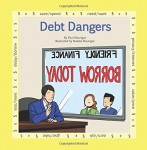
Borrowing money is advertised as “easy”. So, why not do it? The truth is, taking out loans can create big problems for kids. Debt Dangers tells a great story about Chelsea and Jack saving money, living within their means, and why kids should avoid debt. A book in the series “Marvels of Money … for kids”; richly illustrated, engaging and practical fictional stories for young readers about the fundamentals of money. This book supports emerging educational (K-5) learning standards for common core, integrating “life skills” and “reasoning skills” into the fictional but realistic financial literacy stories. Each story in the series includes essential financial words, which are highlighted throughout each story and then defined in a glossary along with summary concepts at the end of each story. 3rd-6th grade level readers will find the 2,500 word story and numerical examples great for reading, mathematics, social sciences and financial literacy! Younger (K-2) readers may skim the concepts in a picture book manner, as there are incredible illustrations on each page. Great real-along and discussion books! Messages to last a lifetime.