Debt
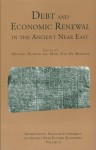
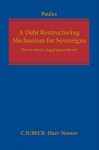
The Eurozone crisis which started in spring 2010 as a Greek budget crisis has alerted Europeans that the issue of defaulting sovereigns is not one reserved just for the poor and poorest countries on this globe. The crisis painfully amplified that developed countries, too, might be hit by this phenomenon. To be sure, this insight is far from novel – the history of defaulting states reaches back into history for at least two millennia. And yet, lawyers have surprisingly abstained more or less completely from discussing this subject and developing possible solutions. Beginning with the Argentina crisis in 2001, this neglect began to vanish to a certain degree and this movement got some momentum in 2010 by the Eurozone crisis. The present book collects contributions from authors, most of whom have participated in a conference on this issue in January 2012 at the Humboldt-Universität zu Berlin. The presentations, thus, provide a unique overview of the present discussion both from an economic and legal perspective.

You can use these letters as they are, modify them to suit your needs or your business or just use one sentence from a letter. Each letter should be on your company letterhead and include your company name, address, phone and fax, web address, email and any other contact information. The letters that get the best results are not “form” letters. If a letter looks like a form letter it loses some of its punch. The most effective letters are short, to the point and easy to read. Try to avoid long or confusing words and sentences. The more direct, the fewer misunderstandings. Have someone read your letter and see if they totally understand it. If they do, then chances are your debtor will, too. Your letter is a reflection of your business; keep it professional. Remember that your letter is to persuade someone to send you money. Your wording and tone are critical, especially if this is a customer you want to continue to do business with. Always assume the debtor will pay. Enclosing an envelope for payment is always a good idea. You can also include an envelope with postage. The easier you make it for the debtor to make payment, the better your chances are of receiving that payment. Collection letters should do two things: retain customer good will and help you get paid. You know a letter works well when you do a mailing and your phone rings off the hook when everyone receives their letters. If you send out a letter and there is no response, you need to re-work your letter.

Since 2008, economic policymakers and researchers have occupied a brave new economic world. Previous consensuses have been upended, former assumptions have been cast into doubt, and new approaches have yet to stand the test of time. Policymakers have been forced to improvise and researchers to rethink basic theory. George Akerlof, Nobel Laureate and one of this volume’s editors, compares the crisis to a cat stuck in a tree, afraid to move. In April 2013, the International Monetary Fund brought together leading economists and economic policymakers to discuss the slowly emerging contours of the macroeconomic future. This book offers their combined insights. The editors and contributors–who include the Nobel Laureate and bestselling author Joseph Stiglitz, Federal Reserve Vice Chair Janet Yellen, and the former Governor of the Bank of Israel Stanley Fischer–consider the lessons learned from the crisis and its aftermath. They discuss, among other things, post-crisis questions about the traditional policy focus on inflation; macroprudential tools (which focus on the stability of the entire financial system rather than of individual firms) and their effectiveness; fiscal stimulus, public debt, and fiscal consolidation; and exchange rate arrangements.
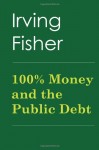
Article by Irving Fisher (1936), Professor Emeritus of Economics, Yale University, urges Congress to take back the Constitutional money power, redeem the national debt, require banks’ demand deposit to be 100% liquid, to avoiding an inelastic loan structure that bursts, leaving frozen loans behind, and avoid ‘Global Financial Crises’. Includes a brief biography of Irving Fisher.
Hate paying bills? So do I, and that’s why I stopped! What if I told you that I haven’t paid a bill in almost six years! Do you want to know how I did it? With the help of Bella the Budgetnista, featured in this book, we will teach you what I took years to learn. The One Week Budget is for anyone that wants to manage their day-to-day money without the day-to-day trouble. Does this sound like you? What are you waiting for? Read the book! Tiffany “The Budgetnista” Aliche

Debt Cures 2014′ gives you MORE ways to reduce your debt along with BRAND NEW techniques how to build wealth and raise large amounts of cash. ‘Debt Cures 2014’ is a revised, more up to date version of Debt Cures.

Refer to this financial management guide to help you gain control of your personal finances from assessment to budgeting to home ownership. The tips included will be beneficial for everyone in your family regarding money and credit issues. You will learn the differences in needs versus wants, creating a manageable budget, saving for future expenditures, paying off debt, and housing related rights and responsibilities.
This plain-English guide to decide if Chapter 13 is right for you and to learn how to keep valuable property and discharge your unsecured debts.
Chapter 13 legal concepts, procedures, and monetary calculations can be tricky. Nolo’s Chapter 13 Bankruptcy breaks down the Chapter 13 process and provides clear explanations of the law so you can:
. consider alternatives to bankruptcy
. decide which is better for you — Chapter 7 or Chapter 13
. determine if you qualify for Chapter 13
. understand bankruptcy’s automatic stay
. learn how Chapter 13 can help avoid foreclosure
. find out if you can reduce your car loan balance, or the balance on other secured debts
. determine if you can strip second mortgages or home equity lines from your home
. calculate (with forms and step-by-step instructions) whether you have enough income to propose a repayment plan that will meet legal requirements
. calculate the amount of your monthly plan payment
. find and work effectively with an excellent lawyer, and
. rebuild your credit after bankruptcy
This newest edition includes new information on hiring and working with a lawyer, recent U.S. Supreme Court and other federal court decisions interpreting bankruptcy law, the latest bankruptcy exemption laws in your state, and recent IRS standard expense amounts (which play a role in plan payments).
This book does not cover business bankruptcies, farm reorganizations, or Chapter 7 personal bankruptcy. See Nolo’s How to File for Chapter 7 Bankruptcy.