Recently Added Videos

Neoliberalism as a wealth redistribution imperative has made property ownership impossible or unprofitable for much of society. Whether in the form of mortgages or rent, we are consigned to living in conditions of perpetual debt.
Real Estates: Life Without Debt explores the moral, political and economic ramifications of property and ownership in neoliberal debt economies, and asks what role the architect might play in addressing widening social and spatial inequality in the built environment.
Essays by:
Pier Vittorio Aureli, Neil Brenner, Mark Campbell, Mario Carpo, Keller Easterling, Ross Exo Adams, Peer Illner, Sam Jacob, Roberta Marcaccio, Jack Self, Brett Steele, Urban-Think Tank, Wouter Vanstiphout, Eyal Weizman, Finn Williams
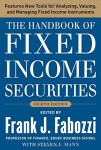
The Definitive Guide to Fixed Income Securities—Revised and Updated for the New Era of Investing
For decades, The Handbook of Fixed Income Securities has been the most trusted resource in the world for fixed income investing. Since the publication of the last edition, however, the financial markets have experienced major upheavals, introducing dramatic new opportunities and risks.
This completely revised and expanded eighth edition contains 31 new chapters that bring you up to date on the latest products, analytical tools, methodologies, and strategies for identifying and capitalizing on the potential of the fixed income securities market in order to enhance returns. Among the world’s leading authorities on the subject, Frank J. Fabozzi, along with Steven V. Mann, has gathered a powerful global team of leading experts to provide you with the newest and best techniques for taking advantage of this market. New topics include: Electronic trading Macro-economic dynamics and the corporate bond market Leveraged loans Structured and credit-linked notes Exchange-traded funds Covered bonds Collateralized loan obligations Risk analysis from multifactor fixed income models High-yield bond portfolio management Distressed structured credit securities Hedge fund fixed income strategies Credit derivatives valuation and risk Tail risk hedging Principles of performance attribution
Invaluable for its theoretical insights, unsurpassed in its hands-on guidance, and unequaled in the expertise and authority of its contributors, this all-new edition of The Handbook of Fixed Income Securities delivers the information and knowledge you need to stay on top of the market and ahead of the curve.
Product Features
- Used Book in Good Condition

Book by MacEwan, Arthur
Product Features
- Used Book in Good Condition
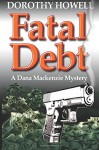
Dana Mackenzie lands a job with a faceless financial institution—it’s either this or piercing ears at the mall—and while she’s grateful for a job, she has no intentions of following the corporate offices’ heartless orders. She’s sent to the home of an elderly couple with instruction to repossess their television, but instead finds sweet old Mr. Sullivan murdered. Investigating the case is homicide detective Nick Travis, Dana’s high school crush, who’s still harboring a dark secret from their past. Dana agrees to help Mr. Sullivan’s grieving family locate his grandson, a guy with a surprising new lifestyle. Her good intentions put her in the thick of the murder investigation and on a collision course with the killer.
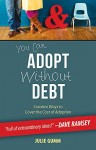
Many families want to adopt, but do not have the large amount of money it takes to complete a private domestic or international adoption. Some quickly give up the idea of adopting and are left feeling frustrated, overwhelmed, and discouraged. Those who choose to proceed often take out large loans or borrow from family and friends which adds to the financial pressure on the family. Author Julie Gumm shares proven strategies from her own experience as well as from others that include applying for grants, creative budgeting, and fundraising that prospective adoptive parents can use to prepare for and avoid those high costs associated with adoption.
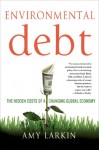
For decades, politicians and business leaders alike told the American public that our most important challenge was growing the economy, and that environmental protection could be left to future generations. Now, in the wake of billions of dollars in costs associated with coastal devastation from Hurricane Sandy, rampant wildfires across the West, and groundwater contamination from reckless drilling, it’s increasingly clear that yesterday’s carefree attitude about the environment has morphed into a fiscal crisis of epic proportions. Environmental Debt argues that the costs of global warming, extreme weather, pollution, and other forms of “environmental debt” are wreaking havoc on the economy. To combat these trends, author Amy Larkin proposes a new framework for twenty-first century commerce, based on three principles: 1) Pollution can no longer be free; 2) All business decision making and accounting must incorporate the long view; and 3) Government must play a vital role in catalyzing clean technology and growth while preventing environmental destruction. Profiling the multinational corporations that are transforming their operations with downright radical initiatives, Larkin presents smart policy choices that would actually unleash these business solutions to many global financial and environmental problems.

“I own you. I have the piece of paper to prove it. It’s undeniable and unbreakable. You belong to me until you’ve paid off your debts.” Nila Weaver’s family is indebted. Being the first born daughter, her life is forfeit to the first born son of the Hawks to pay for sins of ancestors past. The dark ages might have come and gone, but debts never leave. She has no choice in the matter. She is no longer free. Jethro Hawk receives Nila as an inheritance present on his twenty-ninth birthday. Her life is his until she’s paid off a debt that’s centuries old. He can do what he likes with her—nothing is out of bounds—she has to obey. There are no rules. Only payments.
Ben Emons explains why government debt is no longer “risk free”–and how you can seek alternatives in order to invest your money accordingly
A timely alert to the fundamental changes taking place in today’s global economic and financial systems. The book discusses why there is no longer a true risk free rate, how this will impact risk premiums, financial and real asset valuations, what could be the future alternatives to the risk free rate and what to look for when investing.
Product Features
- Used Book in Good Condition
The Constitution grants Congress the power “to lay and collect taxes, duties, imposts, and excises.” From the First Congress until today, conflicts over the size, role, and taxing power of government have been at the heart of national politics. This book provides a comprehensive historical account of federal tax policy that emphasizes the relationship between taxes and other components of the budget. It explains how wars, changing conceptions of the domestic role of government, and beliefs about deficits and debt have shaped the modern tax system. The contemporary focus of this book is the partisan battle over budget policy that began in the 1960s and triggered the disconnect between taxes and spending that has plagued the budget ever since. With the federal government now facing its most serious deficit and debt challenge in the modern era, partisan debate over taxation is almost completely divorced from fiscal realities. Continuing to indulge the public about the true costs of government has served the electoral interests of the parties, but it precludes honest debate about the urgent task of reconnecting taxes and budgets.
Product Features
- Used Book in Good Condition
States, Debt, and Power argues for the importance of situating our contextually influenced thinking about European states and debt within a commitment to historically informed and critical analysis. It teases out certain broad historical patterns. The book also examines the inescapably difficult and contentious judgements about ‘bad’ and ‘good’ debt; about what constitutes sustainable debt; and about distributive justice at times of sovereign debt crisis. These judgements offer insight into the nature of power and the contingent nature of sovereign creditworthiness. Three themes weave through the book: the significance of creditor-debtor state relations in defining asymmetry of power; the context-specific and constructed character of debt, above all in relation to war; and the limitations of formal economic reasoning in the face of radical uncertainty. Part I examines case studies from Ancient Greece to the modern Euro Area and brings together a wealth of historical data that cast fresh light on how sovereign debt problems are debated and addressed. Part II looks at the conditioning and constraining framework of law, culture, and ideology and their relationship to the use of policy instruments. Part III shows how the problems of matching the assumption of liability with the exercise of control are rooted in external trade and financial imbalances and external debt; in financial markets and vulnerability to banking crisis; in the character of the ‘private governance of public debt’; in who has power over indicators of sustainability; in domestic institutional and political arrangements; and in sub-national fiscal governance. Part IV looks at how the problems of mismatch between liability and control take on an acute form within the historical context of European monetary union, above all in Euro Area debt crises.