Top Rated Videos
Now in audio, the updated and expanded edition: David Graeber’s “fresh…fascinating…thought-provoking…and exceedingly timely” (Financial Times) history of debt.
Here, anthropologist David Graeber presents a stunning reversal of conventional wisdom: He shows that before there was money, there was debt. For more than 5,000 years, since the beginnings of the first agrarian empires, humans have used elaborate credit systems to buy and sell goods – that is, long before the invention of coins or cash. It is in this era, Graeber argues, that we also first encounter a society divided into debtors and creditors.
Graeber shows that arguments about debt and debt forgiveness have been at the center of political debates from Italy to China, as well as sparking innumerable insurrections. He also brilliantly demonstrates that the language of the ancient works of law and religion (words like “guilt”, “sin”, and “redemption”) derive in large part from ancient debates about debt, and shape even our most basic ideas of right and wrong. We are still fighting these battles today without knowing it.
Greece isn’t the only country drowning in debt. The Debt Supercycle—when the easily managed, decades-long growth of debt results in a massive sovereign debt and credit crisis—is affecting developed countries around the world, including the United States. For these countries, there are only two options, and neither is good—restructure the debt or reduce it through austerity measures. Endgame details the Debt Supercycle and the sovereign debt crisis, and shows that, while there are no good choices, the worst choice would be to ignore the deleveraging resulting from the credit crisis. The book: Reveals why the world economy is in for an extended period of sluggish growth, high unemployment, and volatile markets punctuated by persistent recessions Reviews global markets, trends in population, government policies, and currencies
Around the world, countries are faced with difficult choices. Endgame provides a framework for making those choices.
Q&A with Authors John Mauldin and Jonathan Tepper
Author John Mauldin What is the debt supercycle? Over a period of about sixty years, debt levels grew faster than incomes. This increase in debt became particularly pronounced in the 1980s, 90s and finally went parabolic after the Federal Reserve lowered interest rates to 1% after the Nasdaq crash. The increase in debt was not just a US phenomenon. As interest rates fell structurally with the fall in inflation from 1982 onwards, people took on more debt because it became more manageable. However, by 2008 the burden of debt became too much to bear and the debt supercycle came to an end. People started deleveraging and banks started collapsing due to low levels of capital and large losses from loans people couldn’t pay back. How does the sovereign debt crisis play into this? The rapid contraction in debt levels due to default and deleveraging lead to a fall in economic activity as people started saving and cutting spending. Governments immediately stepped in and backed bank debt with explicit guarantees. Governments also started borrowing and spending to transfer money to the private sector, for example via unemployment insurance. So in a very real sense, private borrowing was replaced with public borrowing. Debt was added onto more debt. Rather than free itself of debt, the system now has more debt. The sovereign debt crisis is the recognition that most of this debt will not be paid back, and governments are making promises to pay debt and other obligations, for example general spending and pensions, that they simply lack the ability to fulfill. Author Jonathan Tepper The end of the debt supercycle and the beginning of the sovereign debt crisis present problems and challenges for investors and governments. Governments will need to either 1) inflate, 2) default or 3) devalue, which is similar to inflate. That is the way governments have historically dealt with too much debt. Some countries will experience deflation and others inflation, depending on what choices governments make. Currently governments have only bad and worse choices. Let’s hope they can choose wisely. What do you predict for the next ten years? Central banks globally have shown a predisposition to print money to solve problems. We forsee rising inflation in many parts of the world, reductions in real income as people lose purchasing power due to higher food and fuel prices and more macroeconomic volatility. Some countries that do not control their own money supply or are running pegs may experience deflation as they are forced to delever and cannot increase the money supply to counteract the weight of deleveraging. You cite the events in Greece as an example of a country continuing to run massive deficits. Is there an example of a country making a better choice? The UK is making some of the right steps to control spending, but even the UK could be more draconian. In nominal and real terms, government spending in aggregate will not be cut in the UK. Also, Iceland has made positive steps by defaulting on its debt effectively. Default is a good way to cure too much debt.
Product Features
- Great product!

The queen of the underworld has a new play toy and her name is Jessica Blood. Bad boy Duncan Jasper and passive healer Amanda Blood are on the run for their lives with a horde of demons on their tale. The queen of the underworld, Lourdes, wants Amanda to free Lourdes from her prison and it’s all on Duncan to keep this from happening. But Amanda’s soul is fractured and bleeding thanks to the torture she suffered at the hands of the high-level demon, Vaughn. Now a painful ritual is her soul’s only chance at survival. If Duncan fails, Jessica Blood may never be free from the chains that bind her to Lourdes. Demons swarm to their location and Jessica walks right into a trap they’ve set for her. But to cure her sister, Amanda will have to embrace the pain and welcome the beauty of death. All before they get ready to stand off against Lourdes and the demons of hell, coming to claim their souls. Hold onto your seats! Long-held family secrets and heartache are about to be revealed.
In her debut book Dear Debt, personal finance expert Melanie Lockert combines her endearing and humorous personal narrative with practical tools to help readers overcome the crippling effects of debt. Drawing from her personal experience of paying off eighty thousand dollars of student loan debt, Melanie provides a wealth of money-saving tips to help her community of debt fighters navigate the repayment process, increase current income, and ultimately become debt-free. By breaking down complex financial concepts into clear, manageable tools and step-by-step processes, Melanie has provided a venerable guide to overcoming debt fatigue and obtaining financial freedom.
Inside Dear Debt you will learn to:
– Find the debt repayment strategy most effective for your needs
– Avoid spending temptations by knowing your triggers
– Replace expensive habits with cheaper alternatives
– Become a frugal friend without being rude
– Start a side hustle to boost your current income
– Negotiate your salary to maximize value
– Develop a financial plan for life after debt
Are You In Search For The Right Debt Solution? Does Using The Art Of Money In Your Favor With The Least Minimal Money Makeover To Crush Consumer Debt Sound Like A Miracle? Well you came to the right place to find the right Debt Solution. Read through and understand the best method of debt management. Get out of the typical consumer debt with this true money makeover tactic you will learn and engage in. Let this art of money work in your favor to crush consumer debt and use the simple savings tips to back you up in the process. All You Have To Do Is Grab Yourself A Copy Today!!!

Have you ever seen a poor Casino owner? Probably not! Have you ever seen a poor banker? Probably not! The thing is that the house always wins. The financial institutes have rigged the system so they win while we work hard to pay off our debts! In this book you will learn about: 1). What is wrong with the financial system and why it is ruining your life! 2). How to escape from the burden of credit card debt and debt in general 3). How to sustain your financial freedom over the course of your life! I hope if you read this book, that it will deter you from taking up debt in the first place and that you might even think about ways of bringing about debt reduction and a general life change, towers a safer and more long –term sustainable way of structuring your financial wellbeing!

Large 8.5 Inches By 11 Inches Budget Planner.
Get Your Copy Today
No Pockets!
Includes
Debt TrackerSavings TrackerBudget Tracker Including Income, Expenses, Planned, Actual And Difference
Get Your Copy Today
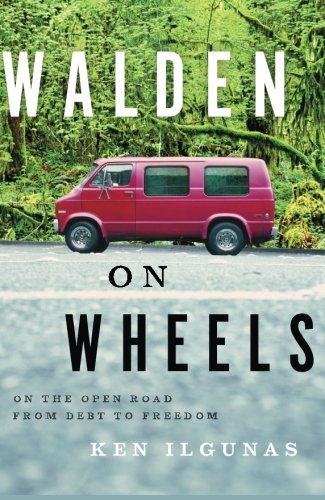
In this frank and witty memoir, Ken Ilgunas lays bare the existential terror of graduating from the University of Buffalo with $32,000 of student debt. Ilgunas set himself an ambitious mission: get out of debt as quickly as possible. Inspired by the frugality and philosophy of Henry David Thoreau, Ilgunas undertook a 3-year transcontinental jour¬ney, working in Alaska as a tour guide, garbage picker, and night cook to pay off his student loans before hitchhiking home to New York.
Debt-free, Ilgunas then enrolled in a master’s program at Duke University, determined not to borrow against his future again. He used the last of his savings to buy himself a used Econoline van and outfitted it as his new dorm. The van, stationed in a campus parking lot, would be more than an adventure—it would be his very own “Walden on Wheels.”
Freezing winters, near-discovery by campus police, and the constant challenge of living in a confined space would test Ilgunas’s limits and resolve in the two years that followed. What had begun as a simple mission would become an enlightening and life-changing social experiment. Walden on Wheels offers a spirited and pointed perspective on the dilemma faced by those who seek an education but who also want to, as Thoreau wrote, “live deep and suck out all the marrow of life.”
A helpful guide for CFO’s and bankers alike, this book demystifies the contents of a typical corporate loan agreement and helps make the entire loan process easier to deal with. The book outlines the steps involved in getting a loan and explains – in plain and easy-to-understand language – what the terms of the loan agreement mean. CFO’s will learn which terms in the agreement could create problems for the company and how to take steps to prevent that. And corporate borrowers and lenders alike will gain a better understanding of the steps involved in preparing to close the deal and how to make it all go smoothly.
Give your business a successful credit and collections plan with this easy and clear guide
Over 100,000 businesses have slow or non-paying customers. Yet very few actually have a workable plan for claiming the missing revenue that results. This book gives you a complete solution and tool set to ensure your business maximizes its collections while maintaining an effective, profitable credit plan.
You’ll discover how to set up an efficient in-house credit policy that not only lets you collect more debts, but also boost sales, increase cash flow, and grow profits. Step-by-step credit management instructions show you how to weed out bad-paying customers, add more good-paying customers, collect on past-due balances, avoid bad debt, and limit credit risk.Contains all needed forms to set up and implement an effective credit policyAuthor is a popular columnist for several newspapers and national magazines, and appears regularly in the media as a go-to authority on debt
Get Paid enables you to decide what matters most to your business when it comes to billing, payment terms, pricing, cash flow, and more, then set up the systems to meet these goals and increase profitability.