Recently Added Videos
Since 2008, economic policymakers and researchers have occupied a brave new economic world. Previous consensuses have been upended, former assumptions have been cast into doubt, and new approaches have yet to stand the test of time. Policymakers have been forced to improvise and researchers to rethink basic theory. George Akerlof, Nobel Laureate and one of this volume’s editors, compares the crisis to a cat stuck in a tree, afraid to move. In April 2013, the International Monetary Fund brought together leading economists and economic policymakers to discuss the slowly emerging contours of the macroeconomic future. This book offers their combined insights. The editors and contributors–who include the Nobel Laureate and bestselling author Joseph Stiglitz, Federal Reserve Vice Chair Janet Yellen, and the former Governor of the Bank of Israel Stanley Fischer–consider the lessons learned from the crisis and its aftermath. They discuss, among other things, post-crisis questions about the traditional policy focus on inflation; macroprudential tools (which focus on the stability of the entire financial system rather than of individual firms) and their effectiveness; fiscal stimulus, public debt, and fiscal consolidation; and exchange rate arrangements.
Article by Irving Fisher (1936), Professor Emeritus of Economics, Yale University, urges Congress to take back the Constitutional money power, redeem the national debt, require banks’ demand deposit to be 100% liquid, to avoiding an inelastic loan structure that bursts, leaving frozen loans behind, and avoid ‘Global Financial Crises’. Includes a brief biography of Irving Fisher.
Hate paying bills? So do I, and that’s why I stopped! What if I told you that I haven’t paid a bill in almost six years! Do you want to know how I did it? With the help of Bella the Budgetnista, featured in this book, we will teach you what I took years to learn. The One Week Budget is for anyone that wants to manage their day-to-day money without the day-to-day trouble. Does this sound like you? What are you waiting for? Read the book! Tiffany “The Budgetnista” Aliche

Debt Cures 2014′ gives you MORE ways to reduce your debt along with BRAND NEW techniques how to build wealth and raise large amounts of cash. ‘Debt Cures 2014’ is a revised, more up to date version of Debt Cures.
Refer to this financial management guide to help you gain control of your personal finances from assessment to budgeting to home ownership. The tips included will be beneficial for everyone in your family regarding money and credit issues. You will learn the differences in needs versus wants, creating a manageable budget, saving for future expenditures, paying off debt, and housing related rights and responsibilities.
This plain-English guide to decide if Chapter 13 is right for you and to learn how to keep valuable property and discharge your unsecured debts.
Chapter 13 legal concepts, procedures, and monetary calculations can be tricky. Nolo’s Chapter 13 Bankruptcy breaks down the Chapter 13 process and provides clear explanations of the law so you can:
. consider alternatives to bankruptcy
. decide which is better for you — Chapter 7 or Chapter 13
. determine if you qualify for Chapter 13
. understand bankruptcy’s automatic stay
. learn how Chapter 13 can help avoid foreclosure
. find out if you can reduce your car loan balance, or the balance on other secured debts
. determine if you can strip second mortgages or home equity lines from your home
. calculate (with forms and step-by-step instructions) whether you have enough income to propose a repayment plan that will meet legal requirements
. calculate the amount of your monthly plan payment
. find and work effectively with an excellent lawyer, and
. rebuild your credit after bankruptcy
This newest edition includes new information on hiring and working with a lawyer, recent U.S. Supreme Court and other federal court decisions interpreting bankruptcy law, the latest bankruptcy exemption laws in your state, and recent IRS standard expense amounts (which play a role in plan payments).
This book does not cover business bankruptcies, farm reorganizations, or Chapter 7 personal bankruptcy. See Nolo’s How to File for Chapter 7 Bankruptcy.
Discover the Top 5 Secrets to Graduating College Debt-Free! If you’ve ever wondered whether it’s true … REALLY TRUE … that … you can … • Graduate college owing little to NO debt … • Have someone else pay for your college education… • Not have your parents pay a single dime for your college education… • Get money for college without you having the highest GPA or SAT scores… • Get paid to go to college • Not have to worry or stress about how you will pay next semester’s tuition • Win scholarships when everyone else says it’s impossible or a waste of time … then … allow Shanice Miller to PROVE it to you. Shanice entered the summer before college without having any knowledge about college or scholarships and was easily on her way to being over $200,000 in debt when she graduated. After realizing just how much college was going to cost, she knew she had to do something fast so she started applying for scholarships. By graduation day, Shanice had graduated college 100% debt-free and had even received over $10,000 in refund checks from the college. What turned Shanice Miller around? The answers are between the covers of How to Graduate College Debt-Free With Money in the Bank. Now All of These College and Scholarship Secrets Are Yours!
In this hilarious account of a debt collection agency, the reader is introduced to five categories of excuses debtor’s use to escape paying their bills. Phone dialogue and excerpts from letters are included. Gould describes a possible scenario how the collection industry began with the cave men. A brief history from antiquity through Irish Brehon Law to modern practices culminates with the Federal Fair Debt Collection Practices Act. In 1988, Gerry Gould was named Instructor of the Year by the Association for Credit and Collection Professionals (ACA) International. The rich history of the ACA is highlighted throughout the book. Having an entertaining way of telling a story and teaching that enamored him to his students and fellow professional debt collectors, Gerry’s book is a must read for anyone touched by this industry — collectors, doctors, whom his Royal Collection Agency represented, and yes, even debtors. This is the second book B.B. Gould wrote based on Gerry’s motivational writings. GG’s Principle: Three Steps to Empower You in Any Situation was published in 2011.
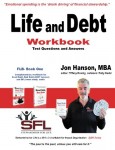
Live, laugh, learn….This is the workbook to complement the audio and text of Good Debt, Bad Debt (Penguin 2005, 2007). It is also used at SFLToday.org Workshops and in our video classes and as the starter courses for those personally coached by Jon Hanson. The workbook contains approximately 80 pages. Several original cartoons and slightly sarcastic expanded explanations on Houses, Spouses, and Cars! Oh my! Here is a breakdown of topics (aside from an overall understanding of debt and time). Table of Contents Preface: It’s about time and money! 4 Positive Thinking Isn’t Enough 6 Habit 7 The Daily Practice 7 Most Everything Good Happens in the First Six Feet 7 The Picture of Good Stewardship 9 The Practice of Good Stewardship 10 The Promise of Good Stewardship 12 I Know, You’re Different, Snowflake… 12 Good Debt, Bad Debt Workbook 17 Q&A Chapter 1- The Debt Effects, the Invisible Hand of Debt 18 Q&A Chapter 2- Emotional Hostage: How Do I Get Free From Me? 19 Q&A Chapter 3- Burn Rate: Spending. Not Income, Determines Wealth 21 Q&A Chapter 4- Delayed Gratification Don’t Wait to Get It! 23 Q&A Chapter 5 – I Don’t Know About My Past, But My Future is Spotless. 26 Q&A Chapter 6 – What if You Live? 29 Q&A Chapter 7- Real Estate 34 Real estate rant: 35 Q&A Chapter 8 – Driving My Life Away 40 Car Salesman: 42 Q&A Chapter 9 – Do I Have Records? 43 Tax rant: 46 Q&A Chapter 10 -You Married Who? 46 Q&A Chapter 11 – Debt Warfare: When Push Comes to Shove 51 Negligent Spendicide?: 54 Teach your children well… 55 References 55 10 Year Guarantee 57 (Test Only 16 pages) Stewardship for Life’s Financial Literacy Basics 58 Test Answer Key Only 123 questions 74
“Life is great when you spend less than you make!” SFLToday.org “Emotional spending is the ‘drunk driving’ of financial stewardship.” Jon Hanson, March 5, 2014
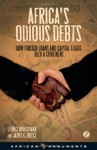
In Africa’s Odious Debts, Boyce and Ndikumana reveal the shocking fact that, contrary to the popular perception of Africa being a drain on the financial resources of the West, the continent is actually a net creditor to the rest of the world. The extent of capital flight from sub-Saharan Africa is remarkable: more than $700 billion in the past four decades. But Africa’s foreign assets remain private and hidden, while its foreign debts are public, owed by the people of Africa through their governments.
Léonce Ndikumana and James K. Boyce reveal the intimate links between foreign loans and capital flight. More than half of the money borrowed by African governments in recent decades departed in the same year, with a significant portion of it winding up in private accounts at the very banks that provided the loans in the first place. Meanwhile, debt-service payments continue to drain scarce resources from Africa, cutting into funds available for public health and other needs. Controversially, the authors argue that African governments should repudiate these “odious debts” from which their people derived no benefit, and that the international community should assist in this effort.
A vital book for anyone interested in Africa, its future, and its relationship with the West.
Product Features
- Used Book in Good Condition