Top Rated Videos
With even a modest income, if you start strategizing and saving for your future, the financial possibilities are nearly endless! Patrick Weinert explains the many strategies you can use to pay off your debt, save money, and plan for retirement. His guide, The Money Mission, is the result of years of experience in both personal and organizational money management. Weinert has advised the chief financial officer of the US Marine Corps on financial planning, and he brings the same rigorous skill to helping you plan out your personal financial future. The Money Mission begins by addressing debt, the main financial burden that afflicts so many Americans. Weinert offers simple and easy ways to begin reducing your debt. He examines and explains the most common obstacles blocking the way to a debt-free life and shows you exactly how to overcome them. He also explains how to create a starter savings fund and a six-month savings account reserve. After laying out the plan for a strong financial foundation, The Money Mission addresses saving for retirement, interest rates, banking, the Federal Reserve, investments, and more. With specific, accessible examples and simple terminology, Weinert makes financial management easier than ever.
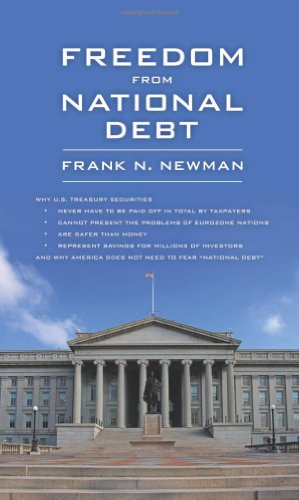
America is unjustly worried about ”national debt,” believing it can no longer do the many things that mark it as a great nation. Discussions of national undertakings–including infrastructure repair, jobs programs, military modernization, and disease prevention–have all been stifled through fear of insolvency. America has convinced itself that it can no longer afford, as a nation, to do many of the productive things that it has done so well over its history.
That’s a great shame, because America remains a nation of tremendous resources in every sense, and the underlying assumptions about U.S. government financial instruments are not correct. America can never face the debt problems of nations like Greece, thanks to its fundamentally different financial system.
This short book explains why such fears should not hold back America, and why even the expression ”national debt” is neither meaningful nor appropriate for the United States.
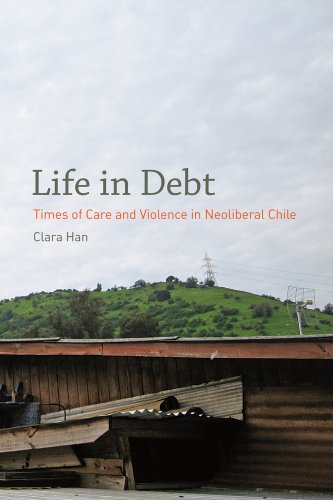
Chile is widely known as the first experiment in neoliberalism in Latin America, carried out and made possible through state violence. Since the beginning of the transition in 1990, the state has pursued a national project of reconciliation construed as debts owed to the population. The state owed a ?social debt” to the poor accrued through inequalities generated by economic liberalization, while society owed a ?moral debt” to the victims of human rights violations. Life in Debt invites us into lives and world of a poor urban neighborhood in Santiago. Tracing relations and lives between 1999 and 2010, Clara Han explores how the moral and political subjects imagined and asserted by poverty and mental health policies and reparations for human rights violations are refracted through relational modes and their boundaries. Attending to intimate scenes and neighborhood life, Han reveals the force of relations in the making of selves in a world in which unstable work patterns, illness, and pervasive economic indebtedness are aspects of everyday life. Lucidly written, Life in Debt provides a unique meditation on both the past inhabiting actual life conditions but also on the difficulties of obligation and achievements of responsiveness.
Product Features
- Used Book in Good Condition
THE 4 LAWS OF FINANCIAL PROSPERITY (Formerly The Four Laws of Debt Free Prosperity)
Inspired by actual occurrences, this entertaining and captivating book shows that how much a person earns isn’t nearly as important in achieving financial security as most people think-that nearly anyone, on any income, can achieve debt-free prosperity by applying the four laws in the story.
Inspired by a true story . . . you will discover four basic laws that will change your life.
Simple principles . . . learn how to implement the powerful core principles that financially successful people understand and live by to eliminate debt and accumulate wealth.
Change your financial life . . . anyone on any income can become debt-free and achieve financial independence by applying the principles from this book.
Thousands have bought for family members and friends! Over one hundred thousand copies sold worldwide!

Beat Greedy Lawsuit Filing Debt Collectors At Their Own Game. Learn to Fight Debt Collection Lawsuits and WIN! I look at being sued by a debt collector like this: If you are going to sue me, you better have the proof and documentation to validate it. It doesn’t matter if I owe the debt or not. I am not an easy money target and after you read my book neither will you. Foreword excerpt: “Allen Harkleroad may just be the most dangerous consumer in America for companies that treat people unfairly. He has a long and distinguished history of sticking it to those who have treated him and others unfairly. You can now take advantage of his thousands of hours of research and considerable experience and put it to good use in defending yourself against collections lawsuits. Bottom line is that you as a consumer need to be prepared to stand up and assert your rights to protect yourself. With Allen on your side you are on the right track.” ~ Chris Gleason, Esq. www.Consumerhelp911.com “I meant to tell you that I read the book on Friday and it is incredible. I love the motion to dismiss. Powerful and easy to understand.” ~ Barbara of Next Level Unlimited
Product Features
- ISBN13: 9780978999728
- Condition: New
- Notes: BRAND NEW FROM PUBLISHER! 100% Satisfaction Guarantee. Tracking provided on most orders. Buy with Confidence! Millions of books sold!
LEARN HOW TO ELIMINATE ALL YOUR EXISTING DEBTS, FIND DEBT RELIEF, AND REMAIN DEBT FREE FOR LIFE Discover a proven strategy for debt relief, paying off your debts and remain living debt free for the rest of your life. Millions of people are in debt and struggling to make ends meet. People are hoarded by surmounting financial responsibilities with no resolution in sight. Most don’t know what to do or where to turn for help. The growing financial crisis has shifted the consensus of the American Dream from owning a home to being debt free. This is scary. Is to be “debt free” really just a dream? How do you even start to make this dream a reality? The truth is, it can be your reality. This book gives you step-by-step strategies on how to gain control over your finances, and eliminate all your debts once and for all. You’ll also discover what got you into debt in the first place, and how to keep it from happening again. You don’t have to live enslaved to your debts anymore. You just have to make the commitment to take action and stay the course. Here Is A Preview Of What You’ll Learn… Why Are You In Debt? Income and Expense Worksheet Can You Raise Your Income? Can You Lower Your Expenses? Credit Cards and Debt Debt Consolidation Loan Bankruptcy Secured Loans Much, much more! Here’s What Others Are Saying… “This book is the best book I have read about getting out of your debt the sensible way!! It’s not one of those quick fix books, it is a realistic look at debt and very helpful tools to get out of debt and build your credit. I really recommend this book!!” – Gerald Leroy Anderson (Philly, USA) “This book is really great. I was able to get some nice tips to manage my personal finances better. I’m always trying to save money and I’m always looking to good books like this one to get some information on how to manage my credit card debt better. I’m still in debt but I’ve been following some tips and I can tell you that I’m getting some results already. I would recommend this book. I should try this out.” – Amanda Jones (USA) “I have come out of debt only recently and as I am still recovering financially I decided to download: ‘No More Debt’’ to see if it could help me. I literally ‘absorbed it’ on my lunch break and I found all the tips so useful and so up-to-date that I actually ended up reading it twice. What I got from this read is: some really reinforced motivation! I will never again be a debt victim and will never again struggle financially. I have actually started my financial journal, just like the author suggested and it made it so much easier to me to see where I was with my money…I love this idea of a simple yet healthy and happy life. Thank you so much author!” – Marta T. (Barcelona, Spain) TAKE ACTION TODAY and SECURE YOUR FINANCIAL FREEDOM! Tags: debt, debt free, debt relief, debt management, debt consolidation, debt education, debt free living, debt free spending plan, debt free forever, credit free, credit card debt, credit solutions, credit consolidation, how to pay off your credit card debt, how to pay off all your debts, how to become debt free, how to be financially free, finances, financial problems, financial crisis, financial solutions, financial future, financial independence, financial freedom, financial success, financial planning, financial peace, financial intelligence, financial relief, financial analysis, money management, personal finance, personal money management
If you are one of the millions of people who have hundreds or even thousands of dollars of credit card debt and want to seriously get out of debt and live debt free, then this simple, step-by-step, easy to follow plan is for you. In this book, you will have all the tools you need to get out of debt and stay out of debt. You will discover how to get control of your finances, how to create a monthly cash budget, how to eliminate credit card debt quickly, and have the skills you need to master your money. Start today and get serious about getting out of debt and saying goodbye to credit card debt for good. You CAN experience true financial freedom.

MONEY MANAGEMENT MAKEOVER: The Ultimate Plan for Financial Success with Managing Your Money by Budgeting and Saving! + Debt Free Forever: The Ultimate Guide to “Knowing Nothing to Having Everything in Financial Freedom, Becoming a Millionaire, and Becoming Debt Free Forever” + Single Women & Finances: A Woman’s Secret Diary To Saving, Budgeting, and Retirement (Saving, Retirement, Budgeting, Money Management, Single Woman, Finances, Banking) Money Management
You want to know how to assess your current financial situation and make sound plans in order to get rid of debt, start an emergency fund, and achieve your financial goals?
You want to become financially stable but don’t know where to begin?
This book will help you get started on budgeting, saving and investing your money to gain financial wealth and freedom.
You need to be able to identify how much money you have, how much you owe, and how much you need to have. Knowing these facts will help you create changes to improve your finances and achieve your goals.
Need the guidance to solid financial plan?
Most people make the mistake of treating their budget as a “suggestion” instead of a rule, which is why their liabilities constantly increase and their net worth decreases!
So get the right tools to set you on the path of success! Starts here today if you want it bad! Just hit click to begin that process!
Preview of Topics Assess Your Current Financial SituationCreate a Financial Plan Create a Budget Plan and Stick to It Get Rid of Debt ASAP Safeguard Yourself and Your Money Put Your Money in Investments Much, much more! Debt Free
Want to know the steps to get you out of debt?
You need help to stay out of debt? Help to lead you to financial stability?
Want to know what has worked for hundreds of debt ridden consumers?
Want to learn what will work to fully fit your situation?
Before you can determine what type of plan will work for you, first you need to determine the reasons you got into debt in the first place!
Be absolutely honest with yourself here! This is because, the efficacy of the plan you utilize, is determined by the accuracy and truth of your assessment!
Be willing to do that, and this book as a reference and guaranteed you will be on the right track to debt free forever!
Topic Covered…. Why and How Deep are You in Debt?Income vs. Expenses Viable Alternatives Common Pitfalls (Get Rich Quick Schemes)Concentrate on Increasing Income Keep at It Financial Education and Business Planning Much, much more! Single Women & Finance Did you know are more single women than married ones?
There are many single women who earn a lot of money. Are you one of them?
Women today make better financial decisions. However, most of these women still feel inadequate to navigate their financial life successfully! Are you one of them?
Women struggle because they have no formal training in money management. They grow up believing a lot of money myths which caused anxiety, feeling of inadequacy, and confusion!
Do you want to take control of your finances because you have to make ends meet? You have no partner to share the expenses with!
Here Is What We Cover…. Advantages and Disadvantages of Being a Single Woman Saving Tips for a Single Woman Budget Tips for the Single WomanRetirement Tips for the Single WomanExcellent Finance Tips for Women Much, much more!
For the greater part of recorded history the most successful and powerful states were autocracies; yet now the world is increasingly dominated by democracies. In A Free Nation Deep in Debt, James Macdonald provides a novel answer for how and why this political transformation occurred. The pressures of war finance led ancient states to store up treasure; and treasure accumulation invariably favored autocratic states. But when the art of public borrowing was developed by the city-states of medieval Italy as a democratic alternative to the treasure chest, the balance of power tipped. From that point on, the pressures of war favored states with the greatest public creditworthiness; and the most creditworthy states were invariably those in which the people who provided the money also controlled the government. Democracy had found a secret weapon and the era of the citizen creditor was born. Macdonald unfolds this tale in a sweeping history that starts in biblical times, passes via medieval Italy to the wars and revolutions of the seventeenth and eighteenth centuries, and ends with the great bond drives that financed the two world wars.
Product Features
- Used Book in Good Condition