Recently Added Videos
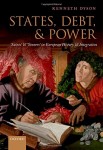
States, Debt, and Power argues for the importance of situating our contextually influenced thinking about European states and debt within a commitment to historically informed and critical analysis. It teases out certain broad historical patterns. The book also examines the inescapably difficult and contentious judgements about ‘bad’ and ‘good’ debt; about what constitutes sustainable debt; and about distributive justice at times of sovereign debt crisis. These judgements offer insight into the nature of power and the contingent nature of sovereign creditworthiness. Three themes weave through the book: the significance of creditor-debtor state relations in defining asymmetry of power; the context-specific and constructed character of debt, above all in relation to war; and the limitations of formal economic reasoning in the face of radical uncertainty. Part I examines case studies from Ancient Greece to the modern Euro Area and brings together a wealth of historical data that cast fresh light on how sovereign debt problems are debated and addressed. Part II looks at the conditioning and constraining framework of law, culture, and ideology and their relationship to the use of policy instruments. Part III shows how the problems of matching the assumption of liability with the exercise of control are rooted in external trade and financial imbalances and external debt; in financial markets and vulnerability to banking crisis; in the character of the ‘private governance of public debt’; in who has power over indicators of sustainability; in domestic institutional and political arrangements; and in sub-national fiscal governance. Part IV looks at how the problems of mismatch between liability and control take on an acute form within the historical context of European monetary union, above all in Euro Area debt crises.
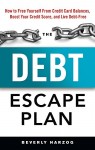
Praise for Author’s Last Book:
“Confessions of a Credit Junkie is presented in a conversational tone, without confusion, techno-speak complexity or excessive industry jargon. The book breaks through delusion and naiveté and can, given a chance, inspire even the most wide-eyed spender to avoid the pit of debt that snared Harzog and so very many others.
–Creditcardinsider.com
If you’re in credit-card debt and you’re tired of being told that all you need to do is give up your daily latte–and cut up all your credit cards–this is the book for you.
Former credit junkie Beverly Harzog racked up thousands of dollars in credit-card debt during a decade of overspending. When she decided she wanted to break free from debt, she found that conventional advice about personal finance didn’t work for her.
So, Beverly created her own unique debt escape plan and succeeded in paying off more than $20,000 in credit card debt in two years.
In The Debt Escape Plan, you’ll find easy-to-follow advice, often laced with a touch of Southern humor, to help you conquer–and stay out of–credit-card debt.
In this much-needed book, you’ll learn:
Why a one-size-fits-all approach to credit card debt doesn’t work.
How to use the Money Personality Quiz to customize your own debt escape plan.
The nine biggest debt mistakes and how to overcome them.
Seven secrets for giving your credit score a quick boost.
how to overcome the hardships of medical bills.
How to debt-proof your future so this never happens to you again!

First came the financial and debt crisis in Greece, then government financing difficulties and rescue programs in Ireland in 2010 and Portugal in 2011. Before long, Italy and Spain were engulfed by financial contagion as well. Finally in 2012, the European Central Bank pledged to do “whatever it takes” to preserve the euro area with purchases of government bonds, a step that achieved impressive results, according to William R. Cline in this important new book.
One of the world’s leading experts on fiscal and debt issues, Cline mobilizes meticulously researched and forceful arguments to trace the history of the euro area debt crisis and makes projections of future debt sustainability. He argues that euro area leaders made the right decision to keep the euro from breaking apart but warns against complacency about the future. Cline contends that troubled European economies should continue their fiscal consolidation but that further debt restructurings for most countries are not called for. Greece is a special case and may need some further debt relief contingent on continued progress on fiscal and structural reform, however. In this landmark study, Cline offers a detailed analysis of the mistakes, successes, and options for Europe as it struggles to overcome its worst economic disaster since World War II.
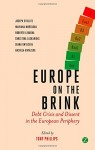
Europe is suffering from a bipolar economic disorder; one symptom of which is a sovereign debt crisis. The media have divided the continent into two groups of nations: center and periphery, not by geography but by credit ratings on national debt. European Debt Crisis: The Sovereign Debt Crisis – A Memorandum from the Periphery is a critical investigation of the root causes of the crisis, and the often misguided policy choices made to ‘resolve’ it.
Nobel Laureate Joseph Stiglitz addresses how regional debt contagion in Europe compares with regional financial crises elsewhere, while former Argentine Minister for Economics Roberto Lavagna provides a poignant comparative analysis with his own country’s experience. Crucially and uniquely, Portuguese, Greek, and Irish economists provide hard-hitting case studies that offer the perspective of the European ‘periphery’.
A much-needed book offering a heterodox economic perspective on the causes, symptoms, and solutions of the biggest economic issue currently facing Europe.
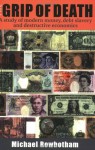
A lucid and original account of where money comes from and why most people and businesses are so heavily in debt. It explodes more myths than any other book this century, yet it’s all about subjects very close to home: mortgages, building societies and banks, agriculture, transport, global poverty, and what’s on the supermarket shelf. The author proposes a new mechanism for the supply of money, creating a supportive financial environment and a decreasing reliance on debt.
Product Features
- Used Book in Good Condition
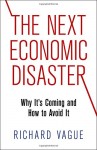
Current debates about economic crises typically focus on the role that public debt and debt-fueled public spending play in economic growth. This illuminating and provocative work shows that it is the rapid expansion of private rather than public debt that constrains growth and sparks economic calamities like the financial crisis of 2008.
Relying on the findings of a team of economists, credit expert Richard Vague argues that the Great Depression of the 1930s, the economic collapse of the past decade, and many other sharp downturns around the world were all preceded by a spike in privately held debt. Vague presents an algorithm for predicting crises and argues that China may soon face disaster. Since American debt levels have not declined significantly since 2008, Vague believes that economic growth in the United States will suffer unless banks embrace a policy of debt restructuring.
All informed citizens, but especially those interested in economic policy and history, will want to contend with Vague’s distressing arguments and evidence.

Named for her late father’s most prized possession, Aston McNeil shares a deep connection with the classic car she inherited upon his recent death. When she learns her reckless stepbrother lost the car as collateral to Houston’s most feared loan shark, she fights the urge to throttle him and vows to do whatever it takes to get it back.
Mechanic and mob enforcer Ben Beciraj can’t believe his eyes when Houston socialite Aston McNeil storms into his chop shop and demands the return of the car he’s just repossessed. He counters with a deal he never expects the fiery blonde heiress to accept–one week at his beck and call for the keys to her late father’s favorite toy.
But Ben’s plans to have a little fun with a girl way out of his league are shot to hell after one taste of sweet, beguiling Aston. When her stepbrother’s shady dealings are revealed, Ben will do anything to protect her from the seedy underworld he inhabits–even if it means crossing the only family he’s ever known.
An Attorney’s Guide to the Collection of Bad Debts is meant to give readers a broad overview of debt collection techniques as well as to inform them of some popular debt collection techniques used by attorneys. The reader should consider this book a type of debt collection techniques catalog. We authored this second edition so that it can be read easily and quickly during a day’s commute to and from work. This second edition also contains revised copies of sample legal forms used to facilitate the collection of bad debts and contains an updated section on asset protection trusts. After reading this book, you will become aware of certain collection techniques so that you can have an informed discussion with an attorney about potential options available to you. This book is not to be considered legal advice and is meant for general information purposes only. This book is not a substitute for the advice of legal counsel.
Product Features
- Used Book in Good Condition
The Titans are the most powerful beings known to man, and it isn’t often that they require assistance from anyone. But when someone does aid them, he is greatly rewarded. The Titans give that person the ability to ask for anything, any one favor to be granted, and whatever that wish is, the Titans must grant it. Three hundred years ago a young man asked the Titans for such a favor. He became the ruler of the human kingdom, choosing to remain in power for over a thousand years before anyone would even be capable of deposing him. He keeps the magical nature of his reign a secret, and is slowly destroying the kingdom that he rules. Cassandra Valiant is just a seventeen-year-old merchant’s daughter, she knows nothing about the Titans, she knows nothing about the land beyond the borders of her hometown, and she knows nothing about the king’s intent to harm his own kingdom. But she may be the only person who can stop him.
Are you tired of being in debt? This book can be the key you need to succeed in your battle against debt. Not only can it help you with your debt battle, it can also help you learn how to remain debt-free! As a bonus, the author included a list of his favorite financial / inspirational books that helped him win the debt battle and can also help you achieve your own financial success. You owe it to yourself to win your debt battle and live your life free from the chains of debt. Are you ready to take the first step toward debt-free living?