Most Viewed Videos

“The Story of the Stone” (c. 1760), also known by the title of “The Dream of the Red Chamber”, is the great novel of manners in Chinese literature. Divided into five volumes, of which “The Debt of Tears” is the fourth, it charts the glory and decline of the illustrious Jia family (a story which closely accords with the fortunes of the author’s own family). The two main characters, Bao-yu and Dai-yu, are set against a rich tapestry of humour, realistic detail and delicate poetry, which accurately reflects the ritualized hurly-burly of Chinese family life. But over and above the novel hangs the constant reminder that there is another plane of existence a theme, which affirms the Buddhist belief in a supernatural scheme of things.
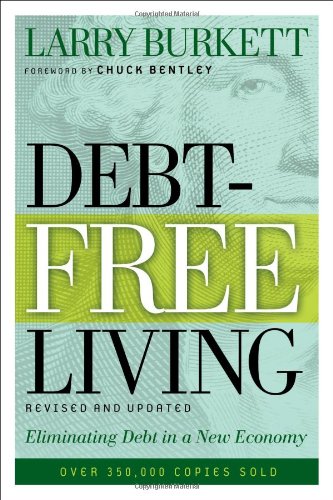
So much has changed…and yet, so much is exactly the same. Debt-Free Living has sold more than 300,000 copies in the two decades since Larry Burkett first laid down the challenge to live debt-free lives. And now, on the heels of the debt-fueled debacle that was 2008-2009, we need this message now more than ever.
With people’s credit, mortgages, car payments, salaries, commissions, and bills fluctuating daily, Debt-Free Living has never looked more attractive. This bestselling book has been updated and revised to reflect today’s realities alongside timeless biblical truth. Learn about the origin of most financial troubles and break out of the debt cycle. Debt-Free Living is a necessary resource to battle the ever-present temptation and trappings of more and more debt that keep weighing you down.
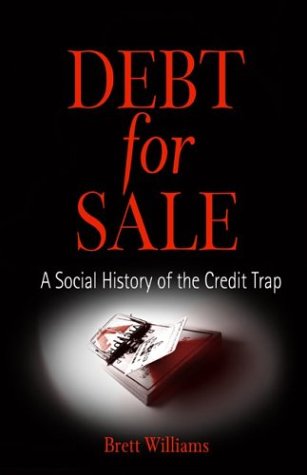
Credit and debt appear to be natural, permanent facets of Americans’ lives, but a debt-based economy and debt-financed lifestyles are actually recent inventions. In 1951 Diners Club issued a plastic card that enabled patrons to pay for their meals at select New York City restaurants at the end of each month. Soon other “charge cards” (as they were then known) offered the convenience for travelers throughout the United States to pay for hotels, food, and entertainment on credit. In the 1970s the advent of computers and the deregulation of banking created an explosion in credit card use—and consumer debt. With gigantic national banks and computer systems that allowed variable interest rates, consumer screening, mass mailings, and methods to discipline slow payers with penalties and fees, middle-class Americans experienced a sea change in their lives.
Given the enormous profits from issuing credit, banks and chain stores used aggressive marketing to reach Americans experiencing such crises as divorce or unemployment, to help them make ends meet or to persuade them that they could live beyond their means. After banks exhausted the profits from this group of people, they moved into the market for college credit cards and student loans and then into predatory lending (through check-cashing stores and pawnshops) to the poor. In 2003, Americans owed nearly $8 trillion in consumer debt, amounting to 130 percent of their average disposable income. The role of credit and debt in people’s lives is one of the most important social and economic issues of our age.
Brett Williams provides a sobering and frank investigation of the credit industry and how it came to dominate the lives of most Americans by propelling the social changes that are enacted when an economy is based on debt. Williams argues that credit and debt act to obscure, reproduce, and exacerbate other inequalities. It is in the best interest of the banks, corporations, and their shareholders to keep consumer debt at high levels. By targeting low-income and young people who would not be eligible for credit in other businesses, these companies are able quickly to gain a stranglehold on the finances of millions. Throughout, Williams provides firsthand accounts of how Americans from all socioeconomic levels use credit. These vignettes complement the history and technical issues of the credit industry, including strategies people use to manage debt, how credit functions in their lives, how they understand their own indebtedness, and the sometimes tragic impact of massive debt on people’s lives.
Product Features
- ISBN13: 9780812238174
- Condition: New
- Notes: BRAND NEW FROM PUBLISHER! 100% Satisfaction Guarantee. Tracking provided on most orders. Buy with Confidence! Millions of books sold!
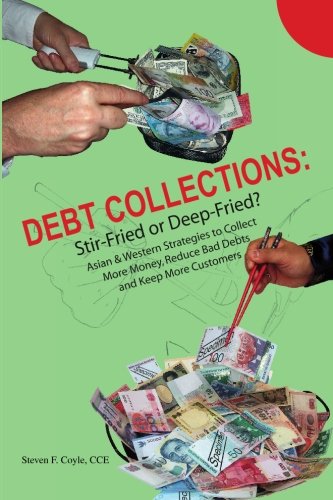
A practical business cookbook on how to creatively collect debts from overdue customers using Asian and Western collection strategies. The author is an American living in Asia since 1995. Accounts receivables are most firms largest asset, and often it’s most unmanageable. This book shares ideas to improve your firm’s processes, people, and systems to reduce bad debts and increase sales and profits. A humorous, ‘how to’ book to put more money in your firm’s pocket while keeping you up-to-date in the field.
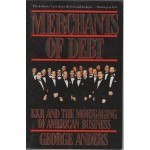
For more than a decade, Henry Kravis and George Roberts have been archetypes, first of Wall Street’s boom years and then of its excesses. Their story and that of their firm – the biggest, most successful and most controversial participant in the age of leverage – illuminates an entire era of financial high jinks and speculative mania. Kravis and Roberts wrote their way into the history books by concocting one giant takeover after another. Their technique: the leveraged buyout, an audacious way to acquire a company with borrowed money, borrowed management – and a lot of nerve. Their firm, Kohlberg Kravis Roberts & Co., dominated the Wall Street scene in the late 1980s, acquiring one Fortune 500 company after another, including Safeway, Duracell, Motel 6, and RJR Nabisco. This book draws on more than 250 interviews, including recurring access to the central figures and their KKR associates, as well as confidential documents and private correspondence to couch giant financial issues in human terms. “Merchants of Debt” shows how pride, jealousy, fear, and ambition fuelled Wall Street’s debt mania – with consequences that affected hundreds of thousands of people. The book addresses 3 questions – why did American business become so enchanted by debt in the 1980s? How exactly did Kravis and Roberts rise to the top of the heap? What have buyouts, especially KKR’s deals, done to America’s economic strength? In the tradition of “Barbarians at the Gate” and “The House of Morgan” this is a saga that takes readers behind closed boardroom doors to show how star-struck young bankers, ruthless deal-makers, and nervous CEOs changed one another’s lives – and the whole American economy – over a 15 year span.

Check out these fun things:
Patreon: https://www.patreon.com/calebhammer
YouTube membership: https://www.youtube.com/channel/UCLe_q9axMaeTbjN0hy1Z9xA/join
My socials: https://linktr.ee/calebhammer
Private 1-on-1 consultation: https://calebhammer.as.me/
Want a free $5? Sign up for Acorns using my link: https://share.acorns.com/calebhammercomposer
Do you want to be in a Financial Audit and you’re in the Austin area? Email castingcalebhammer@gmail.com
_______________________
My filming equipment:
Camera: https://amzn.to/3OqHkG5
SD storage: https://amzn.to/3OaimKD
Tripod: https://amzn.to/3ObsaEn
Microphone system: https://amzn.to/3ObIYeq
Lighting: https://amzn.to/3REor4Z
Teleprompter: https://amzn.to/3OaiLN9
USB C SD card reader: https://amzn.to/3PAq02m
**Disclaimer: neither this video, nor any content produced by Caleb Hammer should ever be considered investing advice or official financial advice. All content is made for entertainment and educational purposes**
_______________________
Sponsorship and business inquiries: castingcalebhammer@gmail.com
_______________________
My financial friend, financial education, american debt, the dave ramsey show, budget money debt cash, personal finance, how to invest in real estate, the plain bagel, the rich dad channel, how to start in real estate, graham stephan, meet kevin, rental property, investment property, ryan pineda, elena taber, noelle randall, lili thompson, john olfert, bigger pockets, kevin ward, mark tilbury, youtube income, creator fund, student loan debt, shorts, biggerpockets, investopads, biaheza, credit cards, student debt, how to make money, debt free, real estate, compound interest, buying house, pardon my take barstool, save, insurance, buy, snowball, pay off debt, debt free journey, financial independence, how to pay off debt, how to pay off student loans, debt snowball, dave ramsey show, pay off student loans, financial independence retire early, how to pay off student loans fast, debt payoff, dave ramsey live, net worth update 2022, dave ramsey cars, caleb kids show, dave ramsey car loan, college debt, money, debt free community, dave ramsey car payments, my net worth update, dave ramsey live stream, barstool big cat, make money online, get rich quick, barstool sports, big cat, pft commenter, barstool pft, get rich, net worth, loans, fake guru, student loan, day in my life vlog, day trading, credit, barstool, morning routine, pmt, pftcommenter, gritweek, pft, bigcat, grit, scam, houston vlog, lesbian couple, cleaning motivation, luxury shopping, houston vlogger, engagement video, date night, productive day in my life, manifest the life you want, loan, budgeting, stock trading, gym motivation, how to bleach hair at home, houston pride parade, crypto, luxury life, fun and crazy kids, morning routines, finance, budget, student loan forgiveness, ramsey, car payments, credit score, shiba inu, should i go to college, shiba inu token. As a 23-year-old with more debt than anyone should ever have, I know how hard it is to get ahead. This is the story of how I paid off $67,000 in debt in just 3 years using the tips in my new financial audit book, Zero Down Your Debt: Financial Freedom Through Debt Repayment. If you’re feeling overwhelmed by your student loan debt, this Financial Audit book is for you! It shows you how to pay off your debt using the same techniques that I used, and it’s completely free. I hope this video helps you get started on your journey to financial freedom! shiba inu crypto, inflation, manifestation, net worth spreadsheet, car loan, luxury cologne, day dates, shiba inu price prediction, caleb hammer, financial audit, caleb, is college worth it in 2022, caleb hammer composer, credit card debt, financial, dave ramsey, debt, credit card, payday loans, eminem, coffeezilla, car debt, bridgette wilson, pardon my take, is college worth it, john oliver, paying off student loans, net worth update, che and cherice, student loans, caleb maupin, shiba inu coin, my jazzy life
Overwhelmed with debt? There is hope and freedom for you no matter how big your problem. Skyrocketing debt has crippled and divided millions in this age of rampant credit, interest-only mortgages, and record loan defaults. The way out from under debt burdens is not a declaration of bankruptcy, but surrender to the Word of God. Becoming debt-free may seem an impossible dream for many, but it is actually an attainable goal according to Howard Dayton, president of Crown Financial Ministries. He overcame his own struggle with debt by applying God’s principles to managing his finances, principles he lays out in this practical, encouraging, never-give-up book.
How to Get Out of Debt
Quickly eliminate your debt forever!
Power down your debt by following proven simple Biblical principles. Learn how to:
Create Your Own Personal Financial Statement(PFS) and Find Your NET Worth
Finances do not need to be so complex. I show you what makes up a Personal Financial Statement and how to read it. What a great and not so great financial statement looks like. You will learn what your true NET worth is and how “getting rich” is really a simple matter of changing a negative to a positive or “greater than” to a “less than”.
Increase Your Income and Learn What the Bible Says About Income
That means digging into the different types of income. I show you what retirement really means and that it is definitely possible to retire young and retire rich. Also, what the Bible says about being rich. Learn how to get started with new investments such as real estate or buying an existing business. I show you some simple checks and balances for reviewing a business before you buy it.
Analyze Your Expenses and Eliminate Unnecessary Expenses
Using your Personal Financial Statement/NET Worth Calculator (* Bonus (no-cost) download from my website) you will see the expenses that you can eliminate that will help you get out of debt quickly. I show you the difference between a good debt and a bad debt and why not all debt is bad.
Get Out of Debt Using My KO Debt Plan
Learn how to knock out(KO) your debt one at a time. Your goal should be to live debt-free and with my KO Debt Plan you can achieve that at an accelerated pace. I show you specific examples of the simple process of removing your debt. In addition I will show you:
• What your financial action plan should look like
• Why you should tithe
• How much money you should tithe
• How much house you can really afford and why you shouldn’t rely soley on real estate agents and bankers.
Note: These principles are based on what it says in the Bible. Regardless, if you are “religious” or not you can benefit from applying these methods. I am not interested in preaching to you but I am excited to share what I have learned and the freedom that comes along with being debt-free.
About The Author
If you know me, you know that my mind never rests. I like to get things done. I like to try new things. And most of all, I like to succeed. While success may mean different things to different people we can all agree that winning is always better than losing. My desire for you is to minimize the times you lose.
My investments include businesses, real estate and stocks. I strive to help others maximize their time and succeed financially as well as personally. I hate bad debt! Also, I love to write and actively cover financial, business (marketing, social media & blogging) and lifestyle topics on my blog (http://5minaday.com)
Learn how to get out of debt. Scroll up &click the buy button now.
Product Features
- Used Book in Good Condition

Best Way to Pay Off Debt Fast (That Actually Works)
Today, we’ll go over the FASTEST way to pay off debt, so you can start knocking out your debt as fast as humanly possible and begin to invest for your future.
Links:
Debt Snowball Calculator: https://www.ramseysolutions.com/debt/debt-calculator?utm_source=YouTube&utm_medium=GKYouTube&utm_campaign=GeorgeKamel&utm_id=ramseysolutions
EveryDollar Budget Deal: I love a good deal, when you sign up using this link I’ll hook you up with a 14-day free trial and $15 off your first year of the premium version of EveryDollar. https://www.ramseysolutions.com/ramseyplus/everydollar/george?utm_source=YT&utm_medium=YT&utm_campaign=George-YouTube&utm_id=ramseysolutions
George Kamel is a personal finance expert and co-host of The Ramsey Show. Following Ramsey’s proven money plan, George went from negative net worth to a millionaire in under 10 years. His goal is to help people spend less, save more, and avoid money traps so they can live a life with more margin, options and freedom.
This channel will simplify complex money topics, bust money myths with actual facts, and debunk the stupid financial advice you’re seeing in your social media feed. All with a healthy dose of pop culture, humor, and snark.
With this nuts-and-bolts guide, both savvy and novice investors can discover the secrets to profiting from personal and corporate debt, including municipal tax liens, defaulted credit card debt, discount promissory notes, mortgage foreclosures, and micro loans. Anyone can participate in these investments, but not all of these options are as easy as calling a broker – they require some legwork and research – so many of these opportunities often go untapped.
While there are many books on alternative investment ideas, none provide this level of practical information and advice. How To Invest in Debt provides everything readers need to capitalize on these investments. Readers will discover:
How to find and purchase debt at a deep discount
How to do effective due diligence and pick the ones that are most likely to pay off
How to collect debt, and the secrets to making short-term high interest loans
Buying future streams of cash flow
Overcoming what could go wrong before it happens
And much more.
Dozens of charts, table, forms, spreadsheets, and diagrams empower readers to get started right away, with all the tools they will need to collect and analyze data and pursue the most profitable opportunities.
How To Invest in Debt shows that if you’re willing to do the work, you can profit from debt.