[America] Videos
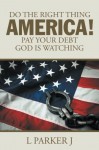
In January 1865, President Abraham Lincoln approved Executive Order, Special Field Orders Number 15. It was an order carried out by the military to divide 400,000 acres of land or confiscated plantations into forty-acre parcels and give them to the heads of the former slave family. I am sure we have all heard of “40 acres and a mule.” In April of 1865, President Lincoln was assassinated (only three months later). Vice President Andrew Johnson was sworn in and did not honor that executive order. Special Field Orders Number 15 was reparations for the recently freed slaves America had held in servitude and subjugation for over 200 years. This book spells out the justification, the ability to pay, and an actual plan to execute reparations for the children of American slaves.
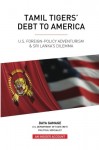
The book separates from other existing ones on the subject in providing an unparalleled angle penetrating into Washington’s covert and overt maneuvers and designs aiding and abetting a global supportive instrument of a terrorist organization which is motivated to destabilize Sri Lanka. The analyses and interpretations, based on the author’s deep knowledge and insights gained during his tenure at the U.S. Department of State, not found in other works. The link the author discovered between Washington’s settled mindset developed in the 1980s and 1990s on Sri Lanka’s national issues, and post-2009 renaissance of the global supportive instrument of a terrorist group is unique to the readers. The interpretations and analyses of discovered evidence of this cohabitation, and Washington’s adventurism are aptly reflected in the title of the book: Tamil Tigers’ Debt to America: U.S. Foreign Policy Adventurism and Sri Lanka’s Dilemma. This book gives a unique analyses and interpretation of Washington’s foreign policy adventurism using the insights the author gained during his tenure at the U.S. State Department. This insider’s account and alarming analysis have disclosed a development – largely due to Washington machinations – that enabled operative organizations within the Tamil Diaspora to replace the vanquished Tigers and diplomatically continue its secessionist agenda in Sri Lanka. Washington’s disappointment in its failure to salvage Sri Lanka’s Tamil Tiger leadership – which it believed represented the sentiments of the minority Tamils – to use it as a pressure group to influence changes in Sri Lanka was thwarted by the movement’s annihilation in 2009. To avenge the foreign policy setback, Washington created a conducive atmosphere – through its foreign policy advocacy – that facilitated the emergence of a stronger, determined and more coordinated Tamil Diaspora – once effectively functioned to sustain the LTTE – as a global diplomatic movement. One cannot recall in recent memory how a totally annihilated lethal terrorist movement along with its superior military power was resurrected and emerged as a global political movement with a determination to achieve the same objective – a separate state for the minority ethnic Tamils in the north-east region of Sri Lanka. The book’s disclosed link facilitates the readers to understand this scenario.
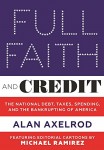
What is the national debt? Who loses from it? Who profits from it? Why is it a greater threat to America than international terrorism? In direct, non-partisan language, this book follows the money and finds the answers.
Conservative, Liberal, Republican, Democrat, Libertarian, Socialist . . . Each has a laundry list for America on which the slow-motion cataclysm of unsustainable national debt is but a lonely bullet point among dozens of others. Full Faith and Credit zooms in on that point, liberates it from partisan programs and political orientations, expands it, explores it, and explains it.
The book examines key dimensions of our national life?from a military-industrial complex more menacing than even Eisenhower could have imagined to a Tower of Babel tax code that covertly translates taxes into secret subsidies. With the aim of converting bystanders into informed advocates of change, Full Faith and Credit is rich with eye-opening data, surprising case studies, and you-can’t-make-this-stuff-up examples:
? For every official the United States public has elected, its government supports 5000 unelected employees.
? $1 billion is the cost to destroy $16 billion in ammunition unneeded by the U.S. military.
? $20,973,890,000 is the total taxpayer cost to the Treasury of gambling losses deducted by millionaires.
With easy-to-follow graphs and charts, as well as 20 uproarious full-color editorial cartoons drawn from the prior work of Pulitzer Prize?winning artist Michael Ramirez, Full Faith and Credit locates the tipping point of the $19.4 trillion (and counting) national debt crisis and offers ideas on how to fix it.
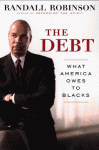
In Randall Robinson’s view, racial problems can’t be solved until America is willing to face up to the devastating effects of slavery and educate all Americans, black and white, about the history of Africa and its people.
In his recent book, the highly successful Defending the Spirit: A Black Life in America, Robinson makes a stirring call to form the next legion of African-American leadership. Now, in The Debt, he argues that reclaiming the lost history of Africa and African-Americans will help provide a much-needed springboard for solving many of today’s problems-from finding new leadership within the black community to developing meaningful educational programs to helping black people empower themselves economically. Robinson also argues that the United States must be prepared to make restitution to African-Americans for 246 years of slavery, and the century of de jure racial discrimination that followed, via major educational programs and economic development. Robinson offers a solution-oriented approach to controversial issues of social justice in a style that is both personal and informative.
“Randall Robinson’s powerful and poignant story of personal and political struggle is one of vision, courage, and sacrifice.”-Cornell West, Harvard University professor and author of Race Matters (on Defending the Spirit)Randall Robinson, the founder and president of TransAfrica (a lobbying organization dedicated to influencing U.S. policy toward Africa and the Caribbean), recounted his heroic struggle to fight and overcome racism in the magnificent Defending the Spirit. In his triumphant follow-up, The Debt, he goes further than any previous black public figure in calling for reparations to African-Americans for the present-day racism that stems from 246 years of slavery. Citing compensation that Jews and Japanese Americans have received, he writes, “No race, ethnic or religious group has suffered as much over so long a span as blacks have and do still, at the hands of those who benefited … from slavery and the century of legalized American racial hostility that followed it.” In making his case, Robinson utilizes facts and figures that highlight the disparity between African-Americans and whites. While fully recognizing the monumental odds of this movement’s success, Robinson feels that the push for reparations will also greatly benefit African-Americans in nonmaterial ways: “Even the making of a well-reasoned case for restitution will do wonders for the spirit of African-Americans,” he argues. “It will cause them to at long last understand the genesis of their history–before, during, and after slavery–into one story of themselves.” –Eugene Holley Jr.
Product Features
- Used Book in Good Condition
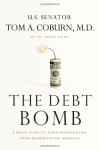
In a nation whose debt has outgrown the size of its entire economy, the greatest threat comes not from any foreign force but from Washington politicians who refuse to relinquish the intoxicating power to borrow and spend. Senator Tom Coburn reveals the fascinating, maddening story of how we got to this point of fiscal crisis-and how we can escape.
Long before America’s recent economic downturn, beltway politicians knew the U.S. was going bankrupt. Yet even after several so-called “change” elections, the government has continued its wasteful ways in the face of imminent danger. With passion and clarity, Coburn explains why Washington resists change so fiercely and offers controversial yet commonsense solutions to secure the nation’s future.
At a time when millions of Americans are speculating about what is broken in Washington, The Debt Bomb is a candid, thoughtful, non-partisan expose of the real problems inside our government. Coburn challenges the conventional wisdom that blames lobbyists, gridlock, and obstructionism, and places the responsibility squarely where it belongs: on members of Congress in both parties who won’t let go of the perks of power to serve the true interests of the nation-unless enough citizens take bold steps to demand action.
“Democracy never lasts long. It soon wastes, exhausts, and murders itself. There was never a democracy yet that did not commit suicide.” -John Adams
Throughout a distinguished career as a business owner, physician, and U.S. senator, Tom Coburn has watched his beloved republic careen down a suicidal path. Today, the nation stands on the precipice of financial ruin, a disaster far more dangerous to our safety than any terrorist threats we face. Yet Coburn believes there is still hope-if enough Americans are willing to shake the corridors of Washington and demand action.
With an insider’s keen eye and a caregiver’s deft touch, Coburn diagnoses the mess that career politicians have made of things while misusing their sacred charge to govern.
Coburn’s incisive analysis:
Reveals the root causes of America’s escalating financial crisis Exposes Washington’s destructive appetite for wasteful spending, power grabs, backroom deals, and quick non-fixes Rises above partisanship to implicate elected officials of all stripes in steering the nation off course Lays out a commonsense guide to restoring order Concludes with a clarion call and sound advice for Americans who would dedicate themselves to defusing the debt bomb Above all, Coburn believes the United States can continue as a beacon of opportunity for future generations-but how we act today will determine whether we deliver the nation to our children and grandchildren fully alive, on life support, or without a pulse.
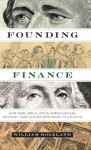
Recent movements such as the Tea Party and anti-tax “constitutional conservatism” lay claim to the finance and taxation ideas of America’s founders, but how much do we really know about the dramatic clashes over finance and economics that marked the founding of America? Dissenting from both right-wing claims and certain liberal preconceptions, Founding Finance brings to life the violent conflicts over economics, class, and finance that played directly, and in many ways ironically, into the hardball politics of forming the nation and ratifying the Constitution—conflicts that still continue to affect our politics, legislation, and debate today.
Mixing lively narrative with fresh views of America’s founders, William Hogeland offers a new perspective on America’s economic infancy: foreclosure crises that make our current one look mild; investment bubbles in land and securities that drove rich men to high-risk borrowing and mad displays of ostentation before dropping them into debtors’ prisons; depressions longer and deeper than the great one of the twentieth century; crony mercantilism, war profiteering, and government corruption that undermine any nostalgia for a virtuous early republic; and predatory lending of scarce cash at exorbitant, unregulated rates, which forced people into bankruptcy, landlessness, and working in the factories and on the commercial farms of their creditors. This story exposes and corrects a perpetual historical denial—by movements across the political spectrum—of America’s all-important founding economic clashes, a denial that weakens and cheapens public discourse on American finance just when we need it most.
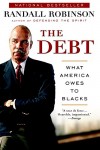
The national bestseller by the author of Defending the Spirit.
In this powerful and controversial book, distinguished African-American political leader and thinker Randall Robinson argues for the restoration of the rich history that slavery and segregation severed. Drawing from research and personal experience, he shows that only by reclaiming their lost past and proud heritage can blacks lay the foundation for their future. And white Americans can make reparations for slavery and the century of racial discrimination that followed with monetary restitution, educational programs, and the kinds of equal opportunities that will ensure the social and economic success of all its citizens.
In a book that is both an unflinching indictment of past wrongs and an impassioned call to our nation to educate all Americans about the history of Africa and its people, Robinson makes a persuasive case for the debt white America owes blacks, and the debt blacks owe themselves.
Randall Robinson, the founder and president of TransAfrica (a lobbying organization dedicated to influencing U.S. policy toward Africa and the Caribbean), recounted his heroic struggle to fight and overcome racism in the magnificent Defending the Spirit. In his triumphant follow-up, The Debt, he goes further than any previous black public figure in calling for reparations to African-Americans for the present-day racism that stems from 246 years of slavery. Citing compensation that Jews and Japanese Americans have received, he writes, “No race, ethnic or religious group has suffered as much over so long a span as blacks have and do still, at the hands of those who benefited … from slavery and the century of legalized American racial hostility that followed it.” In making his case, Robinson utilizes facts and figures that highlight the disparity between African-Americans and whites. While fully recognizing the monumental odds of this movement’s success, Robinson feels that the push for reparations will also greatly benefit African-Americans in nonmaterial ways: “Even the making of a well-reasoned case for restitution will do wonders for the spirit of African-Americans,” he argues. “It will cause them to at long last understand the genesis of their history–before, during, and after slavery–into one story of themselves.” –Eugene Holley Jr.
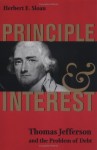
In this acclaimed work, available here for the first time in paperback, Herbert E. Sloan examines Thomas Jefferson’s complex and obsessive relationship to debt—its roles in his life and political career, and in the formation of republican ideology. As party leader in the 1790s, and later as President of the United States, Jefferson led a crusade against public debt, which he felt robbed the people of a future rightly theirs. Yet as a private person, he was plagued by debt, never free of it throughout his life. In this respect, Sloan argues, Jefferson was representative of his social class—most of the Virginia gentry had similar problems with debt, and similar feelings about it.
Taking as the central exposition of Jefferson’s political vision his famous letter to James Madison on the rights of the living generation, Sloan explores in detail the events of 1789–90, when Jefferson acceded to Hamilton’s plans for the national debt. The consequences of this decision would haunt Jefferson until the day he died.
Eloquently written and exhaustively researched, Principle and Interest provides a unique perspective on a range of topics—revolutionary ideology, political economy, the mechanics of party organization—central to an understanding of the period.
Product Features
- Used Book in Good Condition
Examining the causes of the acute Latin American debt crisis that began in mid-1982, North American analysts have typically focused on deficiencies in the debtor countries’ economic policies and on shocks from the world economy. Much less emphasis has been placed on the role of the region’s principal creditors–private banks–in the development of the crisis. Robert Devlin rounds out the story of Latin America’s debt problem by demonstrating that the banks were an endogenous source of instability in the region’s debt cycle, as they overexpanded on the upside and overcontracted on the downside.
Originally published in 1993.
The Princeton Legacy Library uses the latest print-on-demand technology to again make available previously out-of-print books from the distinguished backlist of Princeton University Press. These paperback editions preserve the original texts of these important books while presenting them in durable paperback editions. The goal of the Princeton Legacy Library is to vastly increase access to the rich scholarly heritage found in the thousands of books published by Princeton University Press since its founding in 1905.
What role does war play in political development? Our understanding of the rise of the nation-state is based heavily on the Western European experience of war. Challenging the dominance of this model, Blood and Debt looks at Latin America’s much different experience as more relevant to politics today in regions as varied as the Balkans and sub-Saharan Africa.
The book’s illuminating review of the relatively peaceful history of Latin America from the late eighteenth through the early twentieth centuries reveals the lack of two critical prerequisites needed for war: a political and military culture oriented toward international violence, and the state institutional capacity to carry it out. Using innovative new data such as tax receipts, naming of streets and public monuments, and conscription records, the author carefully examines how war affected the fiscal development of the state, the creation of national identity, and claims to citizenship. Rather than building nation-states and fostering democratic citizenship, he shows, war in Latin America destroyed institutions, confirmed internal divisions, and killed many without purpose or glory.