[Corporate] Videos
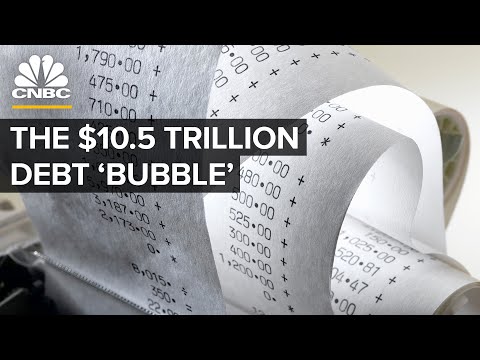
U.S. companies now face the highest levels of debt on record — more than $10.5 trillion, according to the Federal Reserve and the Securities Industry and Financial Markets Association, or SIFMA.
The coronavirus pandemic is only part of the story.
The corporate debt market is where companies go to borrow cash. And for over a decade, super-low interest rates left over from the 2008 financial crisis have made borrowing easier and easier. Since then, U.S. companies have regularly offered up bonds for sale, taking advantage of the cheap access to cash.
Sometimes companies can get reckless with debt, and this can result in bonds facing downgrades and low ratings, putting those companies at junk bond status. Overborrowing can result in companies becoming “fallen angels” or “zombie” companies.
Between rising interest rates and inflation concerns, Wall Street is watching the bond market closely and checking the pulse of the U.S. economy.
Here’s how the corporate bond market got to these “bubble” levels and just how risky this massive amount of debt may be to the U.S. economy.
» Subscribe to CNBC: https://cnb.cx/SubscribeCNBC
» Subscribe to CNBC TV: https://cnb.cx/SubscribeCNBCtelevision
» Subscribe to CNBC Classic: https://cnb.cx/SubscribeCNBCclassic
About CNBC: From ‘Wall Street’ to ‘Main Street’ to award winning original documentaries and Reality TV series, CNBC has you covered. Experience special sneak peeks of your favorite shows, exclusive video and more.
Connect with CNBC News Online
Get the latest news: https://www.cnbc.com/
Follow CNBC on LinkedIn: https://cnb.cx/LinkedInCNBC
Follow CNBC News on Facebook: https://cnb.cx/LikeCNBC
Follow CNBC News on Twitter: https://cnb.cx/FollowCNBC
Follow CNBC News on Instagram: https://cnb.cx/InstagramCNBC
Subscribe to CNBC PRO: https://cnb.cx/2NLi9AN
#CNBC
Behind The Corporate Bond Market’s $10.5 Trillion Debt ‘Bubble’

Since the last economic collapse and market crash, we have witnessed the greatest corporate debt binge in U.S. history. Corporate debt has more than doubled since then, and it is now sitting at a grand total of more than 9 trillion dollars. Of course there have been other colossal corporate debt binges throughout our history, and they all ended badly. In fact, the ratio of corporate debt to U.S. GDP rose above 40 percent prior to each of the last three recessions, but this time around we have found a way to top that. According to Forbes, the ratio of nonfinancial corporate debt to U.S. GDP is now nearly 50 percent…
You can see the chart they are talking about right here and it clearly shows that each of the last three stock market crash and economic crisis coincided with the bursting of an enormous corporate debt bubble. This time around the corporate debt bubble is larger than it has ever been before, and risky corporate debt has been growing faster than any other category…
Needless to say, the stage is set for a corporate debt collapse of epic proportions.
What makes this debt bubble even worse is the way that our big corporations have been spending the money that they are borrowing. Instead of spending the money to build factories, hire workers and expand their businesses, our big corporations have been spending more money on stock buybacks than anything else.
And now this giant corporate debt bubble has reached a bursting point, and there is no way that we can avoid a huge stock market crash and economic crisis.
Meanwhile, another financial bubble of epic proportions is also getting a lot of attention these days. Nonbank lending, an industry that played a central role in the financial crisis, has been expanding rapidly and is still posing risks should credit conditions deteriorate. This kind of lending has absolutely exploded all over the globe since the last recession, and it has now become a 52 trillion dollar bubble…
Who is going to pick up the pieces when a big chunk of those debts start going bad during the next economic collapse and market crash? Never before in human history have we seen so much debt. Government debt is at all-time record levels all over the world, corporate debt is wildly out of control and consumer debt continues to surge.
This is one of the reasons why I get so frustrated with the financially-illiterate politicians who insist that everything will be just fine if we just tweak our current system a little bit.
No, everything is not going to be just fine. In fact, we have perfectly set the stage for the worst financial collapse in human history. At this point nobody has put forth a plan to fundamentally change the system, and there is no way out. All that is left to do is to keep this current bubble going for as long as humanly possible, and then to duck and cover when economic collapse finally strikes.
———————————————————————————
This video created by a professional movie maker with high quality editing and narrated by a world class voiceover artist.
COURTESY:
Script written by Michael Snyder, author of the www.theeconomiccollapseblog.com
Music: CO.AG Music https://www.youtube.com/channel/UCcavSftXHgxLBWwLDm_bNvA
Most of artwork that are included with these videos have been created by Epic Economist and they are used as a representation of the subject matter. The representative artwork included with these videos shall not be construed as the actual events that are taking place.
Anything that is said on the video is either opinion, criticism, information or commentary, If making any type of investment or legal decision it would be wise to contact or consult a professional before making that decision.
Use the information found in these videos as a starting point for conducting your own research and conduct your own due diligence before making any significant investing decisions.
Use state-of-the-art data analytics to optimize your evaluation and selection of corporate debt investments. Data Analytics for Corporate Debt Markets introduces the most valuable data analytics tools, methods, and applications for today’s corporate debt market. Robert Kricheff shows how data analytics can improve and accelerate the process of proper investment selection, and guides market participants in focusing their credit work. Kricheff demonstrates how to use analytics to position yourself for the future; to assess how your current portfolio or trading desk is currently positioned relative to the marketplace; and to pinpoint which part of your holdings impacted past performance. He outlines how analytics can be used to compare markets, develop investment themes, and select debt issues that fit (or do not fit) those themes. He also demonstrates how investors seek to analyze short term supply and demand, and covers some special parts of the market that utilize analytics. For all corporate debt portfolio managers, traders, analysts, marketers, investment bankers, and others who work with structured financial products.
The high-yield leveraged bond and loan market (“junk bonds”) is now valued at $3+ trillion in North America, €1 trillion in Europe, and another $1 trillion in emerging markets. What’s more, based on the maturity schedules of current debt, it’s poised for massive growth. To successfully issue, evaluate, and invest in high-yield debt, however, financial professionals need credit and bond analysis skills specific to these instruments. Now, for the first time, there’s a complete, practical, and expert tutorial and workbook covering all facets of modern leveraged finance analysis. In A Pragmatist’s Guide to Leveraged Finance, Credit Suisse managing director Bob Kricheff explains why conventional analysis techniques are inadequate for leveraged instruments, clearly defines the unique challenges sellers and buyers face, walks step-by-step through deriving essential data for pricing and decision-making, and demonstrates how to apply it. Using practical examples, sample documents, Excel worksheets, and graphs, Kricheff covers all this, and much more: yields, spreads, and total return; ratio analysis of liquidity and asset value; business trend analysis; modeling and scenarios; potential interest rate impacts; evaluating and potentially escaping leveraged finance covenants; how to assess equity (and why it matters); investing on news and events; early stage credit; and creating accurate credit snapshots. This book is an indispensable resource for all investment and underwriting professionals, money managers, consultants, accountants, advisors, and lawyers working in leveraged finance. In fact, it teaches credit analysis skills that will be valuable in analyzing a wide variety of higher-risk investments, including growth stocks.
A comprehensive look at the enormous growth and evolution of distressed debt, corporate bankruptcy, and credit risk default
This Third Edition of the most authoritative finance book on the topic updates and expands its discussion of corporate distress and bankruptcy, as well as the related markets dealing with high-yield and distressed debt, and offers state-of-the-art analysis and research on the costs of bankruptcy, credit default prediction, the post-emergence period performance of bankrupt firms, and more.
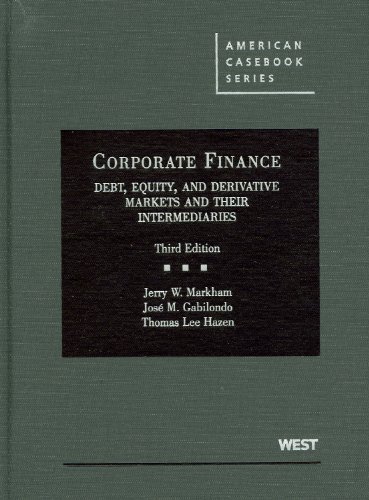
This casebook introduces students to the major instruments issued by corporations for funding and risk-management, including money market instruments, bonds and notes, junior and senior equity, government securities, futures, options, swaps, and other financial derivatives. Moving beyond the issuance market and instrument design, the book situates these instruments in their trading markets, giving students a comprehensive understanding of financial markets. The selected cases and materials highlight financial history, market structure, accounting standards, and a lawyer’s professional standards. Chapter objectives help students to track their progress. This edition has been updated to reflect recent financial reforms.
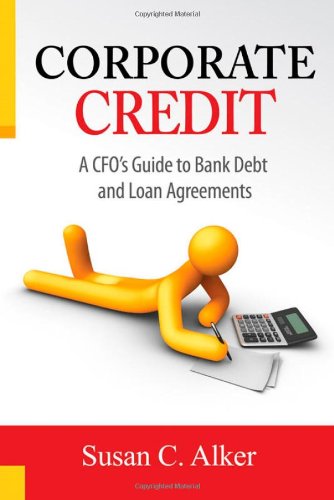
A helpful guide for CFO’s and bankers alike, this book demystifies the contents of a typical corporate loan agreement and helps make the entire loan process easier to deal with. The book outlines the steps involved in getting a loan and explains – in plain and easy-to-understand language – what the terms of the loan agreement mean. CFO’s will learn which terms in the agreement could create problems for the company and how to take steps to prevent that. And corporate borrowers and lenders alike will gain a better understanding of the steps involved in preparing to close the deal and how to make it all go smoothly.