[Crisis] Videos

Total worldwide debt is expected to continue growing over the coming months, despite having just climbed to a fresh all-time high. Given the three previous waves of global debt accumulation have all ended with financial crises, CNBC’s Sam Meredith takes a look at the risks associated with the latest build-up.
Read more:
https://www.cnbc.com/2020/01/14/global-debt-hits-all-time-high-of-nearly-253-dollars–iif-says.html
https://www.worldbank.org/en/research/publication/waves-of-debt
https://www.iif.com/Research/Capital-Flows-and-Debt/Global-Debt-Monitor
—–
Subscribe to us on YouTube: http://cnb.cx/2wuoARM
Subscribe to CNBC International TV on YouTube: https://cnb.cx/2NGytpz
Like our Facebook page:
https://www.facebook.com/cnbcinternational
Follow us on Instagram:
https://www.instagram.com/cnbcinternational/
Follow us on Twitter:
https://twitter.com/CNBCi
#CNBC #Debt #Economy

Political Advocate, Angela Rye discusses the student loan debt crisis and how African American students are disproportionately impacted by schools, government aid and more. Watch as Rye is joined by guests in this BET News Town Hall, “Young, Gifted And Broke” #StudentLoanDebt #AngelaRye #IlhanOmar
SUBSCRIBE to #BET NOW! ?? http://bit.ly/1U0v9xG
Download the BET NOW app for full episodes of your favorite BET shows and exclusive content!
Connect with BET
Web: http://www.BET.com
Facebook: http://www.facebook.com/BET
Twitter: http://www.twitter.com/BET
Instagram: http://www.instagram.com/BET
Google+: http://www.bet.us/gplusBET

This week marks a decade since the collapse of the US investment bank Lehman Brothers triggered the worst global financial crisis since the Great Depression.
What became known as the Global Financial Crisis saw banks collapse and even whole countries teeter on the brink of insolvency.
While much of the world fell into prolonged recession, Australia’s economy narrowly avoided that fate – but 10 years on, many individual Australians are still paying the price.
Now, there are new warnings from financial insiders that the global economy could be even more vulnerable to a repeat meltdown.
For more from ABC News, click here: http://www.abc.net.au/news/
Follow us on Twitter: http://twitter.com/abcnews
Like us on Facebook: http://facebook.com/abcnews.au
Subscribe to us on YouTube: http://ab.co/1svxLVE
Follow us on Instagram: http://instagram.com/abcnews_au

Dead Pledges is the first book to explore the ways that U.S. culture—from novels and poems to photojournalism and horror movies—has responded to the collapse of the financialized consumer credit economy in 2008. Connecting debt theory to questions of cultural form, this book argues that artists, filmmakers, and writers have re-imagined what it means to owe and to own in a period when debt is what makes our economic lives possible. Encompassing both popular entertainment and avant-garde art, the post-crisis productions examined here help to map the landscape of contemporary debt: from foreclosure to credit scoring, student debt to securitized risk, microeconomic theory to anti-eviction activism. A searing critique of the ideology of debt, Dead Pledges dismantles the discourse of moral obligation so often invoked to make us repay. Debt is no longer a source of economic credibility, it contends, but is a system of dispossession that threatens the basic fabric of social life.
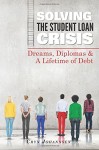
Higher education should not be a business from which many profit while millions go into a lifetime of debt! American higher education is at the point of colossal failure. Thanks to the creation of “Higher Ed Inc.,” we now live in a dysfunctional country with millions of Americans struggling to pay or completely unable to pay their student loan debts. Millions of new students going to college will end up equally in debt, saddled with loans and unable to join the middle class and enjoy the American dream. The student loan debt crisis is no longer a matter that each student or family can solve on their own. We need everyone to put our voices together to push aggressively for change. Read this book and join us if you are among the millions of current student loan debtors, future students and parents about to take out loans, or policymakers and politicians who want to help fix our broken system of higher education.
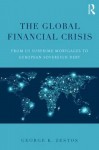
Although banking and sovereign debt crises are not unusual, the crisis that has unfolded across the world since 2007 has been unique in both its scale and scope. It has also been unusual in being both triggered by, and mainly affecting, developed economies. Starting with the US subprime mortgage crisis, and the recession in 2007-2009, the problem soon erupted into financial crisis in Europe. A few of these countries came to the brink of bankruptcy, and were rescued by the EU and the IMF on the condition they adopt austerity measures. The detrimental social effects of the crisis in both the US and Europe are still emerging.
Although there have been several studies published on the US crisis in particular, there has so far been an absence of an accessible comparative overview of both crises. This insightful text aims to fill this gap, offering a critical overview of causes, policy responses, effects and future implications. Starting with the historical context and mutation of the crisis, the book explores the policies, regulations, and governance reforms that have been implemented to cope with the US subprime mortgage crises. A parallel analysis considers the causes of the European sovereign debt crisis and the responses of the European Union (EU), examining why the EU is as yet unable to resolve the crisis. This book is supported with eResources that include essay questions and class discussion questions in order to assist students in their understanding.
This uniquely comprehensive and readable overview will be of interest and relevance to those studying financial crises, financial governance, international economics and international political economy.
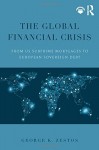
Although banking and sovereign debt crises are not unusual, the crisis that has unfolded across the world since 2007 has been unique in both its scale and scope. It has also been unusual in being both triggered by, and mainly affecting, developed economies. Starting with the US subprime mortgage crisis, and the recession in 2007-2009, the problem soon erupted into financial crisis in Europe. A few of these countries came to the brink of bankruptcy, and were rescued by the EU and the IMF on the condition they adopt austerity measures. The detrimental social effects of the crisis in both the US and Europe are still emerging.
Although there have been several studies published on the US crisis in particular, there has so far been an absence of an accessible comparative overview of both crises. This insightful text aims to fill this gap, offering a critical overview of causes, policy responses, effects and future implications. Starting with the historical context and mutation of the crisis, the book explores the policies, regulations, and governance reforms that have been implemented to cope with the US subprime mortgage crises. A parallel analysis considers the causes of the European sovereign debt crisis and the responses of the European Union (EU), examining why the EU is as yet unable to resolve the crisis. This book is supported with eResources that include essay questions and class discussion questions in order to assist students in their understanding.
This uniquely comprehensive and readable overview will be of interest and relevance to those studying financial crises, financial governance, international economics and international political economy.

The financial crisis of 2007–8 has been widely understood as a result of the financial system’s exceeding its proper place in society; the system became unbalanced, unsustainable, and deprived of a solid foundation. Even as capitalist finance seeks to reinvent itself in the wake of massive upheaval, critics continue to portray the financial system as fundamentally irrational—an unstable, destructive inventor of fictitious money. Characterizing finance in this way, however, neglects the growing connection between the worlds of high finance and consumer credit. The essays in this special issue take the financial crisis as an opportunity for much-needed conceptual innovation. Its contributors move beyond strictly moralistic criticisms of financialization to rethink core economic categories such as money, speculation, measure, value, and the wage, as well as the relationship among labor, finance, and money.
Melinda Cooper is an Australian Research Council Future Fellow in the Department of Sociology and Social Policy at the University of Sydney. She is the author of Clinical Labor: Tissue Donors and Research Subjects in the Global Bioeconomy, also published by Duke University Press. Martijn Konings is Senior Lecturer and Australian Research Council DECRA Fellow in the Department of Political Economy at the University of Sydney. He is the author of The Development of American Finance.
Contributors: Lisa Adkins, Fiona Allon, Dick Bryan, Melinda Cooper, Marieke de Goede, Chris Jefferis, Martijn Konings, Randy Martin, Michael Rafferty
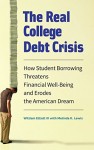
Is it still worth it for low-income students to attend college, given the debt incurred? This book provides a new framework for evaluating the financial aid system in America, positing that aid must not only allow access to higher education, but also help students succeed in college and facilitate their financial health post-college.
• Reveals the inadequacy of the scope of the current educational and economic policy debates, including moves to funnel low-income children toward two-year degrees, structure alternative debt repayment schedules, and constrain increases in college tuition
• Answers the question: “Does the student who goes to college and graduates but has outstanding student debt achieve similar financial outcomes to the student who graduates from college without student debt?”
• Examines an important subject of interest to educators, students, and general readers that is related to the larger topics of education, economics, social problems, social policy, public policy, debt, and asset building
• Provides empirical evidence and theoretical support for a fundamental shift in U.S. financial aid policy, from debt dependence to asset empowerment, including an explanation of how institutional facilitation makes Children’s Savings Accounts potentially potent levers for children’s educational attainment and economic well-being, before, during, and after college
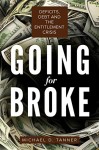
Our growing national debt has dropped out of the headlines recently—but that doesn’t mean that the problem has gone away. The national debt recently topped $17.5 trillion, and is projected to reach $27 trillion by 2024. Worse yet, if you include the unfunded liabilities of Social Security and Medicare, the U.S. real indebtedness exceeds $83 trillion. Despite these undeniable facts, politicians from both parties continue to avoid making the difficult decisions that must be made.
Social Security, Medicare, and Medicaid alone account for 48 percent of federal spending today, a portion that will only increase more rapidly with the newest entitlement program, Obamacare. The truth is that there is no way to address America’s debt problem without reforming entitlements.
Going for Broke provides a critical, in-depth analysis of these entitlement programs and lays out much needed solutions for real reform.