[Debt] Videos
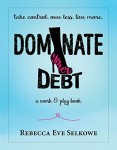
What to do to pay off debt is not a secret: throw money at it until it’s gone. Dominate Your Debt: A Work & Play Book answers the trickier question how. As in, “How do I take control of my debt, pay it off on my own terms, and still live my life?”
With humor and candor, Dominate Your Debt guides you step by step through creating a plan to pay off your debt. You will understand yourself, your debt, and your options. You will organize your financial life. You will create a payoff plan that balances paying off debt with building savings. And you will track and celebrate your progress as you implement that plan, all right in the pages of the book.
This book is the next best thing to having a sassy, savvy financial coach by your side as you tackle your debt.
You’ll find plenty of charts and numbers in this book, because, after all, debt is about numbers. But you’ll also find lots of journaling prompts, thought questions, and space to doodle, dream, and figure things out. You’re going to dig deep into your finances and your life, because being in control of debt is as much about what you do as how you feel. The work you do in this book will become your playbook for being confident and in control of your debt.
This is not a “How to get out of debt and get rich FAST!” book. This is a book for women who are committed to taking control of their debt and who crave the knowledge, structure, and loving kick in the skinny jeans to make it happen.
You won’t just learn; you will be inspired and empowered to take action. Together, we will create a personalized, unique plan for you not just to pay off your debt, but to truly dominate it.
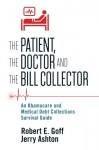
The Patient, The Doctor and Bill Collector reveals the hidden truths behind the crushing wave of medical debt drowning more than 64 million Americans.
Authors Robert E. Goff and Jerry Ashton know the inside story on medical debt. Each offers more than 40 years of experience inside the healthcare and collections industries. They team up to deliver a scathing indictment of America’s healthcare system. In simple and forceful language, they detail how present approaches are rigged to fatten the wallets of big pharmaceutical companies, insurance monopolies, and hospitals. The medical debt collections industry also waits patiently for their turn at the trough.
Beyond simply pointing out the mistakes and the greed, the two authors came up with a simple yet powerful solution: Buy medical debt on the open market, and then abolish it! Their vehicle is RIP Medical Debt, a non-profit established in 2013 for the purpose of locating, buying and then forgiving this debt as a gift to those struggling with unpaid and unpayable bills. One collections industry executive described this debt retirement plan as a “Robin Hood” approach.
The Patient, The Doctor and The Bill Collector will help you keep yourself and your family from being swept away by the tsunami of medical debt endangering our future in America You will learn from industry insiders the shocking truths that the debt collections industry, hospitals and insurance companies do not want you to know.
If you are a patient or a patient’s family member, you will learn:
More than 64 million Americans already struggle to pay medical bills. More than 15 million people will deplete their savings to cover medical bills. Health insurance is no rescue, for 80 percent of those filing bankruptcy had insurance. The security blanket of health insurance is riddled with holes and surrounded by traps.
If you are a health practitioner, hospital or physicians group, you will learn:
Pharmaceutical costs and office visit fees cause patients to skip medication and care. If you believe healthcare reform will reduce your revenue losses, think again.
The United States is the only industrialized nation with a market-based healthcare insurance system. As a result, America is destined to be the only industrialized nation to bring about a widespread debt impoverishment of its citizens.
Whether you are a patent, a doctor or a bill collector, you need this book to survive!
ABOUT THE AUTHORS
Robert E. Goff is an acknowledged expert in healthcare delivery, organization and financing with a career spanning leadership positions as a hospital administrator, regulator, managed care executive, consultant, and association executive. He serves as Executive Director and CEO of University Physicians Network (UPN) in New York City. Robert also is a corporate director and sought-after advisor to healthcare technology and care delivery companies.
Jerry Ashton is a recognized veteran of the credit and collections industry. He’s long been an outspoken critic of industry excesses. Inspired by the Occupy Wall Street movement’s “Rolling Jubilee” campaign against medical debt, he came out of semi-retirement in 2014 to co-found RIP Medical Debt with the goal of removing one billion dollars in unpaid and unpayable personal medical bills from the backs of fellow Americans. Jerry blogs at The Huffington Post and tweets as @RIPMedicalDebt.
The authors maintain a resources website for book readers at NoMoreMedicalDebt.com.
“The Debt” is the story of actor Mitchell Naughton, who plays the starring role in the new hit crime drama “Streets of the City.” His life and career are threatened with destruction when a friend from his distant past is found murdered. Returning home to Chicago, he mysteriously plunges headlong into the investigation, pulling him ever further into a vortex of deceit, danger and death, while Police close in on their number one suspect- Mitchell Naughton.
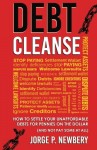
Jorge Newbery erased his debts without filing bankruptcy. Now you can, too. Like many Americans, Newbery struggled with debt. But unlike most people, he owed more than $26 million. Creditors swarmed after a natural disaster devastated his multi-million dollar business. The stress was crushing. He needed a way out — and what he discovered will amaze you. His breakthrough came practically by accident. One of his creditors made a sloppy legal mistake, and he battled the creditor all the way to the Missouri Court of Appeals. The court ruled that the entire debt — nearly $6 million — was “inadvertently extinguished.” It didn’t have to be paid. It was completely eliminated. Newbery applied the powerful techniques he had learned to all his other debts. The results were astonishing. One after another, his debts were either settled or gone forever. Now, Newbery reveals his proven debt-cleansing methods. In simple, step-by-step instructions, you’ll learn how to… Assert your rights and defend yourself against creditors. Stop making payments — and turn that to your advantage. End harassing collection calls. Dispute your debts to stack the odds in your favor. Uncover deficiencies that can put money in your pocket. Protect your assets from creditors (100% legally). Negotiate the best possible settlements. Be debt-free for life. Debt Cleanse shows you how to gain leverage over your creditors. You can settle your unaffordable debts for pennies on the dollar – and not pay some at all. Don’t let your debt burden you one more day. This book will set you free.
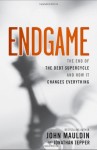
Greece isn’t the only country drowning in debt. The Debt Supercycle—when the easily managed, decades-long growth of debt results in a massive sovereign debt and credit crisis—is affecting developed countries around the world, including the United States. For these countries, there are only two options, and neither is good—restructure the debt or reduce it through austerity measures. Endgame details the Debt Supercycle and the sovereign debt crisis, and shows that, while there are no good choices, the worst choice would be to ignore the deleveraging resulting from the credit crisis. The book: Reveals why the world economy is in for an extended period of sluggish growth, high unemployment, and volatile markets punctuated by persistent recessions Reviews global markets, trends in population, government policies, and currencies
Around the world, countries are faced with difficult choices. Endgame provides a framework for making those choices.
Q&A with Authors John Mauldin and Jonathan Tepper
Author John Mauldin What is the debt supercycle? Over a period of about sixty years, debt levels grew faster than incomes. This increase in debt became particularly pronounced in the 1980s, 90s and finally went parabolic after the Federal Reserve lowered interest rates to 1% after the Nasdaq crash. The increase in debt was not just a US phenomenon. As interest rates fell structurally with the fall in inflation from 1982 onwards, people took on more debt because it became more manageable. However, by 2008 the burden of debt became too much to bear and the debt supercycle came to an end. People started deleveraging and banks started collapsing due to low levels of capital and large losses from loans people couldn’t pay back. How does the sovereign debt crisis play into this? The rapid contraction in debt levels due to default and deleveraging lead to a fall in economic activity as people started saving and cutting spending. Governments immediately stepped in and backed bank debt with explicit guarantees. Governments also started borrowing and spending to transfer money to the private sector, for example via unemployment insurance. So in a very real sense, private borrowing was replaced with public borrowing. Debt was added onto more debt. Rather than free itself of debt, the system now has more debt. The sovereign debt crisis is the recognition that most of this debt will not be paid back, and governments are making promises to pay debt and other obligations, for example general spending and pensions, that they simply lack the ability to fulfill. Author Jonathan Tepper The end of the debt supercycle and the beginning of the sovereign debt crisis present problems and challenges for investors and governments. Governments will need to either 1) inflate, 2) default or 3) devalue, which is similar to inflate. That is the way governments have historically dealt with too much debt. Some countries will experience deflation and others inflation, depending on what choices governments make. Currently governments have only bad and worse choices. Let’s hope they can choose wisely. What do you predict for the next ten years? Central banks globally have shown a predisposition to print money to solve problems. We forsee rising inflation in many parts of the world, reductions in real income as people lose purchasing power due to higher food and fuel prices and more macroeconomic volatility. Some countries that do not control their own money supply or are running pegs may experience deflation as they are forced to delever and cannot increase the money supply to counteract the weight of deleveraging. You cite the events in Greece as an example of a country continuing to run massive deficits. Is there an example of a country making a better choice? The UK is making some of the right steps to control spending, but even the UK could be more draconian. In nominal and real terms, government spending in aggregate will not be cut in the UK. Also, Iceland has made positive steps by defaulting on its debt effectively. Default is a good way to cure too much debt.
Product Features
- Great product!
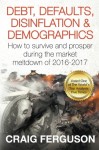
Our prediction for global economies and global asset markets heading into the turbulent 2016–2017 period is not meant to be alarmist, or a “Dr Doom” style forecast, but a realistic assessment of the facts around debt, demographics and disinflation, and then an extrapolation from those factors to individual economies and markets. Rather than simply being doomsayers, we intend to pen another book in 2017–2018, to take advantage of the expected undervaluation of global assets and economies that will occur as a result of the next recessionary phase. As such, we like to be contrarians, in both boom and bear cycles. Our strong sense is that the bull cycle that started in 2009, now nearly 7 years old, is slowly maturing. The time to make major asset allocation changes, whether you are a small investor or a major pension fund investor, is now, in advance of the turmoil. We are clear that we expect shares, property and other growth assets to fall by 30–50% in the coming 2 years. Commodities will fall by more than that, and currencies will fall by a fraction less. Either way, some major opportunities are there for the picking. We strongly advise our readers to think outside of the square, challenge consensus, be contrarian, and think for themselves, logically and sensibly. If they do, that is the path not just to profit but importantly to capital preservation in the turbulent years that lie ahead of us.
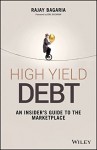
Examine the high yield market for a clear understanding of this evolving asset class
High Yield Debt is the one-stop resource for wealth advisors seeking an in-depth understanding of this misunderstood asset class. The high yield market provides a diverse opportunity set, including fixed and floating rate debt, high and low quality debt issues and both short- and long-term duration; but many fail to understand that not all high yield exposure is the same, and that different market segments and strategies work best at different points in the economic cycle. This guide addresses the confusion surrounding high yield debt. You’ll find the information you need to decide whether or not to buy in to a high yield fund, and how to evaluate the opportunities and risks without getting lost in the jargon.
The U.S. corporate high yield market is worth $2.4 trillion—more than the stock markets of most developed countries. Market growth has increased the number of funds with high yield exposure, as well as the types of debt products available for investment. This book breaks it down into concrete terms, providing the answers advisors need to effectively evaluate the opportunities on offer.
Understand the high yield asset class Learn the debt structures, performance and defaults Evaluate risk and investment opportunities Penetrate the jargon to make sense of high yield investment
Over 300 publicly traded funds provide exposure to U.S. high yield, but despite it’s size and ubiquity, understanding of the asset class as a whole remains somewhat of a rarity—even among participants. A lack of transparency is partially to blame, but the market’s evolution over the past fifteen years is the larger issue. High Yield Debt explains the modern high yield market in real terms, providing a much-needed resource for the savvy investor.
“Rajay Bagaria has written the first book that captures a 360 degree view of the high yield debt market. Whether you are an investor, investment banker, corporate lawyer, CFO or layperson simply trying to gain insights into the fundamentals of high yield debt, this book translates financial and legal concepts, trends and structures of high yield bonds and leveraged loans into a simple, understandable format. Mr. Bagaria’s book is a valuable resource for anyone involved in the new issue or secondary leveraged finance markets.”
—Frank J. Lopez, Co-Head Global Capital Markets, Proskauer
“Bagaria does a great service for both high yield professionals and beginners by providing an accessible, well-written, insightful market primer.”
—Steven Miller, Managing Director, S&P Capital IQ, Leveraged Commentary & Data
“High-Yield Debt – An Insider’s Guide to the Marketplace is a comprehensive book that provides an in-depth understanding of the history, growth, basics and details of high-debt and the high-yield market. The author gives insights that only an experienced professional can provide. The book will be invaluable to readers both starting out and knowledgeable about an important segment of corporate finance, dealing with concepts, structures and performance.”
—Arthur Kaufman, Retired Partner, Fried, Frank, Harris, Shriver & Jacobson LLP / Member of Adjunct Faculty, Columbia Law School
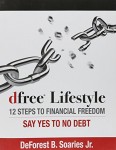
Do debt: Pay as we go use cash and debit cards rather than credit cards. Live without debt. No delinquencies: Pay bills on time avoid late payments and late fees. No deficits: Live below our means spend less than we earn. My goal is that you will discover more about yourself than you do about money by the time you complete this experience. That is why I call it the dfree® lifestyle. I never learned to manage money. What I did learn was to manage my life and then use money to reach my goals. That is what this workbook is designed to help you accomplish also. Our motto is Say Yes to No Debt. Our foundational Bible verse is Proverbs 22:7 (NIV): The rich rule over the poor; and the borrower is slave to the lender. DeForest B. Soaries, Jr.
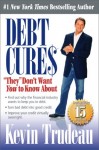
A “New York Times”-bestselling author–and one of the most controversial men in corporate America–blows the lid off the banking and credit card industries.
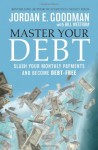
Strategies and tools to live debt free
The world of borrowing and debt management has changed dramatically, leaving people confused about how best to secure their financial future. This book is the only guide with detailed advice to help you become debt free or master the debt you have, based on the latest laws and new government programs and policies implemented under the Obama administration.
Is the information and advice on debt management different than in years past? Definitely. In this savvy, engaging guide, bestselling financial expert Jordan Goodman will tell you how to
Win the mortgage game: avoid foreclosure, obtain the best refi, and modify your mortgage even if it is “under water” Clean up your credit report and dramatically boost your credit score Negotiate new terms and payments for burdensome medical bills, student loans, and credit cards Protect yourself from the devastation of identity theft Master the new credit card rules, and avoid the rate and fee traps Learn a revolutionary strategy that will help you become mortgage free in 5 to 7 years, change the way you pay all your bills, and save hundreds of thousands of dollars
Master Your Debt recommends many pioneering strategies as it lays out an innovative plan for achieving the elusive goal of financial success. The book is filled with helpful web sites, toll free numbers, associations and government agencies, and vetted companies and services to help you implement this advice. In today’s volatile economy, getting out of debt is the key to surviving and thriving, and author Jordan Goodman provides you with the strategies and tools to live debt free.