[Debt] Videos
An exhaustive investor handbook presenting the first rigorous framework to value gold and understand gold attributes in an asset allocation. It also offers a unique perspective by taking a non-US centric view on gold investing. Contrary to popular beliefs, the US government is prone to default. Indeed, it has already defaulted in the past century (1934, 1971), incurring large losses on the back of non-residents. It is very likely it will continue to do so, and for non-US residents, holding gold is a low-cost insurance to holding US Treasuries.
The Last and Only Time America Was Free of Debt?and How It Led to the Two-Party Political System
?An engaging treatment of a topic of perennial concern and frequent misunderstanding, this lucid tale of the brief moment when the United States was debt-free should be on every Congress member’s bedside table.”?Peter J.Woolley, Professor of Comparative Politics, Fairleigh Dickinson University
When President James Monroe announced in his 1824 message to Congress that, barring an emergency, the large public debt inherited from the War for Independence, the Louisiana Purchase, and the War of 1812 would be extinguished on January 1, 1835, Congress responded by crafting legislation to transform that prediction into reality. Yet John Quincy Adams,Monroe’s successor, seemed not to share the commitment to debt freedom, resulting in the rise of opposition to his administration and his defeat for reelection in the bitter presidential campaign of 1828. The new president, Andrew Jackson, was thoroughly committed to debt freedom, and when it was achieved, it became the only time in American history when the country carried no national debt. In A Nation Wholly Free: The Elimination of the National Debt in the Age of Jackson, award-winning economic historian Carl Lane shows that the great and disparate issues that confronted Jackson, such as internal improvements, the ?war” against the Second Bank of the United States, and the crisis surrounding South Carolina’s refusal to pay federal tariffs, become unified when debt freedom is understood as a core element of Jacksonian Democracy.
The era of debt freedom lasted only two years and ten months. As the government accumulated a surplus, a fully developed opposition party emerged?the beginning of our familiar two-party system?over rancor about how to allocate the newfound money. Not only did government move into an oppositional party system at this time, the debate about the size and role of government distinguished the parties in a pattern that has become familiar to Americans. The partisan debate over national debt and expenditures led to poorly thought out legislation, forcing the government to resume borrowing. As a result, after Jackson left office in 1837, the country fell into a major depression. Today we confront a debt that exceeds $17 trillion. Indeed, we have been borrowing ever since that brief time we freed ourselves from an oversized debt. A thoughtful, engaging account with strong relevance to today, A Nation Wholly Free is the fascinating story of an achievement that now seems fanciful.

Anyone dealing with any aspect of debt advice needs to have an up-to-date copy of this Handbook on their desk. It contains all the essential information needed by advisers dealing with debt problems, and explains the key stages and issues in money advice. This new edition has been revised and updated with recent changes to legislation, caselaw, court procedure and practice. It covers payday loans and the sweeping changes to bailiffs’ powers and fees taking place in April 2014, together with new guidance. It also covers changes to the consumer credit regime following the Financial Conduct Authority taking over as regulator. The Debt Advice Handbook gives practitioners a comprehensive guide to the money advice process in England and Wales. It explains the key stages and issues in money advice and provides guidance on interviewing clients; dealing with emergencies; establishing liability for debts; income maximisation; prioritising debts; preparing financial statements and negotiating with creditors. As well as outlining the debt advice process, it helps advisers choose the most effective strategies and deal with unacceptable debt collection practices. There are sections covering business and student debts, and court action by creditors to recover debts and repossess property/goods. Further sections deal with enforcement in magistrates’ courts, bailiffs, and insolvency. The Handbook is written for money advisers, welfare rights workers, social workers, solicitors, housing officers, consumer advisers, bank and building society staff and other financial advisers, and is supplied to all Citizens Advice Bureaux in England and Wales. And as The Times says – .’people in debt may also find it useful as a self-help guide.’
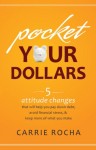
Popular Personal Finance Blogger Gives the Secret to Lasting Financial Health
Countless free budget plans are available for every possible income level and stage of life. So why do more than 60 percent of U.S. households still live paycheck to paycheck? The key to financial stability and success isn’t just about money–it’s about attitudes.
Rocha uses the lessons she learned overcoming personal debt to teach readers how to triumph over the lies we tell ourselves, such as “I deserve a treat,” “Fake it till you make it,” and “I can’t afford it.” Each chapter uses real-life examples to explain faulty thinking about money, followed by step-by-step instructions for how to overcome these pitfalls. Budgets are helpful, but real change won’t happen without a financial attitude adjustment.
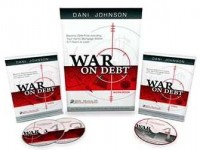
In this proven debt elimination home study program, you will discover how to pay off your debt WITHOUT increasing your income, how to use a simple debt elimination strategy to keep track of your personal War on Debt, step-by-step instructions to bring your accounts to zero, the difference between wise and foolish spending, how to uncover excess spending and use that money to quickly pay down your high interest accounts, and the reasons why it is so important to get out of debt now before the current economic conditions devastate you.
War on Debt is a proven debt elimination formula that has already helped tens of thousands of people pay off tens of millions of dollars in debt in just a few short years. Dani Johnson’s War on Debt Home Study Program will give you all the tools you need to experience the total freedom of being completely debt free!
When Rook Collins woke up in the morning, he had no idea that by the end of the day he would save his suicidal brother’s life, receive a lap dance from a nurse who had saved his life on a distant battlefield, and be marked for death by a vicious gang of sadistic killers. When the skull of an infamous mass murderer is discovered in a canyon in Mexico, Agents Ferrous and Delphi are assigned to the task of learning what befell the former agent, but what they uncover could expose a threat to humanity unlike anything they could have imagined.
In 2013, student loan debt in the US passed $1 trillion. That’s more than our total amount of credit card debt and automobile debt. Graduates are starting out with poor employment prospects, obscene levels of debt, and few tools to help. Adam S. Minsky is a leading expert in student loan debt. He is renowned as a pioneer in student loan law as the founder of one of the first law firms in the country devoted entirely to helping student borrowers. With few resources available for student borrowers navigating byzantine repayment systems, he wrote this book as a practical, easy-to-read guide for managing your student debt. Whether your loans are federal or private, in good standing or in default, this guide identifies your options and helps you determine the best way forward.
America is currently involved in one of the worst economic crises of modern times. As alarm increases over how the government will balance the budget, handle the debt, and maintain prosperity for the future, the minutia of debts and deficits remains incomprehensible to many. Why is it so hard to find ways to resolve the fiscal crisis? This brief and intelligible book is a guide to understanding both the difficulties involved in managing the federal budget and why the on-going fiscal crisis is so significant for America’s future.
In order to introduce the reader to the basic composition of federal spending and to the ways that the government raises revenue, Hudson begins his guide with a “map” clarifying how to navigate the federal budget. He defines basic financial vocabulary and outlines concepts by using clear charts and diagrams that both provide basis for discussion and illustrate key points. With this budget map in mind, the second part of the book lays out how the partisan divide in America helps explain the fiscal crisis. Hudson analyzes the debate on the extent of the fiscal crisis, the ways that political parties have tried to solve it, and the political events and institutions that have surrounded the crisis.
This citizen’s guide reveals how differing views of America inform the arguments over deficits and debt. By the time readers finish the book, they will understand that the conflict over deficits and debt is not simply about where to cut or add spending, but instead is a struggle over national priorities and visions for the future.
If you are one of the millions of people who have hundreds or even thousands of dollars of credit card debt and want to seriously get out of debt and live debt free, then this simple, step-by-step, easy to follow plan is for you. In this book, you will have all the tools you need to get out of debt and stay out of debt. You will discover how to get control of your finances, how to create a monthly cash budget, how to eliminate credit card debt quickly, and have the skills you need to master your money. Start today and get serious about getting out of debt and saying goodbye to credit card debt for good. You CAN experience true financial freedom.