[Debt] Videos

In 1985, Frederic C. Lane and Reinhold C. Mueller published the magisterial Money and Banking in Medieval and Renaissance Venice, Volume 1: Coins and Moneys of Account. Now, after ten years of further research and writing, Reinhold Mueller completes the work that he and the late Frederic Lane began.
The history of money and banking in Venice is crucial to an understanding of European economic history. Because of its strategic location between East and West, Venice rapidly rose to a position of preeminence in Mediterranean trade. To keep trade moving and credit available from London to Constantinople and beyond, Venetian merchants and bankers created specialized financial institutions to serve private entrepreneurs and public administrators: deposit banks, foreign exchange banks, the grain office, and a bureau of the public debt. This new volume clarifies Venice’s pivotal role in Italian and international banking and finance. It also sets banking–and panics–in the context of more generalized and recurrent crises involving territorial wars, competition for markets, and debates over interest rates and the question of usury.
“The single aspect that most characterizes Venetian history and historiography is the dominant role of the state in the life of the city and the symbiosis between public and private sectors of the economy, between public and private interests….A primary concern of civil authorities was to create an atmosphere of competitive opportunity on the Rialto conducive to investment, that is, to the influx of money and goods, their turnover in Venice, and their eventual outflow.”–From The Venetian Money Market
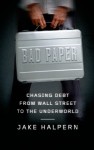
A trip to the underworld of debt collection, where bankers team up with ex-burglars and few rules apply
Bad Paper is a riveting exposé, a moving story of an unlikely friendship, and a gritty narrative of how scrappy entrepreneurs profit from our debts. Jake Halpern introduces us to a former banking executive and a former armed robber who become partners and go in quest of “paper”—the uncollected debts that are sold off by banks for pennies on the dollar. As Halpern shows, the world of consumer debt collection is a wild and unregulated shadowland, where operators may misrepresent a debtor’s situation, make illegal threats, and even lay claim to debts that are not theirs to collect in the first place. It is a realm of indelible individuals who possess a swagger and vocabulary that even David Mamet could not invent. Halpern follows his collectors as they intimidate competitors with weapons, manage high-pressure call centers, and scheme new ways to benefit from American’s debt-industrial complex. He also explores the history of collection agencies and reveals the human cost of a system that leaves hardworking Americans with little opportunity to retire their debts in a reasonable way. The result is a bravura work of storytelling that is also an important consciousness-raiser.

Examining the causes of the acute Latin American debt crisis that began in mid-1982, North American analysts have typically focused on deficiencies in the debtor countries’ economic policies and on shocks from the world economy. Much less emphasis has been placed on the role of the region’s principal creditors–private banks–in the development of the crisis. Robert Devlin rounds out the story of Latin America’s debt problem by demonstrating that the banks were an endogenous source of instability in the region’s debt cycle, as they overexpanded on the upside and overcontracted on the downside.
Originally published in 1993.
The Princeton Legacy Library uses the latest print-on-demand technology to again make available previously out-of-print books from the distinguished backlist of Princeton University Press. These paperback editions preserve the original texts of these important books while presenting them in durable paperback editions. The goal of the Princeton Legacy Library is to vastly increase access to the rich scholarly heritage found in the thousands of books published by Princeton University Press since its founding in 1905.

If you’re tired of living in debt and ready for financial independence, then Debt Free & Set for Life is your solution. Management consultant Les J. Tripp shows you how to become successful and achieve genuine wealth in every area of your life.Utilizing tried-and-true concepts of responsibility, hard work, and dedication, Tripp reveals how you can take control of your debts and credit nightmares to completely change your life. Tripp discusses the emotional impact of debt, the power money has over our lives, and even the way money contributes to our social standing. He also helps you analyze your spending habits, explains the difference between debt and equity, and explores the numerous benefits of investments.The road to financial success is not the path of least resistance, but with a true commitment to creating a better financial portfolio, you can enjoy financial freedom. Find relief from debt and pursue the lifestyle you were meant to have: Debt Free & Set for Life!
Product Features
- ISBN13: 9780595447411
- Condition: New
- Notes: BRAND NEW FROM PUBLISHER! 100% Satisfaction Guarantee. Tracking provided on most orders. Buy with Confidence! Millions of books sold!
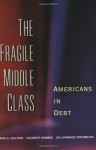
More than a million American families now file for federal bankruptcy annually, and many more are perilously close to financial disaster. In this important analysis of hard-pressed families, recently featured in articles in Newsweek, Forbes, Chronicle of Higher Education, and the New York Times, the authors discover that financial stability for many middle-class Americans is all too fragile. The authors consider the changing cultural and economic factors that threaten financial security and what they imply for the future vitality of the middle class.
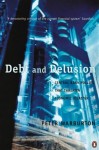
There is an unexploded bomb in the global financial system, threatening to bring the greatest disruption to the lives of people since the Depression on the 1930s. This potential explosion has been created by dereliction of duty by the world’s largest central banks, which have helped to create an unsustainable illusion of personal wealth and national prosperity, exposing the public to uninsurable risks in the process. This volume looks at how this economic timebomb has been created by unchecked credit expansion and the potential havoc it could wreak.


The Eurozone crisis which started in spring 2010 as a Greek budget crisis has alerted Europeans that the issue of defaulting sovereigns is not one reserved just for the poor and poorest countries on this globe. The crisis painfully amplified that developed countries, too, might be hit by this phenomenon. To be sure, this insight is far from novel – the history of defaulting states reaches back into history for at least two millennia. And yet, lawyers have surprisingly abstained more or less completely from discussing this subject and developing possible solutions. Beginning with the Argentina crisis in 2001, this neglect began to vanish to a certain degree and this movement got some momentum in 2010 by the Eurozone crisis. The present book collects contributions from authors, most of whom have participated in a conference on this issue in January 2012 at the Humboldt-Universität zu Berlin. The presentations, thus, provide a unique overview of the present discussion both from an economic and legal perspective.

You can use these letters as they are, modify them to suit your needs or your business or just use one sentence from a letter. Each letter should be on your company letterhead and include your company name, address, phone and fax, web address, email and any other contact information. The letters that get the best results are not “form” letters. If a letter looks like a form letter it loses some of its punch. The most effective letters are short, to the point and easy to read. Try to avoid long or confusing words and sentences. The more direct, the fewer misunderstandings. Have someone read your letter and see if they totally understand it. If they do, then chances are your debtor will, too. Your letter is a reflection of your business; keep it professional. Remember that your letter is to persuade someone to send you money. Your wording and tone are critical, especially if this is a customer you want to continue to do business with. Always assume the debtor will pay. Enclosing an envelope for payment is always a good idea. You can also include an envelope with postage. The easier you make it for the debtor to make payment, the better your chances are of receiving that payment. Collection letters should do two things: retain customer good will and help you get paid. You know a letter works well when you do a mailing and your phone rings off the hook when everyone receives their letters. If you send out a letter and there is no response, you need to re-work your letter.