[Debt] Videos
Article by Irving Fisher (1936), Professor Emeritus of Economics, Yale University, urges Congress to take back the Constitutional money power, redeem the national debt, require banks’ demand deposit to be 100% liquid, to avoiding an inelastic loan structure that bursts, leaving frozen loans behind, and avoid ‘Global Financial Crises’. Includes a brief biography of Irving Fisher.
Debt Cures 2014′ gives you MORE ways to reduce your debt along with BRAND NEW techniques how to build wealth and raise large amounts of cash. ‘Debt Cures 2014’ is a revised, more up to date version of Debt Cures.
Refer to this financial management guide to help you gain control of your personal finances from assessment to budgeting to home ownership. The tips included will be beneficial for everyone in your family regarding money and credit issues. You will learn the differences in needs versus wants, creating a manageable budget, saving for future expenditures, paying off debt, and housing related rights and responsibilities.
Live, laugh, learn….This is the workbook to complement the audio and text of Good Debt, Bad Debt (Penguin 2005, 2007). It is also used at SFLToday.org Workshops and in our video classes and as the starter courses for those personally coached by Jon Hanson. The workbook contains approximately 80 pages. Several original cartoons and slightly sarcastic expanded explanations on Houses, Spouses, and Cars! Oh my! Here is a breakdown of topics (aside from an overall understanding of debt and time). Table of Contents Preface: It’s about time and money! 4 Positive Thinking Isn’t Enough 6 Habit 7 The Daily Practice 7 Most Everything Good Happens in the First Six Feet 7 The Picture of Good Stewardship 9 The Practice of Good Stewardship 10 The Promise of Good Stewardship 12 I Know, You’re Different, Snowflake… 12 Good Debt, Bad Debt Workbook 17 Q&A Chapter 1- The Debt Effects, the Invisible Hand of Debt 18 Q&A Chapter 2- Emotional Hostage: How Do I Get Free From Me? 19 Q&A Chapter 3- Burn Rate: Spending. Not Income, Determines Wealth 21 Q&A Chapter 4- Delayed Gratification Don’t Wait to Get It! 23 Q&A Chapter 5 – I Don’t Know About My Past, But My Future is Spotless. 26 Q&A Chapter 6 – What if You Live? 29 Q&A Chapter 7- Real Estate 34 Real estate rant: 35 Q&A Chapter 8 – Driving My Life Away 40 Car Salesman: 42 Q&A Chapter 9 – Do I Have Records? 43 Tax rant: 46 Q&A Chapter 10 -You Married Who? 46 Q&A Chapter 11 – Debt Warfare: When Push Comes to Shove 51 Negligent Spendicide?: 54 Teach your children well… 55 References 55 10 Year Guarantee 57 (Test Only 16 pages) Stewardship for Life’s Financial Literacy Basics 58 Test Answer Key Only 123 questions 74
“Life is great when you spend less than you make!” SFLToday.org “Emotional spending is the ‘drunk driving’ of financial stewardship.” Jon Hanson, March 5, 2014
The financial crisis is destroying wealth but is also a remarkable opportunity to uncover the ways by which debt can be used to regulate the economic system. This book usesfour case studies of cooperatives to give an in-depth analysis on how they have braved the crisis and continued to generate wealth.
Most books on this subject will teach you to first pay off your debt before doing anything else. In this book, Curt Whipple explains how FOCUSING on paying off your debt can be the key to your downfall and total frustration.
Curt Whipple teaches you the keys to becoming FINANCIALLY FREE and in the process you will also become debt free.
KEYS like:
-How to become Financially Free, on your current income, without changing jobs,and regardless of your debt.
-Why focusing on debt can keep you broke forever!
-What Financially Free people do, that Broke people do not.
-How to find $300-$600 of extra cash each month. (money you never knew you had!)
-How $8,000 invested can secure a comfortable retirement.
-How to generate over $105,000 with pocket change.
Put the most valuable business tool to work for you!
The balance sheet is the key to everything–from efficient business operation to accurate assessment of a company’s worth. It’s a critical business resource–but do you know how to read it? How to Read a Balance Sheet breaks down the subject into easy-to-understand components.
If you’re a business owner or manager, this book helps you . . . Manage working capital Generate higher returns on assets Maximize your inventory dollars Evaluate investment opportunities
If you’re an investor, this book helps you . . . Determine the market value of a company’s assets and operations Predict future earnings and trends Assess the impact of capital expenditures Identify potential “red flags” before the crowd
How to Read a Balance Sheet gives you the bottom line of what you need to know about:
Cash Flow * Assets * Debt * Equity * Profit and how it all comes together.
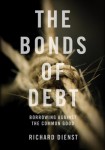
The credit crisis has pushed the whole world so far into the red that the gigantic sums involved defy understanding. On a human level, what does such an enormous degree of debt and insolvency mean? In this timely book, cultural critic Richard Dienst considers the financial crisis, global poverty, media politics and radical theory to parse the various implications of a world where man is born free but everywhere is in debt.
Written with humor and verve, Bonds of Debt ranges across subjects—such as Obama’s national security strategy, the architecture of Prada stores, press photos of Bono, and a fairy tale told by Karl Marx—to capture a modern condition founded on fiscal imprudence. Moving beyond the dominant pieties and widespread anxieties surrounding the topic, Dienst re-conceives the world’s massive financial obligations as a social, economic, and political bond, where the crushing weight of objectified wealth comes face to face with new demands for equality and solidarity. For this inspired analysis, we are indebted to him.
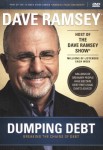
Do you want to build weath and…
Change your family tree?
Provide some security for your retirement years?
Give a large portion of your wealth to charity?
Well, it’s time to dump your debt and make this a reality!
In this 106-minute Financial Peace University lesson, Dave shows you how to become debt free as he walks you through the necessary steps and details of dumping debt with the Debt Snowball method.
DVD Region1 DVD Playable in Bermuda, Canada, United States and U.S. territories. Please check if your equipment can play DVDs coded for this region.
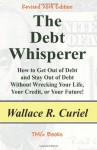
From the author of Money Well Saved comes a new slant and different thinking on getting out of debt and staying out of debt from now on! You will learn why, if debt is a problem for you, it is not your most pressing financial concern. And you will learn how to settle your debts in a way that is in your own best interests. I am the author of this book and I was once unemployed, broke (which I define as having no savings!) and over $50,000 in debt. But I was able to become totally debt-free in just a few years while building my savings at the same time! You can do the same! In this book you will learn my simple secrets to debt-free and prosperous living.