[Debt] Videos
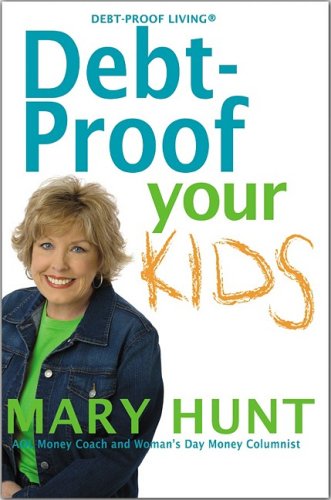
What grade would you give your parents for how well they prepared you to manage your finances? What grade will your kids give you someday? At best you have 18 years to teach your kids how to manage money skillfully. So how do you accomplish this overwhelming challenge? Don’t panic! Everything you need to get the job done is right here in this book. Think it’s too late to debt-proof your kids? It’s only too late if you don’t start NOW!
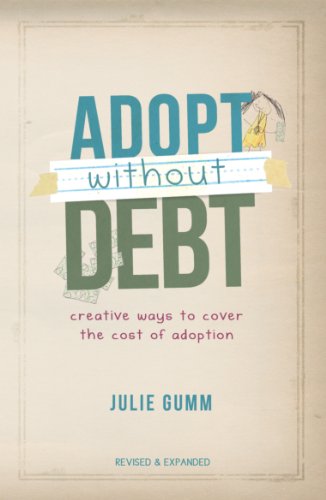
In 2000, Julie and her husband, Mark, declared war on their debt credit cards, student loans, cars and the house. Seven years later, as they wrote the check for their last mortgage payment, God called them to adopt two children from Ethiopia. A few months later, with their income unexpectedly cut by two-thirds, they wondered if they could finish the adoption without crossing back over into the red.
When they brought Wendemagegn and Beza home 12 months later, Julie and her husband proved debt-free adoption is possible!
Passionate about helping others achieve their adoption dream, Julie shares how to find extra money in your household budget, apply for grants, and fundraise in order to build your family without saddling it with debt.
With over $80,000 worth of creative fundraising ideas from more than 30 adoptive families, the second edition of Adopt Without Debt shows you how to fulfill your adoption dream without signing away your financial freedom.
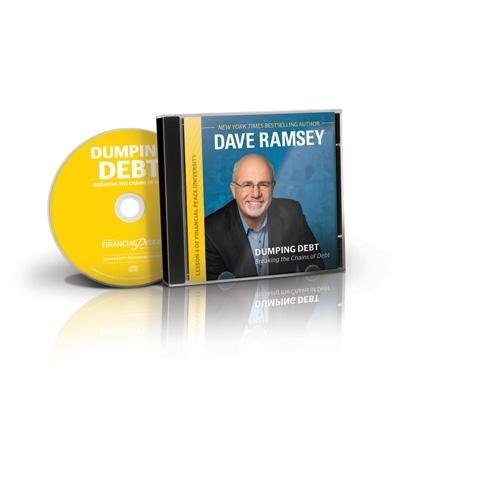
In this core Financial Peace University lesson, Dave shows you how to become debt free as he walks you through the necessary steps and details of dumping debt with the Debt Snowball method.

The practice of charging interest on loans has been controversial since it was first mentioned in early recorded history. Lending is a powerful economic tool, vital to the development of society but it can also lead to disaster if left unregulated. Prohibitions against excessive interest, or usury, have been found in almost all societies since antiquity. Whether loans were made in kind or in cash, creditors often were accused of beggar-thy-neighbor exploitation when their lending terms put borrowers at risk of ruin. While the concept of usury reflects transcendent notions of fairness, its definition has varied over time and place: Roman law distinguished between simple and compound interest, the medieval church banned interest altogether, and even Adam Smith favored a ceiling on interest. But in spite of these limits, the advantages and temptations of lending prompted financial innovations from margin investing and adjustable-rate mortgages to credit cards and microlending.
In Beggar Thy Neighbor, financial historian Charles R. Geisst tracks the changing perceptions of usury and debt from the time of Cicero to the most recent financial crises. This comprehensive economic history looks at humanity’s attempts to curb the abuse of debt while reaping the benefits of credit. Beggar Thy Neighbor examines the major debt revolutions of the past, demonstrating that extensive leverage and debt were behind most financial market crashes from the Renaissance to the present day. Geisst argues that usury prohibitions, as part of the natural law tradition in Western and Islamic societies, continue to play a key role in banking regulation despite modern advances in finance. From the Roman Empire to the recent Dodd-Frank financial reforms, usury ceilings still occupy a central place in notions of free markets and economic justice.
Product Features
- Used Book in Good Condition
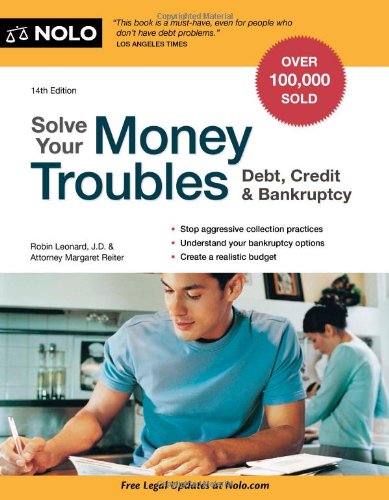
Feeling overwhelmed by your debts? If you’re ready to regain your financial freedom, feeling the squeeze of the housing bust or simply get smarter about managing your money, you’ll find everything you need in this complete guide. Solve Your Money Troubles shows you how to:
. prioritize debts
. create a budget
. negotiate with creditors
. stop collector harassment
. challenge wage attachments
. contend with repossessions
. respond to creditor lawsuits
. qualify for a mortgage
. rebuild credit
. decide if bankruptcy is the right option for you
To make the process easier, Solve Your Money Troubles includes sample letters to creditors, as well as worksheets and charts to calculate your debts and expenses.
An accessible guide to the essential elements of debt markets and their analysis
Debt Markets and Analysis provides professionals and finance students alike with an exposition on debt that will take them from the basic concepts, strategies, and fundamentals to a more detailed understanding of advanced approaches and models.
Strong visual attributes include consistent elements that function as additional learning aids, such as: Key Points, Definitions, Step-by-Step, Do It Yourself, and Bloomberg functionalityOffers a solid foundation in understanding the complexities and subtleties involved in the evaluation, selection, and management of debtProvides insights on taking the ideas covered and applying them to real-world investment decisions
Engaging and informative, Debt Markets and Analysis provides practical guidance to excelling at this difficult endeavor.
Product Features
- Used Book in Good Condition

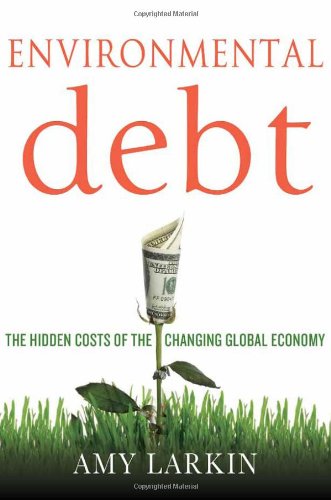
An award-winning environmental activist and social entrepreneur exposes the link between our financial and environmental crises
For decades, politicians and business leaders alike told the American public that today’s challenge was growing the economy, and that environmental protection could be left to future generations. Now in the wake of billions of dollars in costs associated with coastal devastation from Hurricane Sandy, rampant wildfires across the West, and groundwater contamination from reckless drilling, it’s becoming increasingly clear that yesterday’s carefree attitude about the environment has morphed into a fiscal crisis of epic proportions.
Amy Larkin has been at the forefront of the fight for the environment for years, and in Environmental Debt she argues that the costs of global warming, extreme weather, pollution and other forms of “environmental debt” are wreaking havoc on the economy. Synthesizing complex ideas, she pulls back the curtain on some of the biggest cultural touchstones of the environmental debate, revealing how, for instance, despite coal’s relative fame as a “cheap” energy source, ordinary Americans pay $350 billion a year for coal’s damage in business related expenses, polluted watersheds, and in healthcare costs. And the problem stretches far beyond our borders: deforestation from twenty years ago in Thailand caused catastrophic flooding in 2011, and cost Toyota 3.4 percent of its annual production while causing tens of thousands of workers to lose jobs in three different countries.
To combat these trends, Larkin proposes a new framework for 21st century commerce, based on three principles: 1) Pollution can no longer be free; 2) All business decision making and accounting must incorporate the long view; and 3) Government must play a vital role in catalyzing clean technology and growth while preventing environmental destruction. As companies and nations struggle to strategize in the face of global financial debt, many businesses have begun to recognize the causal relationship between a degraded environment and a degraded bottom line. Profiling the multinational corporations that are transforming their operations with downright radical initiatives, Larkin presents smart policy choices that would actually unleash these business solutions to many global financial and environmental problems.
Provocative and hard-hitting, Environmental Debt sweeps aside the false choices of today’s environmental debate, and shows how to revitalize the economy through nature’s bounty.
For debtors everywhere who want to understand how the system really works, this handbook provides practical tools for fighting debt in its most exploitative forms. Over the last 30 years as wages have stagnated across the country, average household debt has more than doubled. Increasingly, people are forced to take on debt to meet their needs; from housing to education and medical care. The results—wrecked lives, devastated communities, and an increasing reliance on credit to maintain basic living standards—reveal an economic system that enriches the few at the expense of the many. Detailed strategies, resources, and insider tips for dealing with some of the most common kinds of debt are covered in this manual, including credit card debt, medical debt, student debt, and housing debt. It also contains tactics for navigating the pitfalls of personal bankruptcy, as well as information on how to be protected from credit reporting agencies, debt collectors, payday lenders, check-cashing outlets, rent-to-own stores, and more. Additional chapters cover tax debt, sovereign debt, the relationship between debt and climate, and an expanded vision for a movement of mass debt resistance.
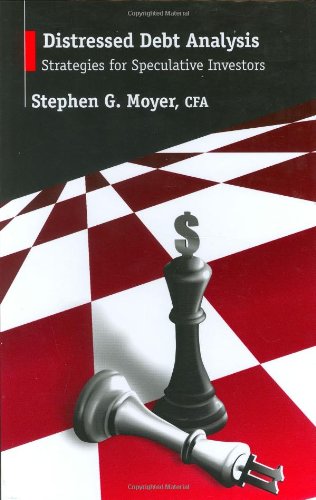
Moyer provides the insight, in-depth analysis and strategies necessary to invest successfully in the securities of financially distressed companies. This high-risk, high-reward $400 billion market is more for institutional investors and often trades in blocks of $1-$5 million.
Product Features
- Used Book in Good Condition