[Economic] Videos

Shocking video of the imminent economic collapse and next Great Depression.
Temporary prosperity that is created by exploding levels of debt is not actually prosperity at all. At this moment, the U.S. government is 22 trillion dollar in debt, and we have been adding an average of more than a trillion dollars a year to that debt since 2009. And if we stay on the path that we are currently on, the trajectory of our debt will soon accelerate dramatically causing the biggest economic collapse in our lifetime.
In fact, as you will see below, the Congressional Budget Office is now projecting that the U.S. national debt will reach 99 trillion dollars by 2048 if nothing changes. Congressional Budget Office projections always tend to be overly optimistic, and so the reality will probably be much worse than that. Of course we will never actually see the day when our national debt reaches 99 trillion dollars. A major economic collapse and the biggest stock market crash will happen long before we ever get to that point. In our endless greed, we are literally destroying America, and emergency action must be taken immediately if we are to survive.
Let me try to put this into perspective. Not too long ago, Venezuela was once one of the wealthiest countries in South America. These days, many Americans like to laugh at them, but we are on the exact same path that Venezuela has gone down with their horrific economic collapse. Eventually, the day comes when there is not enough of someone else’s money to spend, and suffocating levels of debt make the option of printing giant mountains of money too tempting to resist. At that point it is just a matter of time before a huge stock market crash and society devolves into chaos.
The same principle is going to also apply on a global scale. The U.S. government is now more than 22 trillion dollars in debt, and the entire globe is now more than 250 trillion dollars in debt, and global economic collapse is coming.
Twenty years ago there was $40 trillion of debt in the world today there is $250 trillion worth of debt in the world.
It would take an unprecedented effort to turn things around, but right now hardly anyone seems concerned about bringing all of this debt under control. So we continue to roll on toward our date with economic collapse, and most people are completely oblivious to what is about to happen to us. A horrific stock market crash and economic collapse is coming.
COURTESY:
Script: Michael Snyder http://www.theeconomiccollapseblog.com
Music: CO.AG Music https://www.youtube.com/channel/UCcavSftXHgxLBWwLDm_bNvA
Fair Use Notice: This video contains some copyrighted material whose use has not been authorized by the copyright owners. We believe that this not-for-profit, educational, and/or criticism or commentary use on the Web constitutes a fair use of the copyrighted material (as provided for in section 107 of the US Copyright Law. If you wish to use this copyrighted material for purposes that go beyond fair use, you must obtain permission from the copyright owner. Fair Use notwithstanding we will immediately comply with any copyright owner who wants their material removed or modified, wants us to link to their web site, or wants us to add their photo.
Most of artwork that are included with these videos have been created by Epic Economist and they are used as a representation of the subject matter. The representative artwork included with these videos shall not be construed as the actual events that are taking place.
Anything that is said on the video is either opinion, criticism, information or commentary, If making any type of investment or legal decision it would be wise to contact or consult a professional before making that decision.
Use the information found in these videos as a starting point for conducting your own research and conduct your own due diligence before making any significant investing decisions.
Support My Channel! Download Free ?? Vikings War Of Clans Here
? IOS: https://bit.ly/2BI9QjX
? Android: https://bit.ly/2Sg3mOI
And Get 200 ? Gold, And a ? Protective Shield for FREE
Shocking video of the imminent economic collapse and the next Great Depression.
The borrower is the servant of the lender, and one of the primary ways that the elite keep the rest of us subjugated: is through the 244 trillion dollar mountain of global debt that has been accumulated. Every single day, the benefits of our labor are going to enrich somebody else. A portion of the taxes that are deducted from your paycheck is used to pay interest on government debt. A portion of the profits that your company makes probably goes to servicing some form of business debt. And most Americans are continuously making payments on their mortgages, their auto loans, their credit card balances and their student loan debts. But most people never stop to think about who is becoming exceedingly wealthy on the other end of these transactions. Needless to say, it isn’t the 46 percent of the global population that is living on less than 5.50 dollar a day.
The world has never seen anything like this 244 trillion dollar debt ever before, and one of the central themes of Epic Economist youtube channel is that all of this debt will ultimately destroy our society and causing a major economic collapse. According to the Institute of International Finance, the total amount of global debt is now “more than three times the size of the global economy”…
Today, we are living in the terminal phase of the biggest debt bubble in the history of the planet. Every debt bubble eventually ends with horrific economic collapse, and this one will too.
It isn’t an accident that the United States are 22 trillion dollars in debt. The truth is that the debt-based Federal Reserve is doing exactly what it was originally designed to do. And no matter what politicians will tell you, we will never have a permanent solution to our debt problem until we get rid of the Federal Reserve.
In 2017, interest on the national debt will be nearly a trillion dollar. That means that close to 1000 billion of our tax dollars will go out the door before our government spends a single penny on the military, on roads, on health care or on anything else. And we continue to pile up debt at a rate of more than 200 million dollar an hour. According to the Congressional Budget Office, the federal government will add more than a trillion dollars to the national debt once again in 2019…
When economy comes crashing down and a great crisis happens, we are going to have a choice.
We could try to rebuild the fundamentally flawed old system, or we could scrap it and start over with something much better. My hope is that we will finally learn our lesson and discard the debt-based central banking model for good. The reason why I am writing about this so much ahead of time is so that people will actually understand why the coming economic collapse is happening as it unfolds.
If we can get everyone to understand how we are being systematically robbed and cheated, perhaps people will finally get mad enough to do something about it.
COURTESY: The Economic Collapse Blog – http://www.theeconomiccollapseblog.com
Music: CO.AG Music https://www.youtube.com/channel/UCcavSftXHgxLBWwLDm_bNvA
Fair Use Notice: This video contains some copyrighted material whose use has not been authorized by the copyright owners. We believe that this not-for-profit, educational, and/or criticism or commentary use on the Web constitutes a fair use of the copyrighted material (as provided for in section 107 of the US Copyright Law. If you wish to use this copyrighted material for purposes that go beyond fair use, you must obtain permission from the copyright owner. Fair Use notwithstanding we will immediately comply with any copyright owner who wants their material removed or modified, wants us to link to their web site, or wants us to add their photo.
Most of artwork that are included with these videos have been created by Epic Economist and they are used as a representation of the subject matter. The representative artwork included with these videos shall not be construed as the actual events that are taking place.
Anything that is said on the video is either opinion, criticism, information or commentary, If making any type of investment or legal decision it would be wise to contact or consult a professional before making that decision.
Use the information found in these videos as a starting point for conducting your own research and conduct your own due diligence before making any significant investing decisions.
In this innovative legal history of economic life in the Western Indian Ocean, Bishara examines the transformations of Islamic law and Islamicate commercial practices during the emergence of modern capitalism in the region. In this time of expanding commercial activity, a mélange of Arab, Indian, Swahili and Baloch merchants, planters, jurists, judges, soldiers and seamen forged the frontiers of a shared world. The interlinked worlds of trade and politics that these actors created, the shared commercial grammars and institutions that they developed and the spatial and socio-economic mobilities they engaged in endured until at least the middle of the twentieth century. This major study examines the Indian Ocean from Oman to India and East Africa over an extended period of time, drawing together the histories of commerce, law and empire in a sophisticated, original and richly textured history of capitalism in the Islamic world.
Public debt has become a severe problem for a great many economies. While the effects of tax policies on the allocation of resources are readily derived, the mechanisms that make public deficits and debt influence the economy are not so easily understood. This book elaborates on the effects of public debt starting from the intertemporal budget constraint of the government. It is shown under which conditions a government can stick to the intertemporal budget constraint and then, demonstrated how public debt affects the growth process and welfare in market economies. The effects are derived for models with complete labor markets as well as taking into account labor market imperfections. The focus in this book is on fiscal policy issues, but it also deals with monetary policy aspects. The theoretical analysis is complemented with empirical time series analyses on debt sustainability and with panel studies dealing with the relationship between public debt and economic growth.
?Despite clear danger and explicit warnings, the United States of America?distracted by short-term challenges and its own political dysfunction?is steaming toward its own collision, one with long-term debt.”
Philanthropist, businessman, and former secretary of commerce Peter G. Peterson argues that we can no longer ignore the long-term debt challenges facing our country, because our economic future depends on it. The gross federal debt now exceeds $17 trillion and it is expected to rise rapidly in the decades to come. If the growing gap between projected spending and revenues continues to widen, our federal debt is projected to soar to the highest levels in our nation’s history?more than four times its average over the past forty years. This growing debt and the associated interest costs divert resources away from important public and private investments that are critical to our global competitiveness, threatening our future economy.
Peterson has made it his life’s work to bring awareness to America’s key economic and fiscal challenges. He makes clear that if we continue to ignore America’s long-term debt, we will diminish economic opportunities for future generations, weaken our ability to protect the most vulnerable, and undermine the competitive strength of our businesses globally.
The drama-filled, economically damaging budget battles of the last few years have focused almost entirely on the short term?putting aside the more difficult, but much more important, long-term issues. Peterson offers nonpartisan analysis of our economic challenges and a robust set of options for solving our long-term debt problems. He looks at the impact of aging baby boomers, growing healthcare costs, outdated military spending, a flawed tax code, and our divided political system. And he offers hopeful, durable, and achievable solutions for improving our fiscal outlook through a mix of progrowth reform options that would reduce government spending and increase revenue, and could be phased in gradually in the years to come.
There’s still time to restore the United States as a land of opportunity. Peterson’s diagnosis and recommendations can help us confront our fiscal reality, address our long-term debt, and steer the country safely toward a more secure and dynamic economic future.

Book by MacEwan, Arthur
Product Features
- Used Book in Good Condition
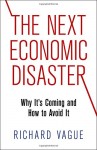
Current debates about economic crises typically focus on the role that public debt and debt-fueled public spending play in economic growth. This illuminating and provocative work shows that it is the rapid expansion of private rather than public debt that constrains growth and sparks economic calamities like the financial crisis of 2008.
Relying on the findings of a team of economists, credit expert Richard Vague argues that the Great Depression of the 1930s, the economic collapse of the past decade, and many other sharp downturns around the world were all preceded by a spike in privately held debt. Vague presents an algorithm for predicting crises and argues that China may soon face disaster. Since American debt levels have not declined significantly since 2008, Vague believes that economic growth in the United States will suffer unless banks embrace a policy of debt restructuring.
All informed citizens, but especially those interested in economic policy and history, will want to contend with Vague’s distressing arguments and evidence.
There is an unexploded bomb in the global financial system, threatening to bring the greatest disruption to the lives of people since the Depression on the 1930s. This potential explosion has been created by dereliction of duty by the world’s largest central banks, which have helped to create an unsustainable illusion of personal wealth and national prosperity, exposing the public to uninsurable risks in the process. This volume looks at how this economic timebomb has been created by unchecked credit expansion and the potential havoc it could wreak.

Why do lenders time and again loan money to sovereign borrowers who promptly go bankrupt? When can this type of lending work? As the United States and many European nations struggle with mountains of debt, historical precedents can offer valuable insights. Lending to the Borrower from Hell looks at one famous case–the debts and defaults of Philip II of Spain. Ruling over one of the largest and most powerful empires in history, King Philip defaulted four times. Yet he never lost access to capital markets and could borrow again within a year or two of each default. Exploring the shrewd reasoning of the lenders who continued to offer money, Mauricio Drelichman and Hans-Joachim Voth analyze the lessons from this important historical example.
Using detailed new evidence collected from sixteenth-century archives, Drelichman and Voth examine the incentives and returns of lenders. They provide powerful evidence that in the right situations, lenders not only survive despite defaults–they thrive. Drelichman and Voth also demonstrate that debt markets cope well, despite massive fluctuations in expenditure and revenue, when lending functions like insurance. The authors unearth unique sixteenth-century loan contracts that offered highly effective risk sharing between the king and his lenders, with payment obligations reduced in bad times.
A fascinating story of finance and empire, Lending to the Borrower from Hell offers an intelligent model for keeping economies safe in times of sovereign debt crises and defaults.