[Finance] Videos
An up-to-date look at the exploding CDO and structured credit products market
In this fully updated Second Edition, financial expert Janet Tavakoli provides readers with a comprehensive look at the CDO and structured credit products market amid recent developments. In addition to a detailed overview of the market, this book presents key issues in valuing structured financial products and important quality control issues. Tavakoli shares her experiences in this field, as she examines important securitization topics, including the huge increase in CDO arbitrage created by synthetics, the tranches most at risk from new technology, dumping securitizations on bank balance sheets, the abuse of offshore vehicles by companies, the role of hedge funds, critical issues with subprime, Alt-A, and prime mortgage securitizations, and securitizations made possible by new securitization techniques and the Euro. While providing an overview of the market and its dynamic growth, Tavakoli takes the time to explore the types of products now offered, new hedging techniques, and valuation and risk/return issues associated with investment in CDOs and synthetic CDOs.
The proven guide to taking control of your finances
The bestselling Personal Finance For Dummies has helped countless readers budget their funds successfully, rein in debt, and build a strong foundation for the future. Now, renowned financial counselor Eric Tyson combines his time-tested financial advice along with updates to his strategies that reflect changing economic conditions, giving you a better-than-ever guide to taking an honest look at your current financial health and setting realistic goals for the future.
Inside, you’ll find techniques for tracking expenditures, reducing spending, and getting out from under the burden of high-interest debt. Tyson explains the basics of investing in plain English, as well as the risks, returns, and options for popular investment strategies. He also covers ways to save for college and special events, tame your taxes, and financially survive the twists and turns that life delivers.The bestselling, tried-and-true guide to taking control of finances, now updated to cover current economic conditionsProvides concrete, actionable advice for anyone facing great financial hardshipHelps you avoid or get out of debt and budget funds more successfullyEric Tyson, MBA, is a nationally recognized personal finance counselor and the author of numerous For Dummies titles, including Home Buying For Dummies, Investing For Dummies, and Mutual Funds For Dummies, among others
There’s no need to stress over an uncertain economy — just read Personal Finance For Dummies and protect your financial future!

Conventional wisdom holds that all nations must repay debt. Regardless of the legitimacy of the regime that signs the contract, a country that fails to honor its loan obligations damages its reputation, inviting still greater problems down the road. Yet difficult dilemmas arise from this assumption. Should today’s South Africa be responsible for apartheid-era debt? Is it reasonable to tether postwar Iraq with Saddam Hussein’s excesses?
Rethinking Sovereign Debt is a probing historical analysis of how sovereign debt continuity–the rule that nations should repay loans even after a major regime change, or expect reputational consequences–became the consensus approach. Odette Lienau contends that the practice is not essential for functioning international capital markets, and demonstrates how it relies on ideas of absolutist government that have come under fire over the last century. Challenging previous accounts, Lienau incorporates a wealth of original research to argue that Soviet Russia’s repudiation of Tsarist debt and Great Britain’s 1923 arbitration with Costa Rica hint at the feasibility of selective debt cancellation. She traces the notion of debt continuity from the post-World War I era to the present, emphasizing the role of government officials, the World Bank, and private-market actors in shaping our existing framework.
Lienau calls on scholars and policymakers to recognize political choice and historical precedent in sovereign debt and reputation, in order to move beyond an impasse when a government is overthrown.
Jason Manolopoulos lends a unique perspective, based on experience of the global financial system, emerging markets and crises, European politics and Greek society, to demonstrate how one of the EU’s smaller countries played a catalytic role in a crisis that threatens the future of the euro, and possibly even of the European Union itself. He digs beneath the headline economic data to explore the historical legacy and psychological biases that have shaped an ongoing political drama, in a book that has profound implications for our understanding of economics, as well as the policy choices for Europe’s elite.
For more information please visit the book website: http://greecesodiousdebt.anthempressblog.com/
Since first edition’s publication, the CDO market has seen tremendous growth. As of 2005, $1.1 trillion of CDOs were outstanding — making them the fastest-growing investment vehicle of the last decade. To help you keep up with this expanding market and its various instruments, Douglas Lucas, Laurie Goodman, and Frank Fabozzi have collaborated to bring you this fully revised and up-to-date new edition of Collateralized Debt Obligations. Written in a clear and accessible style, this valuable resource provides critical information regarding the evolving nature of the CDO market. You’ll find in-depth insights gleaned from years of investment and credit experience as well as the examination of a wide range of issues, including cash CDOs, loans and CLOs, structured finance CDOs and collateral review, emerging market and market value CDOs, and synthetic CDOs. Use this book as your guide and take advantage of this dynamic market and its products.
Product Features
- Collateralized Debt Obligations
- Structures
- Analysis
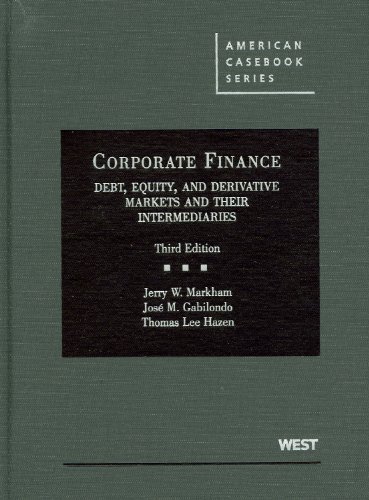
This casebook introduces students to the major instruments issued by corporations for funding and risk-management, including money market instruments, bonds and notes, junior and senior equity, government securities, futures, options, swaps, and other financial derivatives. Moving beyond the issuance market and instrument design, the book situates these instruments in their trading markets, giving students a comprehensive understanding of financial markets. The selected cases and materials highlight financial history, market structure, accounting standards, and a lawyer’s professional standards. Chapter objectives help students to track their progress. This edition has been updated to reflect recent financial reforms.
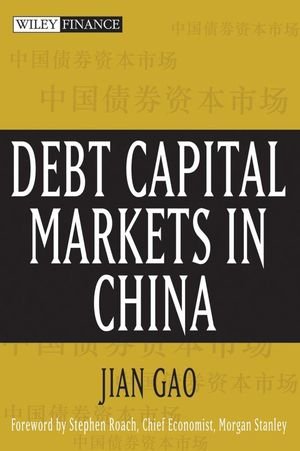
An in-depth look at China’s burgeoning capital markets
Author Jian Gao is the number one authority on fixed income markets in China, and with this book, he brings his considerable experience and knowledge about these markets to investors worldwide. For those interested in becoming active in China’s growing fixed income markets, Debt Capital Markets in China is the book you need to get started. It includes coverage of the primary and secondary markets, government debt instruments, corporate bonds, the collateralized bond market, and asset-backed securitizations. Debt Capital Markets in China also examines the developing market trends, which affect investors and institutions looking to make the most of this incredible financial opportunity.
Dr. Jian Gao, PhD (Beijing, China) is the Vice Governor of China Development Bank (CDB).
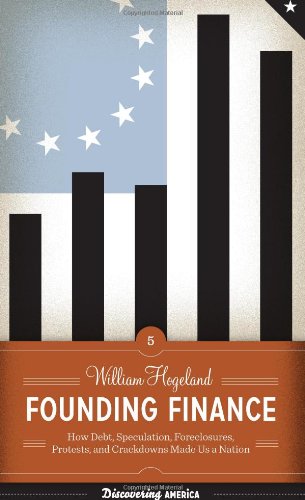
Recent movements such as the Tea Party and anti-tax “constitutional conservatism” lay claim to the finance and taxation ideas of America’s founders, but how much do we really know about the dramatic clashes over finance and economics that marked the founding of America? Dissenting from both right-wing claims and certain liberal preconceptions, Founding Finance brings to life the violent conflicts over economics, class, and finance that played directly, and in many ways ironically, into the hardball politics of forming the nation and ratifying the Constitution—conflicts that still continue to affect our politics, legislation, and debate today.
Mixing lively narrative with fresh views of America’s founders, William Hogeland offers a new perspective on America’s economic infancy: foreclosure crises that make our current one look mild; investment bubbles in land and securities that drove rich men to high-risk borrowing and mad displays of ostentation before dropping them into debtors’ prisons; depressions longer and deeper than the great one of the twentieth century; crony mercantilism, war profiteering, and government corruption that undermine any nostalgia for a virtuous early republic; and predatory lending of scarce cash at exorbitant, unregulated rates, which forced people into bankruptcy, landlessness, and working in the factories and on the commercial farms of their creditors. This story exposes and corrects a perpetual historical denial—by movements across the political spectrum—of America’s all-important founding economic clashes, a denial that weakens and cheapens public discourse on American finance just when we need it most.
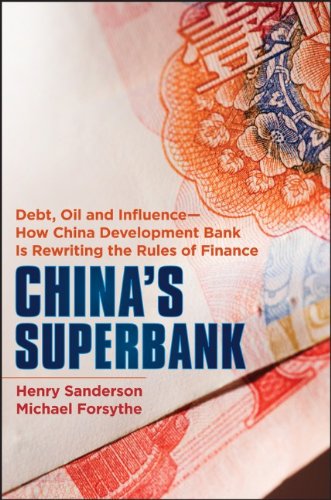
Inside the engine-room of China’s economic growth—the China Development Bank
Anyone wanting a primer on the secret of China’s economic success need look no further than China Development Bank (CDB)—which has displaced the World Bank as the world’s biggest development bank, lending billions to countries around the globe to further Chinese policy goals. In China’s Superbank, Bloomberg authors Michael Forsythe and Henry Sanderson outline how the bank is at the center of China’s domestic economic growth and how it is helping to expand China’s influence in strategically important overseas markets.
100 percent owned by the Chinese government, the CDB holds the key to understanding the inner workings of China’s state-led economic development model, and its most glaring flaws. The bank is at the center of the country’s efforts to build a world-class network of highways, railroads, and power grids, pioneering a lending scheme to local governments that threatens to spawn trillions of yuan in bad loans. It is doling out credit lines by the billions to Chinese solar and wind power makers, threatening to bury global competitors with a flood of cheap products. Another $45 billion in credit has been given to the country’s two biggest telecom equipment makers who are using the money to win contracts around the globe, helping fulfill the goal of China’s leaders for its leading companies to “go global.”
Bringing the story of China Development Bank to life by crisscrossing China to investigate the quality of its loans, China’s Superbank travels the globe, from Africa, where its China-Africa fund is displacing Western lenders in a battle for influence, to the oil fields of Venezuela.
Offers a fascinating insight into the China Development Bank (CDB), the driver of China’s rapid economic developmentTravels the globe to show how the CDB is helping Chinese businesses “go global”Written by two respected reporters at Bloomberg News
As China’s influence continues to grow around the world, many people are asking how far it will extend. China’s Superbank addresses these vital questions, looking at the institution at the heart of this growth.
Product Features
- Used Book in Good Condition