[Financial] Videos
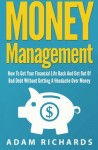
Money Management: How To Get Your Financial Life Back And Get Out Of Bad Debt Without Getting A Headache Over Money
You are about to discover what everyone must know about personal finance and effective money management without any unnecessary financial jargon coming your way. Plain and simple.
In Money Management: How To Get Your Financial Life Back And Get Out Of Bad Debt Without Getting A Headache Over Money you will learn about one of the most important, yet underrated subject that is ‘personal finance’. You will learn the various benefits of effective money management and how much of an impact it can make (becoming financially literate) in the quality of your life. We will go through the basics of money management and you will be able to evaluate your current financial situation.
Furthermore, you will be able to determine if you are living within your means by monitoring your income and expenses. We will then go into budgeting and you will learn how to create a budget that will fit your needs. You will be given a simple 6 step process to ensure that you fully understand how to prepare your budget and make any necessary changes. You will also learn some tips that should you implement, will help you live within your means (and even below, if that’s something that you feel is necessary in your current situation) while fulfilling your needs and of course always staying within your budget.
Being in debt can be stressful. However, there is a difference between good and bad debt (yeah, there is good debt too) and trust me, being in bad debt is even more stressful and completely unnecessary. We will go through some tips and strategies that if you are in debt, can help you to start getting rid of your debt and becoming once more financially healthy. Finally, you will learn 10 all powerful “money habits” that should you implement, can transform your financial life. Commit in adopting maybe only a few if not all of them and it won’t take long to begin reaping the rewards.
Here Is A Preview Of What You Will Learn… Personal Finance 101: Things You Didn’t Learn At SchoolHow To Evaluate Your Current Financial Situation: Are You Financially Fit?Monitoring Income And Expenses: Are You Living Within Your Means?Budgeting Explained: How To Create A Budget That Fits Your NeedsHow To Get Rid Of Bad Debt And Become Financially HealthyStick To It: 10 Powerful Money Habits That Can Transform Your Financial Life
Get Your Copy Right Now
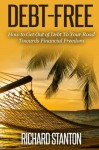
Manage Your Finances and Stay Out of Debt!
Thrift is of great revenue
Nobody wants to live a life full of debt! If we can run away from it, we would in a heartbeat. However, circumstances have lead a large number of the world’s population into debt after debt.
How is this possible? Here’s how:
1. Under employment 2. Poor money management 3. Gambling 4. Failure to save 5. Misuse of credit cards 6. Living above your means
The List can go on! But be troubled no more. When you download Debt-Free How to Get Out of Debt To Your Road Towards Financial Freedom, you will finally address the underlying issues in your life that are dragging you down from experiencing financial freedom!
When you are not drowning in debt, you find that it’s more peaceful to face your day-to-day activities with less stress and less fear. When you don’t owe anyone any money, you won’t have to find yourself bombarded with nasty calls reminding you of your dues.
This book will help you look at money in a new different light allowing you to become wiser and more disciplined in keeping your budget in reflective motion.
Here Are Some Of The Topics Discussed In The Book:
• 401(k) Contributions While In Debt • 5 Steps To Reduce Consumer Debt For Your Financial Freedom • Steps To Repay Debt • Faster Ways to Repay Debt • How To Stop Using Credit Cards • Best Ways To Save Money • Investment Options For You
There’s more to this book than meets the eye. When you finish reading it, you’ll immediately see a change on how you handle your money and start seeing it grow instead of seeing it washed down the drain.
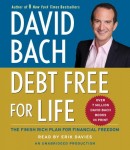
GOODBYE DEBT—HELLO FREEDOM!
Most of us grew up with the idea that there is good debt and there is bad debt. Good debts are generally considered to be debts you incur to buy things that can go up in value—like a home or college education. Bad debts are things like credit card balances, where you borrowed money to buy things that depreciate or go down in value, like most consumer goods.
But as America’s favorite financial coach, David Bach, points out, in difficult times there is no such thing as good debt. There is only debt. And all debt is too expensive—if what you desire is FREEDOM! In fact, Bach believes the best investment you can make today is to pay down your debt, faster and smarter than you have ever attempted before—starting today!
In Debt Free for Life, #1 New York Times bestselling author David Bach has written his most groundbreaking and important book since The Automatic Millionaire, giving us the knowledge, the tools, and the mindset we need to get out of debt and achieve financial freedom— forever! Offering a revolutionary approach to personal finance that teaches you how to pay down your debt and adopt a whole new way of living – debt free. Bach unveils the Debt Wise program that empowers you to pare down your debt automatically. You’ll learn how to calculate your Debt Freedom Day – the actual date you will be completely free of debt. And you’ll discover that when you are debt free, you need a lot less money to live on. You can retire, even with a smaller nest egg — perhaps earlier than you expected.
David Bach has coached millions to pay off their debt and now he can guide you. Whether you have home loans, student loans, car loans, credit card debt—paying down your debt is truly a game you can win, if you know the rules. Debt Free For Life will teach you the rules and give you the tools to buy back your freedom.
Product Features
- Used Book in Good Condition
A richly original look at the origins of money and how it makes the world go ?round
Niall Ferguson follows the money to tell the human story behind the evolution of our financial system, from its genesis in ancient Mesopotamia to the latest upheavals on what he calls Planet Finance. What?s more, Ferguson reveals financial history as the essential backstory behind all history, arguing that the evolution of credit and debt was as important as any technological innovation in the rise of civilization. As Ferguson traces the crisis from ancient Egypt?s Memphis to today?s Chongqing, he offers bold and compelling new insights into the rise? and fall?of not just money but Western power as well.
Do debt: Pay as we go use cash and debit cards rather than credit cards. Live without debt. No delinquencies: Pay bills on time avoid late payments and late fees. No deficits: Live below our means spend less than we earn. My goal is that you will discover more about yourself than you do about money by the time you complete this experience. That is why I call it the dfree® lifestyle. I never learned to manage money. What I did learn was to manage my life and then use money to reach my goals. That is what this workbook is designed to help you accomplish also. Our motto is Say Yes to No Debt. Our foundational Bible verse is Proverbs 22:7 (NIV): The rich rule over the poor; and the borrower is slave to the lender. DeForest B. Soaries, Jr.
Debt is just like cholesterol. Too much of the wrong kind can kill you. But too little of the right kind can be a problem too.
Just as not all kinds of fat are equally bad for your health, not all kinds of debt are equally bad for your wealth.
Jon Hanson learned about debt the hard way, barely surviving his own “near-debt experience.” Now he can help you avoid the same fate. Good Debt, Bad Debt doesnÂ’t offer quick-fix solutions. This isnÂ’t optimistic taffy to soothe your ego. ItÂ’s about embracing the reality of where you are financially and working to improve your position. Hanson explains that “debt takes more than your money. It takes your freedom, time, peace of mind, and opportunities. Debt makes cowards of us all.”
Good Debt, Bad Debt concentrates on what you can do using your present income. It blends personal stories, research, history, and humor to build the argument for living life with a plan, instead of allowing yourself to be controlled by your emotions and impulse spending. With a new chapter on debt warfare, Jon Hanson will bring you out of the financial trenches and show you how to wage war against the most difficult personal economic pitfalls.
Product Features
- Used Book in Good Condition
No Matter Where You Start, David Bach Can Help You Live and Finish Rich
With his national bestsellers Smart Women Finish Rich and Smart Couples Finish Rich, renowned financial advisor and educator David Bach has taught millions of people of all ages and incomes how to take control of their financial future. His message, that the key to building wealth is “values first, stuff second,” has inspired people all over the world. Now, The Finish Rich Workbook gives couples and singles alike a new opportunity to tailor his advice for their individual circumstances. Combining the down-to-earth, jargon-free approach that has made him so popular with the hands-on practicality of a workbook, this new addition to the Finish Rich series is like having a one-on-one session with David Bach. You will learn how to:
• Use the power of the Latte Factor™, David Bach’s international recognized approach to building wealth on a few dollars a day.
• Apply the Debt Free SolutionTM, a powerful way to reduce debt quickly and repair your credit in the process.
• Organize your financial life in minutes with the FinishRich Inventory Planner™ and File Folder system, including a pull-out summary of where you stand financially.
• Craft a personalized FinishRich QuickStart™ plan–a to-do list for today, this month, and this year, so you can get started right away.
• Find the perfect financial advisor by using the FinishRich Advisor Questionaire™ to find, interview, screen, and score an advisor before you hire them.
Whether you’re working with a few dollars a week or quite a bit more, Bach’s nine-step program will help you put the Finish Rich wisdom right to work for you.
Drawing on his personal experience and years as a pastor, public policy maker, and community leader, DeForest “Buster” Soaries, Jr. shares the twelve steps to achieving financial freedom in this groundbreaking, life-changing book—Say Yes to No Debt.
“The idea that debt is actually slavery is offensive to all of our sensibilities,” says Soaries, “but when we continue to spend what we don’t have, charge what we don’t need, and borrow more than we can repay, then we must call the problem what it is: slavery. Eliminating debt is the first step toward financial freedom. And we can do it.”
This is not another financial literacy program assuming that all people need is information. Soaries believes living in debt is an emotional, spiritual, and psychological problem as much as it is an educational and informational one.
Here, Soaries shares the twelve steps to financial freedom that have helped families in hundreds of churches. By replacing the “get more money” mentality with a “get out of debt” approach to financial freedom, not only were thousands of people able to become debt free, church’s that have used the dfree® strategy have experienced increased giving by their members.
Find out how you can leave a financial legacy of your own by saying yes to no debt.
Says Soaries: “There may be no greater need than to understand that debt-free living is the first step toward financial freedom. And the result is that we can enjoy life and leave a real legacy for our children.”
Although banking and sovereign debt crises are not unusual, the crisis that has unfolded across the world since 2007 has been unique in both its scale and scope. It has also been unusual in being both triggered by, and mainly affecting, developed economies. Starting with the US subprime mortgage crisis, and the recession in 2007-2009, the problem soon erupted into financial crisis in Europe. A few of these countries came to the brink of bankruptcy, and were rescued by the EU and the IMF on the condition they adopt austerity measures. The detrimental social effects of the crisis in both the US and Europe are still emerging.
Although there have been several studies published on the US crisis in particular, there has so far been an absence of an accessible comparative overview of both crises. This insightful text aims to fill this gap, offering a critical overview of causes, policy responses, effects and future implications. Starting with the historical context and mutation of the crisis, the book explores the policies, regulations, and governance reforms that have been implemented to cope with the US subprime mortgage crises. A parallel analysis considers the causes of the European sovereign debt crisis and the responses of the European Union (EU), examining why the EU is as yet unable to resolve the crisis. This book is supported with eResources that include essay questions and class discussion questions in order to assist students in their understanding.
This uniquely comprehensive and readable overview will be of interest and relevance to those studying financial crises, financial governance, international economics and international political economy.
How financial parasites and debt destroy the global economy. Professor Hudson continues the discussion on the financialization of capital and its global effects. KILLING THE HOST exposes how finance, insurance, and real estate (the FIRE sector) have gained control of the global economy at the expense of industrial capitalism and governments. The FIRE sector is responsible for today’s economic polarization (the 1% vs. the 99%) via favored tax status that inflates real estate prices while deflating the “real” economy of labor and production. The Great 2008 Bailout saved the banks but not the economy, and plunged the U.S., Irish, Latvian and Greek economies into debt deflation and austerity. This book describes how the phenomenon of debt deflation imposes austerity on the U.S. and European economies, siphoning wealth and income upward to the financial sector while impoverishing the middle class.