[Global] Videos
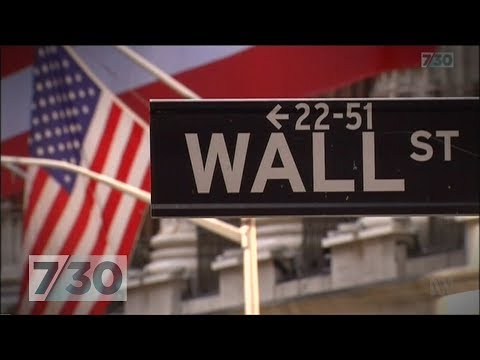
This week marks a decade since the collapse of the US investment bank Lehman Brothers triggered the worst global financial crisis since the Great Depression.
What became known as the Global Financial Crisis saw banks collapse and even whole countries teeter on the brink of insolvency.
While much of the world fell into prolonged recession, Australia’s economy narrowly avoided that fate – but 10 years on, many individual Australians are still paying the price.
Now, there are new warnings from financial insiders that the global economy could be even more vulnerable to a repeat meltdown.
For more from ABC News, click here: http://www.abc.net.au/news/
Follow us on Twitter: http://twitter.com/abcnews
Like us on Facebook: http://facebook.com/abcnews.au
Subscribe to us on YouTube: http://ab.co/1svxLVE
Follow us on Instagram: http://instagram.com/abcnews_au
Debt as power is a timely and innovative contribution to our understanding of one of the most prescient issues of our time: the explosion of debt across the global economy and related requirement of political leaders to pursue exponential growth to meet the demands of creditors and investors.
The book is distinctive in offering a historically sensitive and comprehensive analysis of debt as an interconnected and global phenomenon. Rather than focusing on the historical emergence of debt as a moral obligation, the authors argue that debt under capitalism can be conceived of as a technology of power, intimately tied up with the requirement for perpetual growth and the differential capitalization that benefits ‘the 1%’.
Their account begins with the recognition that the histories of human communities and their natural environment are interconnected in complex spatial and hierarchical relations of power and to understand their development we need to not only examine the particularities of a given case, but more importantly their interconnected, interdependent and international relations. Since debt under capitalism is increasingly ubiquitous at all levels of society and economic growth is now the sole mantra of dominant political parties around the world, the authors argue that tracing the evolution and transformation of debt as a technology of power is crucial for understanding the ‘present as history’ and possible alternatives to our current trajectory
Although banking and sovereign debt crises are not unusual, the crisis that has unfolded across the world since 2007 has been unique in both its scale and scope. It has also been unusual in being both triggered by, and mainly affecting, developed economies. Starting with the US subprime mortgage crisis, and the recession in 2007-2009, the problem soon erupted into financial crisis in Europe. A few of these countries came to the brink of bankruptcy, and were rescued by the EU and the IMF on the condition they adopt austerity measures. The detrimental social effects of the crisis in both the US and Europe are still emerging.
Although there have been several studies published on the US crisis in particular, there has so far been an absence of an accessible comparative overview of both crises. This insightful text aims to fill this gap, offering a critical overview of causes, policy responses, effects and future implications. Starting with the historical context and mutation of the crisis, the book explores the policies, regulations, and governance reforms that have been implemented to cope with the US subprime mortgage crises. A parallel analysis considers the causes of the European sovereign debt crisis and the responses of the European Union (EU), examining why the EU is as yet unable to resolve the crisis. This book is supported with eResources that include essay questions and class discussion questions in order to assist students in their understanding.
This uniquely comprehensive and readable overview will be of interest and relevance to those studying financial crises, financial governance, international economics and international political economy.
How financial parasites and debt destroy the global economy. Professor Hudson continues the discussion on the financialization of capital and its global effects. KILLING THE HOST exposes how finance, insurance, and real estate (the FIRE sector) have gained control of the global economy at the expense of industrial capitalism and governments. The FIRE sector is responsible for today’s economic polarization (the 1% vs. the 99%) via favored tax status that inflates real estate prices while deflating the “real” economy of labor and production. The Great 2008 Bailout saved the banks but not the economy, and plunged the U.S., Irish, Latvian and Greek economies into debt deflation and austerity. This book describes how the phenomenon of debt deflation imposes austerity on the U.S. and European economies, siphoning wealth and income upward to the financial sector while impoverishing the middle class.
Although banking and sovereign debt crises are not unusual, the crisis that has unfolded across the world since 2007 has been unique in both its scale and scope. It has also been unusual in being both triggered by, and mainly affecting, developed economies. Starting with the US subprime mortgage crisis, and the recession in 2007-2009, the problem soon erupted into financial crisis in Europe. A few of these countries came to the brink of bankruptcy, and were rescued by the EU and the IMF on the condition they adopt austerity measures. The detrimental social effects of the crisis in both the US and Europe are still emerging.
Although there have been several studies published on the US crisis in particular, there has so far been an absence of an accessible comparative overview of both crises. This insightful text aims to fill this gap, offering a critical overview of causes, policy responses, effects and future implications. Starting with the historical context and mutation of the crisis, the book explores the policies, regulations, and governance reforms that have been implemented to cope with the US subprime mortgage crises. A parallel analysis considers the causes of the European sovereign debt crisis and the responses of the European Union (EU), examining why the EU is as yet unable to resolve the crisis. This book is supported with eResources that include essay questions and class discussion questions in order to assist students in their understanding.
This uniquely comprehensive and readable overview will be of interest and relevance to those studying financial crises, financial governance, international economics and international political economy.
The Description for this book, Between Debt and the Devil: Money, Credit, and Fixing Global Finance, will be forthcoming.
Debt as Power is a timely and innovative contribution to our understanding of one of the most prescient issues of our time: the explosion of debt across the global economy and related requirement of political leaders to pursue exponential growth to meet the demands of creditors and investors.
The book is distinctive in offering a historically sensitive and comprehensive analysis of debt as an interconnected and global phenomenon. Rather than focusing on the historical emergence of debt as a moral obligation, the authors argue that debt under capitalism can be conceived of as a technology of power, intimately tied up with the requirement for perpetual growth and the differential capitalization that benefits ‘the 1%’.
Their account begins with the recognition that the histories of human communities and their natural environment are interconnected in complex spatial and hierarchical relations of power and to understand their development we need to not only examine the particularities of a given case, but more importantly their interconnected, interdependent and international relations. Since debt under capitalism is increasingly ubiquitous at all levels of society and economic growth is now the sole mantra of dominant political parties around the world, the authors argue that tracing the evolution and transformation of debt as a technology of power is crucial for understanding the ‘present as history’ and possible alternatives to our current trajectory.
Gambling Debt is a game-changing contribution to the discussion of economic crises and neoliberal financial systems and strategies. Iceland’s 2008 financial collapse was the first case in a series of meltdowns, a warning of danger in the global order. This full-scale anthropology of financialization and the economic crisis broadly discusses this momentous bubble and burst and places it in theoretical, anthropological, and global historical context through descriptions of the complex developments leading to it and the larger social and cultural implications and consequences.
Chapters from anthropologists, sociologists, historians, economists, and key local participants focus on the neoliberal policies?mainly the privatization of banks and fishery resources?that concentrated wealth among a select few, skewed the distribution of capital in a way that Iceland had never experienced before, and plunged the country into a full-scale economic crisis. Gambling Debt significantly raises the level of understanding and debate on the issues relevant to financial crises, painting a portrait of the meltdown from many points of view?from bankers to schoolchildren, from fishers in coastal villages to the urban poor and immigrants, and from artists to philosophers and other intellectuals.
This book is for anyone interested in financial troubles and neoliberal politics as well as students and scholars of anthropology, sociology, economics, philosophy, political science, business, and ethics.
Publication supported in part by the National Science Foundation.
Contributors:
Vilhjálmur Árnason, Ásmundur Ásmundsson, Jón Gunnar Bernburg, James Carrier, Sigurlína Davíðsdóttir, Dimitra Doukas, Níels Einarsson, Einar Mar Guðmundsson, Tinna Grétarsdóttir, Birna Gunnlaugsdóttir, Guðný S. Guðbjörnsdóttir, Pamela Joan Innes, Guðni Th. Jóhannesson, Örn D. Jónsson, Hannes Lárusson, Kristín Loftsdóttir, James Maguire, Már Wolfgang Mixa, Evelyn Pinkerton, Hulda Proppé, James G. Rice, Rögnvaldur J. Sæmundsson, Unnur Dís Skaptadóttir, Margaret Willson
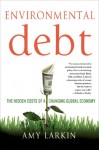
For decades, politicians and business leaders alike told the American public that our most important challenge was growing the economy, and that environmental protection could be left to future generations. Now, in the wake of billions of dollars in costs associated with coastal devastation from Hurricane Sandy, rampant wildfires across the West, and groundwater contamination from reckless drilling, it’s increasingly clear that yesterday’s carefree attitude about the environment has morphed into a fiscal crisis of epic proportions. Environmental Debt argues that the costs of global warming, extreme weather, pollution, and other forms of “environmental debt” are wreaking havoc on the economy. To combat these trends, author Amy Larkin proposes a new framework for twenty-first century commerce, based on three principles: 1) Pollution can no longer be free; 2) All business decision making and accounting must incorporate the long view; and 3) Government must play a vital role in catalyzing clean technology and growth while preventing environmental destruction. Profiling the multinational corporations that are transforming their operations with downright radical initiatives, Larkin presents smart policy choices that would actually unleash these business solutions to many global financial and environmental problems.
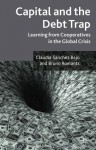
The financial crisis is destroying wealth but is also a remarkable opportunity to uncover the ways by which debt can be used to regulate the economic system. This book usesfour case studies of cooperatives to give an in-depth analysis on how they have braved the crisis and continued to generate wealth.