[Money] Videos
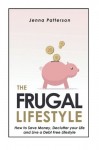
THE FRUGAL LIFESTYLE: How to Save Money, Declutter Your Life and Live a Debt Free Lifestyle Do you want to get out of debt once and for all? Are you tired of living from paycheck to paycheck, feeling like you never have quite enough? With this book, you have a comprehensive guide to doing a complete overhaul of your financial situation from debt relief to retirement planning and everything in between. You will even learn how to do a professional assessment of your finances so that you can see exactly what you have to work with and how to construct a plan uniquely suited to your needs. After reading this guide to frugal living, you won’t need to spend extra money that you don’t have on a professional financial advisor. Discover how to live frugally and free yourself from debt painlessly Also, you’ll discover.. Simple lifestyle changes that will eliminate clutter and save you money. Proven investment strategies that you can use to earn more money. How you can build a savings no matter how tight your budget is. And much more! Table of Contents Chapter 1: Do it Yourself Financial Assessment Learn how to do a financial assessment like a pro so you can see exactly where you stand as of now. Chapter 2: Freeing Yourself from Debt Read about strategies for managing your debt and becoming totally debt free Chapter 3: Planning Your Dream Retirement Get tips and tricks for planning for the retirement you always dreamed of. Chapter 4: A Brief Guide to Wall Street Learn the basics of investing and how to build an investment portfolio with low risk and high reward. Chapter 5: Savings 101 Everything you need to know about building a savings in any situation Chapter 6: Minimalism for Maximum Gain How to cut your expenses by eliminating clutter and knowing your priorities Chapter 7: Budgeting for Freedom All you need to know to create your own budget for getting out of debt, saving money, and achieving financial freedom
1 SOFTCOVER BOOK
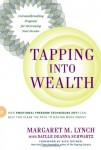
Discover how Tapping can help you release your negative beliefs about money and open the door to more wealth than you ever imagined.
Emotional Freedom Techniques (EFT), also known as Tapping, has become a popular tool for realizing goals, as evidenced by the recent New York Times bestseller The Tapping Solution by Nick Ortner. For many of us, one of our main aspirations is to flourish in our careers and, by extension, in our finances. Yet limiting beliefs and fears keep people stuck in their current financial states. EFT uses the fingertips to tap on acupuncture points while emotionally tuning in to negative attitudes and past experiences, allowing people to transform their thoughts and feelings. Margaret M. Lynch teaches people how to harness the power of Tapping to identify and clear the blocks to prosperity.
This book also features QR codes and URLs linking to video demonstrations of Tapping exercises.
Product Features
- Used Book in Good Condition
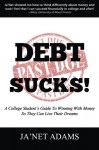
College students are facing many issues today and the main one being student loan debt! Student loan debt is at $1.2 trillion and growing! Debt Sucks! is for the college student who is looking to win with money so they can pursue their dreams! Ja’Net Adams shows the reader step by step how she paid off nearly $50,000 of debt in 2 1/2 years! In Debt Sucks! there are tips on how pay off student loans and other debt quickly while in college and after. The book also encourages college students to stand out from the crowd so that they can land internships while they are in school and valuable careers once they graduate.
A lucid and original account of where money comes from and why most people and businesses are so heavily in debt. It explodes more myths than any other book this century, yet it’s all about subjects very close to home: mortgages, building societies and banks, agriculture, transport, global poverty, and what’s on the supermarket shelf. The author proposes a new mechanism for the supply of money, creating a supportive financial environment and a decreasing reliance on debt.
Product Features
- Used Book in Good Condition
In 1985, Frederic C. Lane and Reinhold C. Mueller published the magisterial Money and Banking in Medieval and Renaissance Venice, Volume 1: Coins and Moneys of Account. Now, after ten years of further research and writing, Reinhold Mueller completes the work that he and the late Frederic Lane began.
The history of money and banking in Venice is crucial to an understanding of European economic history. Because of its strategic location between East and West, Venice rapidly rose to a position of preeminence in Mediterranean trade. To keep trade moving and credit available from London to Constantinople and beyond, Venetian merchants and bankers created specialized financial institutions to serve private entrepreneurs and public administrators: deposit banks, foreign exchange banks, the grain office, and a bureau of the public debt. This new volume clarifies Venice’s pivotal role in Italian and international banking and finance. It also sets banking–and panics–in the context of more generalized and recurrent crises involving territorial wars, competition for markets, and debates over interest rates and the question of usury.
“The single aspect that most characterizes Venetian history and historiography is the dominant role of the state in the life of the city and the symbiosis between public and private sectors of the economy, between public and private interests….A primary concern of civil authorities was to create an atmosphere of competitive opportunity on the Rialto conducive to investment, that is, to the influx of money and goods, their turnover in Venice, and their eventual outflow.”–From The Venetian Money Market
You can use these letters as they are, modify them to suit your needs or your business or just use one sentence from a letter. Each letter should be on your company letterhead and include your company name, address, phone and fax, web address, email and any other contact information. The letters that get the best results are not “form” letters. If a letter looks like a form letter it loses some of its punch. The most effective letters are short, to the point and easy to read. Try to avoid long or confusing words and sentences. The more direct, the fewer misunderstandings. Have someone read your letter and see if they totally understand it. If they do, then chances are your debtor will, too. Your letter is a reflection of your business; keep it professional. Remember that your letter is to persuade someone to send you money. Your wording and tone are critical, especially if this is a customer you want to continue to do business with. Always assume the debtor will pay. Enclosing an envelope for payment is always a good idea. You can also include an envelope with postage. The easier you make it for the debtor to make payment, the better your chances are of receiving that payment. Collection letters should do two things: retain customer good will and help you get paid. You know a letter works well when you do a mailing and your phone rings off the hook when everyone receives their letters. If you send out a letter and there is no response, you need to re-work your letter.
Article by Irving Fisher (1936), Professor Emeritus of Economics, Yale University, urges Congress to take back the Constitutional money power, redeem the national debt, require banks’ demand deposit to be 100% liquid, to avoiding an inelastic loan structure that bursts, leaving frozen loans behind, and avoid ‘Global Financial Crises’. Includes a brief biography of Irving Fisher.
Hate paying bills? So do I, and that’s why I stopped! What if I told you that I haven’t paid a bill in almost six years! Do you want to know how I did it? With the help of Bella the Budgetnista, featured in this book, we will teach you what I took years to learn. The One Week Budget is for anyone that wants to manage their day-to-day money without the day-to-day trouble. Does this sound like you? What are you waiting for? Read the book! Tiffany “The Budgetnista” Aliche
Discover the Top 5 Secrets to Graduating College Debt-Free! If you’ve ever wondered whether it’s true … REALLY TRUE … that … you can … • Graduate college owing little to NO debt … • Have someone else pay for your college education… • Not have your parents pay a single dime for your college education… • Get money for college without you having the highest GPA or SAT scores… • Get paid to go to college • Not have to worry or stress about how you will pay next semester’s tuition • Win scholarships when everyone else says it’s impossible or a waste of time … then … allow Shanice Miller to PROVE it to you. Shanice entered the summer before college without having any knowledge about college or scholarships and was easily on her way to being over $200,000 in debt when she graduated. After realizing just how much college was going to cost, she knew she had to do something fast so she started applying for scholarships. By graduation day, Shanice had graduated college 100% debt-free and had even received over $10,000 in refund checks from the college. What turned Shanice Miller around? The answers are between the covers of How to Graduate College Debt-Free With Money in the Bank. Now All of These College and Scholarship Secrets Are Yours!