[Power] Videos

Understand how credit counseling works. How credit counseling can make paying off credit card debt easy, affordable and stress free.
Who needs credit counseling? We suggest anyone with over $10,000 of credit card debt, current with their payments but struggling to pay more than the minimums is a good candidate for counseling.
The credit counseling process. A credit counselor begins the process with some simple intake questions such as marital status, number of people in household and what the client’s goals are. Next, we pull their credit report. This is a soft pull; therefore, it will not affect their credit. Now, the counselor will review liabilities. This includes any mortgages, car loans, credit cards, student loans, personal loans or any other accounts showing a balance. Next, the counselor will confirm the balances and the monthly payment amounts with the client. In some cases, we may need to obtain the interest rates on accounts from the client over the phone.
Recommendations
One of the recommendations might be enrolling into a debt management plan. On this plan, the client usually receives lower interest rates and lower payments. As a matter of fact, last year, the average client had their total payment decrease from $915 to $694 on our program. That’s a 24% decrease payment for our average customer. They also saw their average interest rate fall from 23% down below 7%.
Credit Effect
A Debt Management Plan typically has a neutral effect on your credit. You might see your score initially go down because your accounts get closed. For people that are already maxed out on their cards, they probably don’t see much change in their score at the beginning since their score is already on the lower end. But over time, as long as payments are being made on time to all accounts and new accounts are not getting opened outside the program, you should see your score gradually increase. A recent study at DebtWave showed the average client’s scores increasing about 15 points per year.
But we don’t recommend focusing so much on your credit score as a good credit score will ultimately lead you to acquiring more debt. If you have a large amount of credit card debt, focus on paying it off and nothing else. Learn to live within your means! Spend less than you make. Become Debt Free and stay that way!
Debt Management vs. Debt Settlement
A Debt Management Plan often gets confused with Debt Settlement. These plans are very different so it’s important to know how they work. A Debt Settlement Plan requires you to starve your creditors of payments for months and months and sometimes years. This of course can ruin your credit. Once the accounts are severely delinquent, the creditors will settle for about 50% of what you owe. The debt settlement company will collect monthly payment from you but won’t disburse payments until you’ve saved about 50% of one of your debts. Not only do you need to be cautious of the credit effect, but you need to understand the tax implications as well. Whatever amount of debt is forgiven will be considered taxable income. So let’s say you have $10,000 of debt and you successfully reach a settlement for only $4,500. The $5,500 debt that was forgiven becomes taxable income. Expect to pay 20-25% to Uncle Sam, so around $1,200 will be due to the IRS. And you may get sued by creditors along the way. When you fall that far delinquent, some creditors may take action to try to garnish your wages. We would avoid this debt settlement program unless you absolutely cannot afford payments on your own or the payments on a debt management program.
What to expect after enrolling?
The enrollment process consists of you paying a start-up fee which is usually around $50-$99. That amount varies depending on the state you live in. Once the fee is paid, the credit counseling agency will then contact all your creditors by sending them what are called “proposals”. Most of these proposals are sent electronically but some creditors still live in the ice age and require these to be sent by mail or fax. Although, each creditor varies, most of them reply within a week with an “Accepted” or “Declined”. DebtWave usually has an 85-90% acceptance rate with the creditors. Now, when a creditor declines the initial proposal, most times it can be fixed. Some of the more common reasons for decline include the balance was incorrect and they want a slightly higher payment, the account number was incorrect, the name on the account doesn’t match or the account is already under a hardship plan. Regardless if the proposal has been accepted by your creditors, DebtWave will debit your payment and disburse the payment to your creditors. You have the option to make ACH payments weekly, bi-weekly, semi-monthly or monthly with DebtWave.

Electricity Minister Kgosientsho Ramokgopa says there is a way to shave off 6% off proposed power tariffs.
He says this can be done by staving off carbon tax and recouping municipal debt.
He was briefing a Parliamentary Portfolio Committee alongside energy regulator, Nersa. #eNCA #DStv403 #questionthinkact
FULL INTERVIEW HERE: https://www.enca.com/videos/discussion-restore-power-grid-sorting-out-municipal-debt-can-reduce-tariffs

Prepare for dollar destruction and the coming monetary transition by getting your silver and metals here: https://sdbullion.com/jjbbbb (you also help out this channel by using this link).
Please subscribe for the latest economic / financial news, U.S. economy, global economy featuring several reports each week discussing: the stock market, money matters, financial system reform, housing market, economic collapse, recession watch, unfolding financial crisis, preparing for the next economic decline, debt crisis, bank crisis, market crash, investing, and much more.

Credit counselling should be about personal contact. At CCSAC, a credit counsellor will be with you every step of the way on your journey to financial freedom.
Visit our website at www.solveyourdebts.com
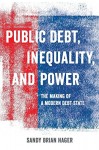
Who are the dominant owners of U.S. public debt? Is it widely held, or concentrated in the hands of a few? Does ownership of public debt give these bondholders power over our government? What do we make of the fact that foreign-owned debt has ballooned to nearly 50 percent today? Until now, we have not had any satisfactory answers to these questions. Public Debt, Inequality, and Power is the first comprehensive historical analysis of public debt ownership in the United States. It reveals that ownership of federal bonds has been increasingly concentrated in the hands of the 1 percent over the last three decades. Based on extensive and original research, Public Debt, Inequality, and Power will shock and enlighten.
At publication date, a free ebook version of this title will be available through Luminos, University of California Press’s open access publishing program for monographs. Visit www.luminosoa.org to learn more.
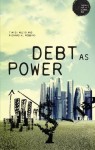
Debt as power is a timely and innovative contribution to our understanding of one of the most prescient issues of our time: the explosion of debt across the global economy and related requirement of political leaders to pursue exponential growth to meet the demands of creditors and investors.
The book is distinctive in offering a historically sensitive and comprehensive analysis of debt as an interconnected and global phenomenon. Rather than focusing on the historical emergence of debt as a moral obligation, the authors argue that debt under capitalism can be conceived of as a technology of power, intimately tied up with the requirement for perpetual growth and the differential capitalization that benefits ‘the 1%’.
Their account begins with the recognition that the histories of human communities and their natural environment are interconnected in complex spatial and hierarchical relations of power and to understand their development we need to not only examine the particularities of a given case, but more importantly their interconnected, interdependent and international relations. Since debt under capitalism is increasingly ubiquitous at all levels of society and economic growth is now the sole mantra of dominant political parties around the world, the authors argue that tracing the evolution and transformation of debt as a technology of power is crucial for understanding the ‘present as history’ and possible alternatives to our current trajectory
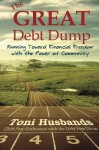
How can running improve your physical health and fiscal fitness? By combining what makes novice runners and struggling debt dumpers successful – The Power of Community. 76% of Americans are living paycheck-to-paycheck. By applying principles common in training for long distance races to personal finances, The Great Debt Dump will show you how to take your finances across the finish line and accomplish your goals. The GREAT Debt Dump… • Provides practical tips to help you break free from debt’s stranglehold • Teaches you how to leverage the Power of Community in order to win with money • Offers tools to help you successfully achieve your financial goals • Lays out how dumping debt will improve your credit • Highlights resources to make budgeting a regular part of your routine • Walks you through a step-by-step plan to build a solid accountability team
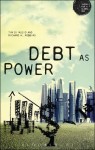
Debt as Power is a timely and innovative contribution to our understanding of one of the most prescient issues of our time: the explosion of debt across the global economy and related requirement of political leaders to pursue exponential growth to meet the demands of creditors and investors.
The book is distinctive in offering a historically sensitive and comprehensive analysis of debt as an interconnected and global phenomenon. Rather than focusing on the historical emergence of debt as a moral obligation, the authors argue that debt under capitalism can be conceived of as a technology of power, intimately tied up with the requirement for perpetual growth and the differential capitalization that benefits ‘the 1%’.
Their account begins with the recognition that the histories of human communities and their natural environment are interconnected in complex spatial and hierarchical relations of power and to understand their development we need to not only examine the particularities of a given case, but more importantly their interconnected, interdependent and international relations. Since debt under capitalism is increasingly ubiquitous at all levels of society and economic growth is now the sole mantra of dominant political parties around the world, the authors argue that tracing the evolution and transformation of debt as a technology of power is crucial for understanding the ‘present as history’ and possible alternatives to our current trajectory.

States, Debt, and Power argues for the importance of situating our contextually influenced thinking about European states and debt within a commitment to historically informed and critical analysis. It teases out certain broad historical patterns. The book also examines the inescapably difficult and contentious judgements about ‘bad’ and ‘good’ debt; about what constitutes sustainable debt; and about distributive justice at times of sovereign debt crisis. These judgements offer insight into the nature of power and the contingent nature of sovereign creditworthiness. Three themes weave through the book: the significance of creditor-debtor state relations in defining asymmetry of power; the context-specific and constructed character of debt, above all in relation to war; and the limitations of formal economic reasoning in the face of radical uncertainty. Part I examines case studies from Ancient Greece to the modern Euro Area and brings together a wealth of historical data that cast fresh light on how sovereign debt problems are debated and addressed. Part II looks at the conditioning and constraining framework of law, culture, and ideology and their relationship to the use of policy instruments. Part III shows how the problems of matching the assumption of liability with the exercise of control are rooted in external trade and financial imbalances and external debt; in financial markets and vulnerability to banking crisis; in the character of the ‘private governance of public debt’; in who has power over indicators of sustainability; in domestic institutional and political arrangements; and in sub-national fiscal governance. Part IV looks at how the problems of mismatch between liability and control take on an acute form within the historical context of European monetary union, above all in Euro Area debt crises.

Brooklyn based author, artist and life coach – Ayana Hinton – debuts her memoir “You Can’t Charge Spiritual Debt to a Credit Card: 13 Keys to Spiritual Power” at a time when people are hungry to know what their purpose in life is. In this book, Ayana Hinton, dissects the anatomy of life crises in order to harvest some of the most powerful, beautiful and difficult life lessons from her journeys.