[Understanding] Videos

Made with https://www.steve.ai/
# Understanding Debt Management Solutions: The Role of Debt Mediation
In today’s fast-paced world, managing debt has become a significant challenge for many individuals and businesses. With rising living costs, unexpected expenses, and economic fluctuations, debt can quickly spiral out of control. Fortunately, various debt management solutions exist to help those in financial distress regain control over their finances. One effective method gaining traction is debt mediation. This blog post delves into the intricacies of debt management solutions, focusing specifically on the role of debt mediation and how it can assist in alleviating financial burdens.
## What is Debt Mediation?
Debt mediation is a structured negotiation process that involves a neutral third party—known as a mediator—who facilitates discussions between the debtor and their creditors. The primary objective of this process is to reach an agreement that satisfies both parties while allowing the debtor to repay their debts more manageably. Unlike litigation or formal bankruptcy proceedings, debt mediation offers a more amicable approach to resolving disputes and can often lead to mutually beneficial outcomes.
### The Benefits of Debt Mediation
1. **Cost-Effective Solution**: Engaging in litigation can be expensive and time-consuming. Debt mediation typically incurs lower costs since it avoids lengthy court processes and attorney fees.
2. **Flexibility**: Mediation allows for creative solutions tailored to the debtor’s unique financial situation. Creditors may be willing to negotiate payment terms, interest rates, or even settle for less than the full amount owed.
3. **Preservation of Relationships**: Since mediation promotes collaboration rather than confrontation, it helps maintain professional relationships between debtors and creditors—a crucial factor for businesses seeking to retain partnerships.
4. **Confidentiality**: Unlike court proceedings, which are public records, mediation sessions are private. This confidentiality encourages open dialogue and honest discussions about financial difficulties.
5. **Faster Resolution**: The mediation process is often quicker than traditional legal routes, allowing individuals or businesses to resolve their debts efficiently and move forward with their lives.
## How Does Debt Mediation Work?
The process typically begins with both parties agreeing to enter mediation voluntarily. Here’s a step-by-step overview:
1. **Choosing a Mediator**: Both the debtor and creditor select an impartial mediator who possesses expertise in financial matters.
2. **Initial Meeting**: The mediator holds an initial meeting with both parties to understand their positions, concerns, and desired outcomes.
3. **Negotiation Sessions**: The mediator facilitates discussions between the debtor and creditor(s), helping them explore potential solutions while keeping communication open.
4. **Drafting an Agreement**: If both parties reach a consensus, the mediator assists in drafting a written agreement that outlines the terms of repayment or settlement.
5. **Follow-Up**: After an agreement is reached, mediators often conduct follow-up sessions to ensure compliance and address any arising issues.
## When Should You Consider Debt Mediation?
Debt mediation may not be suitable for everyone

Debt Options Calculator: https://tryascend.com/qualify/calculator/quick/ytcreditcounsel
Schedule free chat with me (Ben): https://calendly.com/ben-tejes-ascend/free-chat
Credit counseling has its pros and cons, but there’s one thing that many people may not know about a debt management plan. At Ascend, we are dedicated to making debt freedom cheaper, easier, and faster.
Here’s what we will cover in this Credit Counseling video:
Chapters:
0:00 Intro
1:10 One Essential Thing to Understand Before Signing Up
2:25 How Credit Counseling ACTUALLY Works
3:40 3 Questions to Ask Credit Counseling Company
4:30 Should You Sign Up for Credit Counseling?
4:50 Conclusion
#debt budgeting #personalfinance #tryascend
Music: bensound.com
License code: YS3Q1DPIPFDPEKC2

Are you currently ensnared in debt review and seeking insights into the debt review removal process in South Africa? This informative video is tailored just for you. I empathize with the frustration and uncertainty that accompanies being stuck in debt review, particularly if your circumstances have evolved, rendering debt review unnecessary.
Thankfully, debt review removal is attainable, and within this video, I guide you through the process step by step, elucidating the necessary actions to liberate yourself from debt review in South Africa.
This comprehensive walkthrough covers the following key aspects:
1.Determining your eligibility for debt review removal.
2.Essential documentation required for the debt review removal process.
3.A detailed guide on how to initiate the debt review removal procedure in South Africa.
4.Insights into the debt review removal court application facilitated by a seasoned debt review removal attorney.
5.Strategizing the update of your credit report and expunging the debt review listing from your name.
For those seeking further clarification or assistance, feel free to reach out via email or explore our website:
Email: jacques@debtwipe.co.za
Website: https://www.debtwipe.co.za
To streamline the application process, kindly access and complete the application form via the following link:
https://ndrc.org.za/debt-review-removal-sa/
Empower yourself with the knowledge and resources necessary to navigate the debt review removal journey effectively.

A debt consolidation loan is a loan used to combine existing debts into a single loan with one monthly payment. Ronita Choudhuri-Wade explains how they work and what to know to help you can decide if a debt consolidation loan is the right decision for you.
Suggested Articles:
What Is Debt Consolidation, and Should I Consolidate?: https://www.nerdwallet.com/article/finance/consolidate-debt
What Is a Debt Consolidation Loan?:https://www.nerdwallet.com/article/loans/personal-loans/debt-consolidation-loan
#NerdWallet #PersonalLoan #DebtConsolidationLoan
Subscribe to NerdWallet – https://bit.ly/3wGvVf3
About NerdWallet:
We’re NerdWallet. And we’re not your typical finance company. We believe that everyone should be able to make financial decisions with confidence. We’ve built a team of Nerds with the knowledge, passion, and skills to make that happen. Thanks to our Nerdy experts, see side-by-side comparisons and objective reviews of the best credit cards, bank accounts, and so much more — so you can get even more financial clarity. It’s the smartest decision for all your financial decisions.
Disclaimer: This video is for informational and educational purposes only. NerdWallet does not offer advisory or brokerage services, nor does it recommend or advise investors to buy or sell particular stocks or securities. Any comments posted under NerdWallet’s official account videos are not reviewed or endorsed by NerdWallet or representatives of financial institutions affiliated with the reviewed products unless explicitly stated otherwise. Avoid disclosing personal or sensitive information such as bank accounts or phone numbers. NerdWallet employees do not offer personalized financial advice and will not respond to posts here.
Connect with NerdWallet:
Follow NerdWallet on TikTok: https://tiktok.com/@nerdwallet
Follow NerdWallet on Instagram: https://instagram.com/nerdwallet
Follow NerdWallet on Twitter: https://twitter.com/NerdWallet
Follow NerdWallet on Facebook: https://facebook.com/NerdWallet
NerdWallet Website: https://nerdwallet.com
Debt Consolidation Loans: Understanding How They Help Your Finances | NerdWallet
https://www.youtube.com/c/nerdwallet
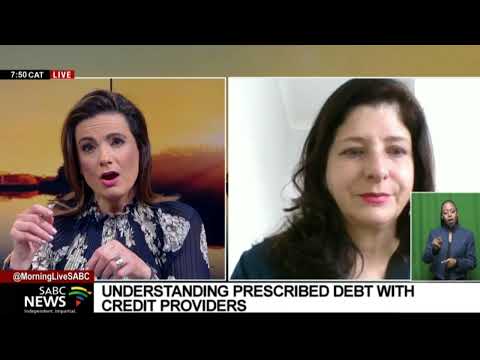
The law forbidding creditors from collecting on prescribed debts which falls under the National Credit Act 34 of 2005 (NCA) is well known.
The aim of this law is to safeguard consumers against unfair and exploitative practices by creditors and has been in effect for a number of years.
Despite the legal requirements and the guaranteed protection they offer consumers, Reana Steyn, the Ombudsman for Banking Services (OBS) warned that the OBS is still receiving, investigating and resolving complaints from bank customer’s relating to prescribed debts.
In some cases, banks have been found guilty of engaging in this illegal practice. This may sound all complicated, but the Ombudsman for Banking Services Reana Steyn is here to simplify it for all of us.
For more news, visit sabcnews.com and also #SABCNews on all Social Media platforms.

Welcome to Credit Counselors, your go-to resource for all things credit and finance. In this video, we’ll be discussing the benefits of credit counseling and how it can help you get your finances back on track.
Our team of experts will walk you through the credit counseling process, from initial consultation to creating a customized debt management plan. We’ll show you how to prioritize your debts, negotiate with creditors, and make a budget that works for you.
We’ll also cover the importance of understanding your credit score and how it can impact your financial well-being. You’ll learn how to improve your credit score over time and take steps to avoid common credit pitfalls.
Whether you’re struggling with credit card debt or just looking to improve your overall financial health, credit counseling can be an effective tool for achieving your goals. Join us as we demystify credit counseling and show you how it can work for you.
Don’t let financial stress hold you back – take control of your finances today with Credit Counselors.

DebtBusters Website : http://www.debtbusters.co.za
DebtBusters is South Africa’s leading and largest debt management company.

In this period of low agricultural market prices and small margins, it is important to understand how to deal with financial trouble when it arises in a farming operation. The state of Iowa has put structures in place to help farmers work their way out of extreme financial difficulties. This process, known as mediation, can be the first step toward addressing debt repayment problems.
During the farm crisis of the 1980s, the Iowa court system was flooded with farmers facing foreclosure. Looking for a way to solve those cases before they went to court, the Iowa legislature created Iowa Mediation Service, a non-profit organization that is governed by the state’s Attorney General.
While today’s farm financial situation doesn’t mirror the 1980s, there is still cause for concern and Iowa Mediation Service is available for farmers who are at risk.
For more information visit our website: http://www.extension.iastate.edu/ag/
The staggering United States debt has a direct impact on every American, yet few are aware of where the debt came from and how it affects their lives
The United States has a debt problem—we owe more than $18 trillion while our gross domestic product, the value of all goods and services produced in America, is only $17.5 trillion. To pay down the debt, some recommend austerity, cutting federal expenditures. Others suggest increasing taxes, especially on the wealthiest Americans. In Understanding the National Debt: What Every American Needs to Know, economic historian Carl Lane urges that the national debt must be addressed in ways beyond program cuts or tax increase alternatives, but change can only occur when more Americans understand what constitutes our debt and the problems it causes. The gross national debt is composed of two elements: the public debt and “intragovernment holdings.” The public debt consists of bonds, bills, and notes purchased by individuals, banks, insurance companies, hedge and retirement funds, foreign governments, and university endowments. Intragovernment holdings refers to money that the U.S. Treasury borrows from other parts of the government, principally Social Security and Medicare. This accounts for approximately a quarter of the gross national debt, but that is money that we owe to ourselves, not another entity. The more the government borrows, the less is available for private sector investment, creating a “squeeze” effect that inhibits economic growth. The most burdensome problem is the interest due each year on the debt. Every dollar spent on interest is a dollar less for other purposes. Those elements of the federal budget which are termed “discretionary” suffer. The mandatory elements of the budget—Social Security, Medicare, Medicaid, and the interest on the debt—must be provided for, but defense and national security, education, energy, infrastructure repair and development, and other needs wind up with less. By understanding the national debt we have an opportunity to address our real debt challenge—its principal and interest.
The staggering United States debt has a direct impact on every American, yet few are aware of where the debt came from and how it affects their lives
The United States has a debt problem—we owe more than $18 trillion while our gross domestic product, the value of all goods and services produced in America, is only $17.5 trillion. To pay down the debt, some recommend austerity, cutting federal expenditures. Others suggest increasing taxes, especially on the wealthiest Americans. In Understanding the National Debt: What Every American Needs to Know, economic historian Carl Lane urges that the national debt must be addressed in ways beyond program cuts or tax increase alternatives, but change can only occur when more Americans understand what constitutes our debt and the problems it causes. The gross national debt is composed of two elements: the public debt and “intragovernment holdings.” The public debt consists of bonds, bills, and notes purchased by individuals, banks, insurance companies, hedge and retirement funds, foreign governments, and university endowments. Intragovernment holdings refers to money that the U.S. Treasury borrows from other parts of the government, principally Social Security and Medicare. This accounts for approximately a quarter of the gross national debt, but that is money that we owe to ourselves, not another entity. The more the government borrows, the less is available for private sector investment, creating a “squeeze” effect that inhibits economic growth. The most burdensome problem is the interest due each year on the debt. Every dollar spent on interest is a dollar less for other purposes. Those elements of the federal budget which are termed “discretionary” suffer. The mandatory elements of the budget—Social Security, Medicare, Medicaid, and the interest on the debt—must be provided for, but defense and national security, education, energy, infrastructure repair and development, and other needs wind up with less. By understanding the national debt we have an opportunity to address our real debt challenge—its principal and interest.