Recently Added Videos
Season One of the Debt Collector serial with all nine episodes.Save 30% by getting the full season!
What’s your life worth on the open market?
A debt collector can tell you precisely.
Lirium plays the part of the grim reaper well, with his dark trenchcoat, jackboots, and the black marks on his soul that every debt collector carries. He’s just in it for his cut, the ten percent of the life energy he collects before he transfers it on to the high potentials, the people who will make the world a better place with their brains, their work, and their lives. That hit of life energy, a bottle of vodka, and a visit from one of Madam Anastazja’s sex workers keep him alive, stable, and mostly sane… until he collects again. But when his recovery ritual is disrupted by a sex worker who isn’t what she seems, he has to choose between doing an illegal hit for a girl whose story has more holes than his soul or facing the bottle alone–a dark pit he’s not sure he’ll be able to climb out of again.
The nine episodes of the Debt Collector serial are collectively 125k words or about 500 pages. This dark and gritty future-noir is about a world where your life-worth is tabulated on the open market and going into debt risks a lot more than your credit rating. For more about the Debt Collector serial, see www(dot)DebtCollectorSeries(dot)com
Contains mature content and themes.
For young-adult-appropriate thrills, see Susan’s bestselling Mindjack series.
EPISODE LIST
1-Delirium
2-Agony
3-Ecstasy4-Broken5-Driven6-Fallen 7-Promise8-Ruthless9-Passion
Sovereign nations don’t have to borrow their money into existence, yet the U.S has done so since 1913. You cannot “pay down” the National Debt because all of our money is created out of debt. To reduce the debt would be to reduce the national money. The only solution is to do what’s been done many times throughout U.S. history, issue debt-free U.S. Notes, instead of Federal Reserve Notes and break free of the debt money system. The problem is the same for every nation on earth, as is the solution. Nations don’t have to borrow; nations can create.
The debt bomb is ticking. The U.S. Treasury says our national debt will hit twenty-eight trillion dollars by 2018. This means that every single day you keep your savings in paper-backed investments, the Federal Reserve destroys your money, your stocks, your savings account, your 401K. But just as the debt has more than tripled in the last decade, so have gold and gas. Gold and gas track debt more than any other assets on earth. So if the debt is doubling to $28 trillion by 2018, where do you think your money needs to be? Gold has been the greatest hedge against currency collapse the world has ever known, and gold has been the world’s wealth preserver of choice for over 5000 years.
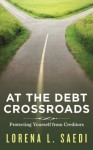
Are your finances starting to mount? Struggling with debt? Get real life advice from consumer bankruptcy attorney Lorena Saedi, founder of a top consumer bankruptcy law firm firm and featured radio and TV consumer law and bankruptcy expert. Lorena has met with thousands of people facing almost every type of debt issue. Although some need to file for bankruptcy protection, Lorena is able to help many clients avoid bankruptcy and set-up a financial restructure plan. People struggling with debt have fewer options today because of the state of the economy: loan modifications are a disaster or unavailable for many and creditors are taking more aggressive action against consumers than in the past. You need an up-to-date guide that can help you assess options, find help, discover opportunities, and take action that works. Lorena Saedi’s “At the Debt Crossroads: Protecting Yourself From Creditors” is that guide. Lorena reveals why most “conventional wisdom” about debt and repayment of debt is just completely wrong. Whether you’ve lost a job, recently become ill, or going through a divorce, having creditor’s constant bombardment can become debilitating and wreak havoc with your ability to make good decisions. This is not a book about managing your money. There are already many great resources out there, and that’s what financial professionals are for. This book addresses what you need to do before you take any action at protecting yourself or resolving your debt with your creditors. You’ll learn: – Questions you need to ask prior to making any major decisions and meeting with professionals – What to expect through different stages of delinquency – Things you need to know ahead of time if you decide to file bankruptcy – Current options you have regarding student loan and tax repayment – Facts and time frames you need to be aware of if you do need to file for bankruptcy protection – How making the wrong decision can snowball into a financial nightmare – How waiting too long will give you less options Dealing with debt issues is never easy but this guide will give you the financial knowledge to make the best decision to rebuild your financial life.
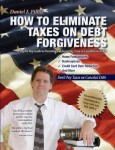
This book will help you deal with any IRS Form 1099-C that you get from the IRS. This book teaches you all the insider tips, tricks and secrets to avoiding taxes on debt forgiveness income and shows you how to cancel this “phantom”income. If you had debt forgiveness for any reason, you cannot afford to go another minute without reading this Manual. Book includes a bonus CD recording of Dan at a live seminar on this subject.
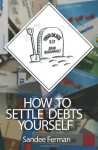
Why You Should Read This Book:
If you have debts and don’t know how you’ll get rid of them, this book is for you …
If creditors are calling you day and night to collect from you, and you don’t have a solution, this book is for you …
If you’ve wondered how long you’ll pay minimum payments, and if you’ll ever get out of debt, this book is for you …
If bankruptcy is starting to look like your only choice, this book is for you …
If you’d like to settle your debts, and wonder if you can do it yourself, this book is for you!
Inside you’ll find out how to work out a budget; how to figure out what your choices are, and decide on your best choice; you’ll get instructions on how to talk to your creditors; you’ll get negotiation insights that will help you get your best settlements with your creditors; you’ll even receive information about what to do in case you receive a lawsuit from one of your creditors (yes, that can happen, and you need to be prepared so you know what to do).
Many people have debts and need help. You might think you need to get a professional to help you negotiate with your creditors. You don’t! I owned a debt settlement company for years and I know most people can do this themselves. If you think you can, this book will show you how to settle your debts yourself.
I don’t hold back any secrets.
You can do it!
This book will show you how.
Product Features
- Used Book in Good Condition
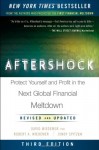
From the authors who accurately predicted the bursting of the global bubble economy comes the definitive look at what lies ahead in 2013 and beyond
Written by the market oracles who predicted, with uncanny accuracy, the global financial meltdown and the economic chain reaction it set in motion, Aftershock offers a vivid picture of what to expect when the world’s bubble economy inevitably pops. More importantly, it tells you how to protect your assets before and during the coming Aftershock and how to capitalize on the new opportunities that others will miss.
Building on the valuable insights and proven predictions of their previous books, the authors of Aftershock, Third Edition offer their latest thinking and advice as the economy moves even closer to the coming aftershock. Explains why and how the stock market, real estate, consumer spending, private debt, dollar, and government debt bubbles will burst, driving up unemployment, devaluing the dollar, and causing deep recession around the globe Updated to include the latest developments, such as new coverage of monetary stimulus and a more global focus (with special attention to Europe and China)Offers new actionable insights about protection and profits in an increasingly confusing investment environment
Sovereign debt is a complex and highly topical area of law and this work represents a new main reference book on the subject bringing together contributions from world leading practitioners, scholars and regulators.
Divided into five parts the book opens with a part on restructuring which analyses contractual provisions and the role of institutions such as the International Monetary Fund. The second part, on enforcement, considers the position of a sovereign as a defendant analyzing the availability of special immunities and matters of defense and arbitration pertinent to sovereign debt.
Part three of the book is concerned with complicating factors such as economic, political or banking crises and how these relate and complicate the task of addressing an unsustainable sovereign debt stock. In this section the particular and topical issues concerned with restructuring in a monetary union are explained.
The fourth part provides economists’ explanations of why and how sovereigns borrow and the causes of a sovereign debt, which enriches understanding by providing context to the purely legal aspects of the work. The book closes with a section which covers proposed reform to sovereign debt systems.
Dedicated to the leading expert Lee Buchheit, this work contains comprehensive and rigorous analysis on sovereign debt management which no specialist should be without.
In this survey of international economic thought, Michael Hudson rewrites the history of trade, development and debt theorizing. He shows that mainstream free-trade surveys are censorial in excluding the protectionist logic that has guided the trade policy of Europe and the United States, especially by leaving out discussion of the transfer problem and payment of international debts. He points out that most economists throughout history have focused as much on war financing as on trade and development. Free-trade ideology and IMF-style financial austerity under today’s rules, rather than benefiting all parties and maximizing welfare, leave “client” nations severely indebted. By excluding dynamics that used to be central to trade theory such as emigration and technology transfer, today’s global production and financial policies tend to concentrate economic and political power in the hands of dominant nations. Prof. Michael Hudson (Economics Department, University of Missouri, Kansas City) is a frequent contributor to The Financial Times, Counterpunch, and Global Research.
Product Features
- ISBN13: 9783980846691
- Condition: New
- Notes: BRAND NEW FROM PUBLISHER! 100% Satisfaction Guarantee. Tracking provided on most orders. Buy with Confidence! Millions of books sold!
A POWERFUL GUIDE ON TO HOW TO GET RID OF YOUR DEBT AND AVOID BANKRUPTCY
***Updated October 2013 to include the new HUD change on getting a FHA loan***
Learn How to Get Rid of Your Credit Card and Other Debt by Yourself
Are you drowning in a sea of debt because of job loss, a divorce or separation, a disability or medical problem?
Whatever your circumstances or financial hardship, Attorney Jim Arnold has many years of debt settlement experience and he will show you exactly how to get rid of your debt and avoid bankruptcy using proven debt settlement techniques. He has a track record over many years of settling several million dollars in debt for individuals and businesses while at the same time teaching people how to do it themselves.
This short and power packed book will give you a roadmap and step by step instructions on how to get out of debt without having to declare bankruptcy.
This Book Provides You with Forms, Telephone Scripts, Letters, and Settlement Agreements to Use With Your Creditors
You will be guided through the process of how to get rid of your debt and you will be given the specific instructions as to what to say on the telephone to your creditors, bill collectors and collection agencies. After you settle the debt, Mr. Arnold then gives you the letters and settlement agreements to send to your creditors along with advice as to what to write on the check.
Have You Heard About Debt Settlement and Debt Negotiation Companies but Are Not Sure Whether You should Use them and Pay Them a Fee?
Financial authors Dave Ramsey and Suze Orman and the Federal Trade Commission recommend that you negotiate directly with your credit card companies and other creditors to settle your debt and to not use a debt settlement company. The FTC and many state attorney generals have brought law suits against debt settlement companies. This book tells you exactly how to do it yourself.
How does bankruptcy work?
You will learn:
The difference between a Chapter 7 and Chapter 13 bankruptcy and what they typically cost.The top 5 reasons why people go bankrupt.Why you should not undertake to do a bankruptcy by yourself without an experienced bankruptcy lawyer.How to locate a bankruptcy lawyer in your area and learn what qualities to look for in a bankruptcy lawyer.
The goal of this book is to teach you how to settle and reduce your own debts to avoid bankruptcy. However, should you consider declaring bankruptcy this book will also teach you what you need to know.
Here are some of the Debt Settlement Secrets that you will learn:
What are Debts? Secured versus Unsecured Debts?What Debts Are Worth Settling?Why would a Creditor or Credit Card Company want to take a lesser amount than what is owed?What is the Best Way to Get Rid of Debt While Avoiding Bankruptcy?What should be said on the Telephone to Your Creditors or the Collection Agency?What Objections are You Likely to Hear from the Creditor, and How Should You Respond?What is a Restrictive Endorsement and when is it Not Recommended to put it on the Back of Your Personal Check?What Happens to Your Credit After Settlement?What is the Recent Study which found that Worrying about your Debt Lowers your IQ?What is the New August 2013 U.S. Department of Housing & Urban Development Policy on Getting a New FHA Loan a Year after a Foreclosure?
…and more
Don’t miss out on this incredibly valuable, concise guide on how to get out of debt. Find out the debt settlement secrets that will help you get rid of your debt while avoiding bankruptcy to help you get back on your financial feet. Your investment in this book is less than a large latte at Starbucks yet it can save you thousands of dollars if you buy it now.