Recently Added Videos
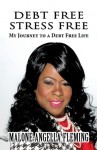
This book was designed to inspire, encourage, and motivate you to make positive changes in your financial life. Put God first in your finances because most times, we take care of the spiritual, and physical, then we only do something about the money after it is all gone. In this informative book, you will discover: The principles to get out of debt How to stay out of debt How to make a budget How to take control of your money
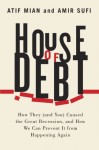
The Great American Recession resulted in the loss of eight million jobs between 2007 and 2009. More than four million homes were lost to foreclosures. Is it a coincidence that the United States witnessed a dramatic rise in household debt in the years before the recession?that the total amount of debt for American households doubled between 2000 and 2007 to $14 trillion? Definitely not. Armed with clear and powerful evidence, Atif Mian and Amir Sufi reveal in House of Debt how the Great Recession and Great Depression, as well as the current economic malaise in Europe, were caused by a large run-up in household debt followed by a significantly large drop in household spending.
Though the banking crisis captured the public’s attention, Mian and Sufi argue strongly with actual data that current policy is too heavily biased toward protecting banks and creditors. Increasing the flow of credit, they show, is disastrously counterproductive when the fundamental problem is too much debt. As their research shows, excessive household debt leads to foreclosures, causing individuals to spend less and save more. Less spending means less demand for goods, followed by declines in production and huge job losses. How do we end such a cycle? With a direct attack on debt, say Mian and Sufi. More aggressive debt forgiveness after the crash helps, but as they illustrate, we can be rid of painful bubble-and-bust episodes only if the financial system moves away from its reliance on inflexible debt contracts. As an example, they propose new mortgage contracts that are built on the principle of risk-sharing, a concept that would have prevented the housing bubble from emerging in the first place.
Thoroughly grounded in compelling economic evidence, House of Debt offers convincing answers to some of the most important questions facing the modern economy today: Why do severe recessions happen? Could we have prevented the Great Recession and its consequences? And what actions are needed to prevent such crises going forward?
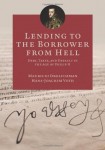
Why do lenders time and again loan money to sovereign borrowers who promptly go bankrupt? When can this type of lending work? As the United States and many European nations struggle with mountains of debt, historical precedents can offer valuable insights. Lending to the Borrower from Hell looks at one famous case–the debts and defaults of Philip II of Spain. Ruling over one of the largest and most powerful empires in history, King Philip defaulted four times. Yet he never lost access to capital markets and could borrow again within a year or two of each default. Exploring the shrewd reasoning of the lenders who continued to offer money, Mauricio Drelichman and Hans-Joachim Voth analyze the lessons from this important historical example.
Using detailed new evidence collected from sixteenth-century archives, Drelichman and Voth examine the incentives and returns of lenders. They provide powerful evidence that in the right situations, lenders not only survive despite defaults–they thrive. Drelichman and Voth also demonstrate that debt markets cope well, despite massive fluctuations in expenditure and revenue, when lending functions like insurance. The authors unearth unique sixteenth-century loan contracts that offered highly effective risk sharing between the king and his lenders, with payment obligations reduced in bad times.
A fascinating story of finance and empire, Lending to the Borrower from Hell offers an intelligent model for keeping economies safe in times of sovereign debt crises and defaults.

Beat Greedy Lawsuit Filing Debt Collectors At Their Own Game. Learn to Fight Debt Collection Lawsuits and WIN! I look at being sued by a debt collector like this: If you are going to sue me, you better have the proof and documentation to validate it. It doesn’t matter if I owe the debt or not. I am not an easy money target and after you read my book neither will you. Foreword excerpt: “Allen Harkleroad may just be the most dangerous consumer in America for companies that treat people unfairly. He has a long and distinguished history of sticking it to those who have treated him and others unfairly. You can now take advantage of his thousands of hours of research and considerable experience and put it to good use in defending yourself against collections lawsuits. Bottom line is that you as a consumer need to be prepared to stand up and assert your rights to protect yourself. With Allen on your side you are on the right track.” ~ Chris Gleason, Esq. www.Consumerhelp911.com “I meant to tell you that I read the book on Friday and it is incredible. I love the motion to dismiss. Powerful and easy to understand.” ~ Barbara of Next Level Unlimited
Product Features
- ISBN13: 9780978999728
- Condition: New
- Notes: BRAND NEW FROM PUBLISHER! 100% Satisfaction Guarantee. Tracking provided on most orders. Buy with Confidence! Millions of books sold!
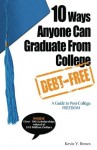
Founder of MyDebtFreeCollege.com, Kevin Y. Brown, author of 10 Ways Anyone Can Graduate from College DEBT-FREE: A Guide to Post Graduate Freedom reflects back on his college experience…”If I have to take out a loan for college, I’m dropping out!” is what he said to his dormitory hall director, a few days in to college. With zero knowledge of the college, financing system Kevin took it upon himself to be proactive and take control of his college finances. Upon graduation, Kevin proved to have kept his promise to himself and today he is free of any college debt. With approximately 37 million student loan borrowers having outstanding student loans and people in the 18 to 24–age bracket spending nearly 30% of their monthly income on student loan debt repayment there is a need for a guide to help students navigate the financial aspects of college life and avoid the pitfalls of student loans and related college debt. 10 Ways Anyone Can Graduate From College DEBT-FREE provides: • 10 proven strategies that can help students avoid student loan debt • Personal stories of the authors experience with each strategy • A list of over 100 scholarships valued at over $10 million dollars • Consequences of defaulting on student loans • An understanding of the various types of financial aid • Up-to-date data on life-time earnings vs. education levels • Current data on and the state of the student loan debt crisis
Before there was money, there was debt
Every economics textbook says the same thing: Money was invented to replace onerous and complicated barter systems—to relieve ancient people from having to haul their goods to market. The problem with this version of history? There’s not a shred of evidence to support it.
Here anthropologist David Graeber presents a stunning reversal of conventional wisdom. He shows that for more than 5,000 years, since the beginnings of the first agrarian empires, humans have used elaborate credit systems to buy and sell goods—that is, long before the invention of coins or cash. It is in this era, Graeber argues, that we also first encounter a society divided into debtors and creditors.
Graeber shows that arguments about debt and debt forgiveness have been at the center of political debates from Italy to China, as well as sparking innumerable insurrections. He also brilliantly demonstrates that the language of the ancient works of law and religion (words like “guilt,” “sin,” and “redemption”) derive in large part from ancient debates about debt, and shape even our most basic ideas of right and wrong. We are still fighting these battles today without knowing it.
Debt: The First 5,000 Years is a fascinating chronicle of this little known history—as well as how it has defined human history, and what it means for the credit crisis of the present day and the future of our economy.
Product Features
- Used Book in Good Condition
This new fully updated edition of Surviving Debt provides precise, practical, and hard-hitting advice from the nation’s consumer law experts on how to deal with crushing debt affecting millions of Americans.
Surviving Debt tells you what consumers need to know about:
• Dealing with Debt Collectors
• Which Debts to Pay First
• Saving Your Home from Foreclosure
• Credit Card Debt
• Student Loans
• Your Credit Report
• When and When Not to Refinance
• Strategies to Prevent Repossessions
• How to Defend Collection Lawsuits
• How to Find Effective Credit Counseling Agencies
• Your Bankruptcy Rights, and much more.
With glossary explaining an array of financial and legal terms and full index.
Reviews
“A wealth of expert legal advice on dealing with an overwhelming debt burden.”
— Senator Elizabeth Warren, Founder, Consumer Financial Protection Bureau
“Outstanding manual. Seldom is such useful, authoritative information
available for so small a price!”
— Booklist
“A gold mine on topics like how to handle collectors, which debts to pay first, and how collection lawsuits work.”
— U.S. News and World Report
“Great advice, from the nation’s experts, on how to pull yourself out of debt.”
— Jane Bryant Quinn
“The best book available for consumers in financial trouble.”
— Stephen Brobeck, Executive Director, Consumer Federation of America
Do you Want to Save Money, but Don’t Know Where to Start? Is Diving Into the World of Coupons Too Time Consuming for You?
In Create Your Own Money-Saving Adventure, you get to pick what YOU want to learn. Not ready to dive into the world of coupons? That’s ok! You can learn about Price Matching, getting out of debt, raising your credit score or saving money on travel. At the end of each chapter, your choices will start to make you a money-saving master. You will get to pick and choose different adventures depending on your lifestyle, time and personal money goals. It’s the Ultimate Money-Saving Guide for everyone!
You can even re-read the book and pick different adventures each time. It’s like reading a whole new book!
With the information in this book and the free website, Freebies2Deals.com, you will learn how to S-T-R-E-T-C-H your dollar like never before!
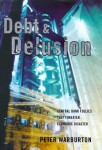
There is an unexploded bomb in the global financial system, threatening to bring the greatest disruption to the lives of people since the Depression on the 1930s. This potential explosion has been created by dereliction of duty by the world’s largest central banks, which have helped to create an unsustainable illusion of personal wealth and national prosperity, exposing the public to uninsurable risks in the process. This volume looks at how this economic timebomb has been created by unchecked credit expansion and the potential havoc it could wreak.
Product Features
- Used Book in Good Condition
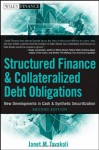
An up-to-date look at the exploding CDO and structured credit products market
In this fully updated Second Edition, financial expert Janet Tavakoli provides readers with a comprehensive look at the CDO and structured credit products market amid recent developments. In addition to a detailed overview of the market, this book presents key issues in valuing structured financial products and important quality control issues. Tavakoli shares her experiences in this field, as she examines important securitization topics, including the huge increase in CDO arbitrage created by synthetics, the tranches most at risk from new technology, dumping securitizations on bank balance sheets, the abuse of offshore vehicles by companies, the role of hedge funds, critical issues with subprime, Alt-A, and prime mortgage securitizations, and securitizations made possible by new securitization techniques and the Euro. While providing an overview of the market and its dynamic growth, Tavakoli takes the time to explore the types of products now offered, new hedging techniques, and valuation and risk/return issues associated with investment in CDOs and synthetic CDOs.