[Debt] Videos
The financial crisis of 2007–8 has been widely understood as a result of the financial system’s exceeding its proper place in society; the system became unbalanced, unsustainable, and deprived of a solid foundation. Even as capitalist finance seeks to reinvent itself in the wake of massive upheaval, critics continue to portray the financial system as fundamentally irrational—an unstable, destructive inventor of fictitious money. Characterizing finance in this way, however, neglects the growing connection between the worlds of high finance and consumer credit. The essays in this special issue take the financial crisis as an opportunity for much-needed conceptual innovation. Its contributors move beyond strictly moralistic criticisms of financialization to rethink core economic categories such as money, speculation, measure, value, and the wage, as well as the relationship among labor, finance, and money.
Melinda Cooper is an Australian Research Council Future Fellow in the Department of Sociology and Social Policy at the University of Sydney. She is the author of Clinical Labor: Tissue Donors and Research Subjects in the Global Bioeconomy, also published by Duke University Press. Martijn Konings is Senior Lecturer and Australian Research Council DECRA Fellow in the Department of Political Economy at the University of Sydney. He is the author of The Development of American Finance.
Contributors: Lisa Adkins, Fiona Allon, Dick Bryan, Melinda Cooper, Marieke de Goede, Chris Jefferis, Martijn Konings, Randy Martin, Michael Rafferty
The United States monetary system is complex.
Money is not what you think it is.
Debt Inflation provides the clarity that is needed.
Why should you care about the monetary system?
The monetary system is like a game. As a participant of the economy you are a player in this game. A clear understanding of how the game works will provide you a significant strategic advantage.
In these pages the monetary system game is deconstructed. Difficult economic concepts are addressed with remarkable clarity. Page after page compelling points pile up, one upon the other, until two extraordinary benefits emerge:
ECONOMIC BREAKTHROUGH: An accurate method for determining the true inflation rate of the dollar is devised. Reliance on “official government inflation numbers” is no longer necessary. The numbers are real, and the conclusions are surprising.
FINANCIAL TRIUMPH: A clever plan for winning the monetary system game is exposed. Incredibly, you will learn how to identify when an economic downturn is lurking around the corner. With this information, you can sell investments and prepare your personal finances months before asset values tumble and recessions develop.
Inside you will discover original ideas and perspectives that are not found in any other book.
Debt Inflation is not a restatement or reorganization of the same old ideas and catch-phrases.
These are new ideas. This is a fresh perspective.
For anyone who wants to get out of debt…
Do your money problems keep you up at night worrying? Do you stress about not having any money left to pay your bills after buying basic necessities? Does it seem like no matter how much you pay off, your debt only increases? More and more people are finding themselves struggling with debt, whether it is from their massive student loans, the mortgage on their home, car loans, or credit card debt. Even those who have great paying jobs often will end up living from paycheck to paycheck.
Stop making choices that are driving you further into debt…
For the first time, two bestselling money management books have been collected into a single volume, Debt Free Forever. This definitive collection tackles some of the most serious problems those who are in debt suffer from, namely a poor credit rating and living well beyond their means. With Debt Free Forever, you will learn techniques that will help you repair your credit as well as strategies that will help you live much more frugally.
Debt Free Forever – The Definitive Collection on Living Frugally and Credit Repair contains the following two books:
Easy Credit Repair – Effective Strategies to Fix Even the Worst Credit Problems by Warren R. Sullivan Frugal Living – Learn Proven Techniques to Help You Live Within Your Means by Nicole Harrington
Take control of your life and finances today! Debt Free Forever is your first step to a better tomorrow!
Is it still worth it for low-income students to attend college, given the debt incurred? This book provides a new framework for evaluating the financial aid system in America, positing that aid must not only allow access to higher education, but also help students succeed in college and facilitate their financial health post-college.
• Reveals the inadequacy of the scope of the current educational and economic policy debates, including moves to funnel low-income children toward two-year degrees, structure alternative debt repayment schedules, and constrain increases in college tuition
• Answers the question: “Does the student who goes to college and graduates but has outstanding student debt achieve similar financial outcomes to the student who graduates from college without student debt?”
• Examines an important subject of interest to educators, students, and general readers that is related to the larger topics of education, economics, social problems, social policy, public policy, debt, and asset building
• Provides empirical evidence and theoretical support for a fundamental shift in U.S. financial aid policy, from debt dependence to asset empowerment, including an explanation of how institutional facilitation makes Children’s Savings Accounts potentially potent levers for children’s educational attainment and economic well-being, before, during, and after college
[Read by Grover Gardner]
David Graeber’s ”fresh . . . fascinating . . . . thought-provoking . . . and exceedingly timely” — (Financial Times) history of debt.
Anthropologist David Graeber presents a stunning reversal of conventional wisdom: before there was money, there was debt. For more than five thousand years, since the beginnings of the first agrarian empires, humans have used elaborate credit systems to buy and sell goods — that is, long before the invention of coins or cash. It is in this era, Graeber argues, that we also first encounter a society divided into debtors and creditors.
Graeber shows that arguments about debt and debt forgiveness have been at the center of political debates from Italy to China, as well as sparking innumerable insurrections. He also brilliantly demonstrates that the language of the ancient works of law and religion — words like ”guilt,’ ”sin,” and ”redemption” — derive in large part from ancient debates about debt and shape even our most basic ideas of right and wrong. We are still fighting these battles today without knowing it.
Debt: The First 5,000 Years is a fascinating chronicle of this little known history — as well as how it has defined human history and what it means for the credit crisis of the present day and the future of our economy.
Recent movements such as the Tea Party and anti-tax “constitutional conservatism” lay claim to the finance and taxation ideas of America’s founders, but how much do we really know about the dramatic clashes over finance and economics that marked the founding of America? Dissenting from both right-wing claims and certain liberal preconceptions, Founding Finance brings to life the violent conflicts over economics, class, and finance that played directly, and in many ways ironically, into the hardball politics of forming the nation and ratifying the Constitution—conflicts that still continue to affect our politics, legislation, and debate today.
Mixing lively narrative with fresh views of America’s founders, William Hogeland offers a new perspective on America’s economic infancy: foreclosure crises that make our current one look mild; investment bubbles in land and securities that drove rich men to high-risk borrowing and mad displays of ostentation before dropping them into debtors’ prisons; depressions longer and deeper than the great one of the twentieth century; crony mercantilism, war profiteering, and government corruption that undermine any nostalgia for a virtuous early republic; and predatory lending of scarce cash at exorbitant, unregulated rates, which forced people into bankruptcy, landlessness, and working in the factories and on the commercial farms of their creditors. This story exposes and corrects a perpetual historical denial—by movements across the political spectrum—of America’s all-important founding economic clashes, a denial that weakens and cheapens public discourse on American finance just when we need it most.
Traces the origin and preservation of sacred Scripture. This book includes the conversion story of the author, who converted from Calvinist ministry to Catholicism.
Product Features
- Used Book in Good Condition
Noreena Hertz, one of the world’s leading experts on economic globalization, looks at the history of third-world debt and its crippling effects on people in developing countries.
Drawing from her impressive debt-relief campaign, fact-finding travels, and meetings with top-ranking officials, Hertz offers a probing analysis of the origins of this rampant burden and its evolution through the decades. With clear principles of justice, she uncovers the imbalance of power and misuse of corrupt dictators and reckless lenders.
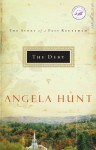
After fleeing a painful and compromising past, Emma Rose Howard settled eagerly into the role of a pastor’s wife. She and her husband, Abel, dedicated themselves to parenting a mega-church and influenced thousands of lives through its related ministries.
But when Emma Rose receives a phone call from a living, breathing remnant of her troubled past, she finds herself wondering if something in her life is woefully out of balance. The presence of this unexpected intruder soon threatens everything Emma Rose has believed about her calling, her marriage, and her relationship with God.
The Debt not only invites readers to embrace the painful heartache and incomparable joy that accompany a soul’s redemption, but it challenges us to follow Christ to new and unexpected places.
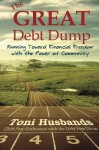
How can running improve your physical health and fiscal fitness? By combining what makes novice runners and struggling debt dumpers successful – The Power of Community. 76% of Americans are living paycheck-to-paycheck. By applying principles common in training for long distance races to personal finances, The Great Debt Dump will show you how to take your finances across the finish line and accomplish your goals. The GREAT Debt Dump… • Provides practical tips to help you break free from debt’s stranglehold • Teaches you how to leverage the Power of Community in order to win with money • Offers tools to help you successfully achieve your financial goals • Lays out how dumping debt will improve your credit • Highlights resources to make budgeting a regular part of your routine • Walks you through a step-by-step plan to build a solid accountability team