Most Viewed Videos

For a free informational series (called “Seven Steps”) on what to do if the debt collectors sue you, go to https://yourlegallegup.com/pages/sued_for_debt_action_steps. It’s free and informative, and there’s no obligation. Along with the companion article at http://yourlegallegup.com/pages/Mediation, this video helps the pro se defendant prepare for mediation. warns of pitfalls that could cause you to lose your shirt in mediation and shows you how to come out ahead. Explains how the mediation process works, how the mediator will probably run the session and what he or she will say, and even what the debt collector’s lawyer is probably going to say. This video tells you exactly what to expect so you can prepare for some of the pressures you’re going to feel without being surprised by them. Don’t Lose Your Shirt in Mediation! http://youtu.be/fBcs7OrNfOU. Your Legal Leg Up is a website and business designed to help ordinary people defend themselves from debt collectors before or during a lawsuit. Many debt collectors rely on unethical and unfair collections methods that violate the Fair Debt Collection Practices Act (FDCPA), which is the first and best source of debtor rights, among other laws.
What makes everybody have a good chance against a debt collector is simply the way the debt collection business works. Junk debt buyers buy huge “tranches” or “portfolios” of debt — sometimes many millions of dollars of “nominal” debt at a time. “Nominal” debt means that is the amount that is theoretically owed, although the companies selling it, like the companies buying it, “discount” the value of debt depending on how long it has been in default (or based on other risk factors). Debt collectors buy huge amounts of the riskiest debt for pennies on the dollar.
Then they harass and dun the people who supposedly owe the money for a while, and then they file suit, often against dozens or hundreds of people at a time. Because the debt collectors are doing everything in “bulk,” they cannot really spend much time on individual cases. If you fight them, therefore, you have an excellent chance to make them go away — it’s simply too profitable for them to pursue the many who do not fight rather than the few who do.
If you hire a lawyer to fight for you, they are more likely to drop your case faster, but if you fight them intelligently even without a lawyer you will have an excellent chance to win the suit on your own. And this, again, is because every time you file a pleading, a motion, or discovery, or pursue any of your rights or potentials in the lawsuit, and every time you force the debt collector to appear in court, you are costing them money — money they hate to spend on you when there are so many others who won’t fight.

If it’s all about the post-pandemic recovery and if deficits no longer matter… then what about Africa? France welcoming leaders for a summit devoted to finance and relieving the debt owed by a continent that felt the full brunt of a world economy under lockdown. The age-old question more acute than ever: how to be like the US and Europe and earmark huge sums for health care, schools, green energy and infrastructure… instead of using the money to pay interest on old debts?
Subscribe to France 24 now:
http://f24.my/youtubeEN
FRANCE 24 live news stream: all the latest news 24/7
http://f24.my/YTliveEN
Visit our website:
http://www.france24.com
Subscribe to our YouTube channel:
http://f24.my/youtubeEN
Like us on Facebook:
https://www.facebook.com/FRANCE24.English
Follow us on Twitter:
https://twitter.com/France24_en
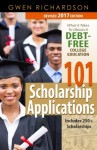
We have all read the headlines featuring a fortunate college-bound student who received $100,000 or more in scholarship awards. Assuming that the scholarships were renewable annually, this amount could easily pay for four years of college at any American college or university. However, these success stories are the exception, not the rule. They are aberrations among the pool of millions of aspiring college students who submit scholarship applications to the hundreds of companies, foundations and non-profit groups that offer them. The reality is a much different, and sobering, picture. According to federal government estimates, the average undergraduate who borrows money to pay for college graduates with about $37,000 in student loan debt. 101 Scholarship Applications: What It Takes to Obtain a Debt-Free College Education was written specifically to address the issue of college loan debt, and help students and their parents identify scholarship opportunities, as well as develop strategies for submitting applications and winning awards. This book’s author, Gwen Richardson, is a parent who has spent five years carefully researching scholarship sources for her daughter, who will enter her senior year in college in 2017 and is completely debt-free. The highlight of this book is a comprehensive listing of more than 200 scholarship sources, including award amounts, eligibility requirements and direct web site links. All sources have been vetted and researched for accuracy.
The book of financial wisdom that your future self will thank you for reading
For many adults under 40, ‘debt’ is a four-letter word—something that should be avoided but is all too often unavoidable. In The Value of Debt in Building Wealth, bestselling author Thomas J. Anderson encourages you to rethink that. You’ll walk away from this book with an understanding of how you can use debt wisely to secure the financial future you envision for yourself and your family. Student loans, mortgages, lines of credit, and other forms of debt are all discussed in detail, with a focus on smart planning for those who are accumulating assets—and debt—now.
Should you rent or buy? How important is liquidity? What is good versus bad debt? How much debt should you have? What debt-to-income and debt-to-asset ratios should you aim for? Fixed debt or floating debt? What’s the best way of saving for college and retirement? These are big questions that deserve thorough answers because the choices you make now could influence the course of your life. This thought-provoking book will open your eyes to savvy financial strategies for achieving your goals faster and with healthier bank accounts. Explore strategies for smart debt management, explained by one of the nation’s top financial advisors Gain an understanding of investment basics and key financial concepts you’ll need to achieve your long-term goals Understand the risks of having debt and the potential risks of being debt-free Make financial decisions now that will maximize your wealth, freedom, and opportunity later
This book is not about buying things you cannot afford. It is about liquidity, flexibility and optimizing your personal balance sheet. The Value of Debt in Building Wealth is full of ideas you can apply to your own situation—no matter what your current asset level. Read this book today and thank yourself later.

We had our first Zoom mediation the other day, and we wanted to share our experience with anyone who may be considering these types of meetings in their case.
Overall, mediation over Zoom went well.
We’re still in the early days of this, so there are some things that we would do differently/better in the future.
We recommend that you use Zoom on your computer, and that you have a back up device for Zoom whether it’s a phone, iPad, tablet, etc.
This is looking like the “new normal” for cases whether we like it or not, but there are some great pros that make this transition easier. Can share documents. Much better than a phone mediation (those often occur in appealed cases).
Thanks for watching!
John G. Watts
Watts & Herring, LLC
Representing consumers across Alabama
205-879-2447
https://www.alabamaconsumer.com/
https://www.alabamaconsumer.com/contact-us/ (to send us a message)
“No representation is made that the quality of the legal services to be performed is greater than the quality of legal services performed by other lawyers.”

After meeting online, Carolyn and Jason lived large during their engagement, but now it’s time to pay the piper. They were years behind in paying taxes and spending double what they earn – which led Gail to repossess the stuff they purchased on credit. Caroline felt like a failure and they decided to cancel their wedding plans. Can Gail teach these two to be happy with what they have in time to save their future together? –
–
Watch more from Weddings and Beyond – https://youtube.com/c/WeddingsAndBeyondTV/videos
Explore our family of YouTube channels with Free movies, tv series and documentaries.
? TOP BOX is where you’ll find an eclectic mix of mind-bending documentaries, cult classic films and investigative television documentaries. https://youtube.com/topboxtv
?? I Love Docs for documentaries: https://youtube.com/ILOVEDOCS
?? North of Main for Independent movies: https://youtube.com/NORTHOFMAIN
#weddings #gettingmarried #realitytv

IG – http://bit.ly/2SptcAL
? In this video, we’re going to learn ten important lessons about debt relief. Leave your thoughts or questions in the comments below. Have fun!
? SUBSCRIBE FOR MORE FINANCIAL EDUCATION
https://www.youtube.com/channel/UC4y7a8nzB3W9IWd71FHnOsw/?sub_confirmation=1
What is Build Your Tomorrow?
Build Your Tomorrow is financial fitness for all.
Join our newsletter for giveaways and exclusive content:
http://bit.ly/2Fc98Q7
Instagram: _buildyourtomorrow
Website: www.buildyourtomorrow.com
Let’s connect: eliezer@buildyourtomorrow.com
Hashtag: #buildyourtomorrow
Home base: New York
*The content contained on or made available through this website is not intended to and does not constitute financial or investment advice. Your use of the information on this channel or materials linked from the Web is at your own risk.

DCM Group Marketing Director Anjela da Silva looks at the reasons why Debt Counselling is a wise decision for over indebted consumers

Debt consolidation is a form of debt refinancing that entails taking out one loan to pay off many others. In this video, the bankruptcy attorney John Skiba describes what debt consolidation is, talks about debt settlement companies, and provides his opinion on what would be the correct way to do it.
MORE ABOUT JOHN SKIBA
John Skiba is a bankruptcy & consumer protection attorney in the state of Arizona.
John helps clients with chapter 7 bankruptcy & chapter 13 bankruptcy for Arizona residents.
????? ARIZONA RESIDENTS ONLY: If you live in the state of Arizona and need help with a junk debt buyer lawsuit or need to file bankruptcy I can help you directly.
Contact my office at (480) 907-3388 https://www.jacksonwhitelaw.com/bankruptcy/
Want to talk to me directly? https://calendly.com/johnskiba
John offers informational products and strategies for consumers facing serious debt problems – particularly those being sued by junk debt buyers like Midland Funding, Portfolio Recovery Associates, Cavalry SPV, and many more.
???Forms, Templates and Video Tutorials can be found at ??? http://consumer-warrior-project.thinkific.com/
Our prediction for global economies and global asset markets heading into the turbulent 2016–2017 period is not meant to be alarmist, or a “Dr Doom” style forecast, but a realistic assessment of the facts around debt, demographics and disinflation, and then an extrapolation from those factors to individual economies and markets. Rather than simply being doomsayers, we intend to pen another book in 2017–2018, to take advantage of the expected undervaluation of global assets and economies that will occur as a result of the next recessionary phase. As such, we like to be contrarians, in both boom and bear cycles. Our strong sense is that the bull cycle that started in 2009, now nearly 7 years old, is slowly maturing. The time to make major asset allocation changes, whether you are a small investor or a major pension fund investor, is now, in advance of the turmoil. We are clear that we expect shares, property and other growth assets to fall by 30–50% in the coming 2 years. Commodities will fall by more than that, and currencies will fall by a fraction less. Either way, some major opportunities are there for the picking. We strongly advise our readers to think outside of the square, challenge consensus, be contrarian, and think for themselves, logically and sensibly. If they do, that is the path not just to profit but importantly to capital preservation in the turbulent years that lie ahead of us.