Most Viewed Videos

National Debt Mediation Association CEO, Magauta Mphahlele, discusses debt traps.

Visit us online by going to https://www.debtreview-sa.co.za/
English:
Debt Review is a process in terms of the National Credit Act for over indebted consumers. The purpose of the act is to protect the over indebted consumer against Credit providers.
The first step in the process is to get the help from a debt counsellor and we do recommend that you do work with a company that has a NCR number and thus is registered with the NCR.
Afrikaans:
Skuldberading is basies die afrikaanse terme vir”debt review” of “debt counselling” en ons gaan onder net n oorsig gee en voel asb vry om ons te kontak met enige vrae of vir meer inligting. Ons afrikaans sprekende konsultante sal met graagte help.
Skuldberading is die proses in terme van die Nasionale Krediet Reguleerder (NKR) vir verbruikers wat in die skuld is. Die rede vir die proses is vir beskerming van die verbruikers, teen krediet verskaffers.
The staggering United States debt has a direct impact on every American, yet few are aware of where the debt came from and how it affects their lives
The United States has a debt problem—we owe more than $18 trillion while our gross domestic product, the value of all goods and services produced in America, is only $17.5 trillion. To pay down the debt, some recommend austerity, cutting federal expenditures. Others suggest increasing taxes, especially on the wealthiest Americans. In Understanding the National Debt: What Every American Needs to Know, economic historian Carl Lane urges that the national debt must be addressed in ways beyond program cuts or tax increase alternatives, but change can only occur when more Americans understand what constitutes our debt and the problems it causes. The gross national debt is composed of two elements: the public debt and “intragovernment holdings.” The public debt consists of bonds, bills, and notes purchased by individuals, banks, insurance companies, hedge and retirement funds, foreign governments, and university endowments. Intragovernment holdings refers to money that the U.S. Treasury borrows from other parts of the government, principally Social Security and Medicare. This accounts for approximately a quarter of the gross national debt, but that is money that we owe to ourselves, not another entity. The more the government borrows, the less is available for private sector investment, creating a “squeeze” effect that inhibits economic growth. The most burdensome problem is the interest due each year on the debt. Every dollar spent on interest is a dollar less for other purposes. Those elements of the federal budget which are termed “discretionary” suffer. The mandatory elements of the budget—Social Security, Medicare, Medicaid, and the interest on the debt—must be provided for, but defense and national security, education, energy, infrastructure repair and development, and other needs wind up with less. By understanding the national debt we have an opportunity to address our real debt challenge—its principal and interest.

Debt consolidation rolls multiple debts into a single payment, while debt settlement is a negotiated agreement in which a creditor accepts less than the full amount owed. Learn more about the pros and cons of debt consolidation and debt settlement and see which is right for you.
To learn more about Freedom Debt Relief, please visit:
Facebook: https://www.facebook.com/freedomdebtrelief/
Twitter: https://twitter.com/FreedomDebt
Instagram: https://www.instagram.com/freedomdebtrelief/
TrustPilot: https://www.trustpilot.com/review/freedomdebtrelief.com
Freedom Debt Relief: https://www.freedomdebtrelief.com/what-we-do/
The author explains how he shed over $300,000 in debt–twice–all while working as a public school teacher. The book offers a compelling view of the debt burden in America today and how the writer made radical choices to pay off everything and to enjoy a life in the black. Included are secrets on boosting income and sources of generating funds while simultaneously slashing costs. Perfect for those searching for answers when it comes to reigning in debt.

Visit us online @ https://www.debtreview-sa.co.za/
We have been assisting consumers in South Africa for quite a few years now and with our dedicated staff members, we will be able to make the debt review process as streamlined as possible.
You can contact us to speak to any of our debt counsellors and we will provide you our best advice and assistance, to get your debt review application started.
Debt Review, Debt Review success stories, Debt Review pros and cons, Debt Review explained, Debt Review South Africa.

Visit us online by going to https://www.debtreview-sa.co.za
Debt Review is a process in terms of the National Credit Act for over indebted consumers. The purpose of the act is to protect the over indebted consumer against Credit providers. The first step in the process is to get the help from a debt counsellor and we do recommend that you do work with a company that has a NCR number and thus is registered with the NCR.
South africadebt review, Debt review, Debt review success stories, Debt review pros and cons, Debt review explained, Debt review south africa.
Debt Your Dirty Little Secret: Tips and motivation to being financially worry free. What are you hiding in your life that is causing you stress and worry? Is it that you haven’t revealed your hidden debt? Is it that your finances are in chaos? Is it that you haven’t got a grip on your financial comings and goings? Make that first step to sorting out money worries and letting those who matter know. You have a secret: you are in debt! What if your partner is clueless about your finances? What if you haven’t told the people important to you about how much money you owe? This book is designed to empower people to improve their quality of life by improving their relationship life. By revealing our hidden secret of indebtedness, we are ready to deal with the consequences of letting the debts escalate. Get into good finance and budgeting habits so you can make good choices. Use this easy to follow guide as it provides motivation and tips to see you through the challenging issue of admitting you owe money. Get to that new place where you have sorted out your finances, are more confident and in a better position of being more financially worry free.
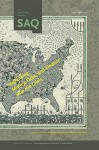
The financial crisis of 2007–8 has been widely understood as a result of the financial system’s exceeding its proper place in society; the system became unbalanced, unsustainable, and deprived of a solid foundation. Even as capitalist finance seeks to reinvent itself in the wake of massive upheaval, critics continue to portray the financial system as fundamentally irrational—an unstable, destructive inventor of fictitious money. Characterizing finance in this way, however, neglects the growing connection between the worlds of high finance and consumer credit. The essays in this special issue take the financial crisis as an opportunity for much-needed conceptual innovation. Its contributors move beyond strictly moralistic criticisms of financialization to rethink core economic categories such as money, speculation, measure, value, and the wage, as well as the relationship among labor, finance, and money.
Melinda Cooper is an Australian Research Council Future Fellow in the Department of Sociology and Social Policy at the University of Sydney. She is the author of Clinical Labor: Tissue Donors and Research Subjects in the Global Bioeconomy, also published by Duke University Press. Martijn Konings is Senior Lecturer and Australian Research Council DECRA Fellow in the Department of Political Economy at the University of Sydney. He is the author of The Development of American Finance.
Contributors: Lisa Adkins, Fiona Allon, Dick Bryan, Melinda Cooper, Marieke de Goede, Chris Jefferis, Martijn Konings, Randy Martin, Michael Rafferty