Top Rated Videos
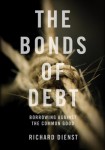
The credit crisis has pushed the whole world so far into the red that the gigantic sums involved defy understanding. On a human level, what does such an enormous degree of debt and insolvency mean? In this timely book, cultural critic Richard Dienst considers the financial crisis, global poverty, media politics and radical theory to parse the various implications of a world where man is born free but everywhere is in debt.
Written with humor and verve, Bonds of Debt ranges across subjects—such as Obama’s national security strategy, the architecture of Prada stores, press photos of Bono, and a fairy tale told by Karl Marx—to capture a modern condition founded on fiscal imprudence. Moving beyond the dominant pieties and widespread anxieties surrounding the topic, Dienst re-conceives the world’s massive financial obligations as a social, economic, and political bond, where the crushing weight of objectified wealth comes face to face with new demands for equality and solidarity. For this inspired analysis, we are indebted to him.

First came the financial and debt crisis in Greece, then government financing difficulties and rescue programs in Ireland in 2010 and Portugal in 2011. Before long, Italy and Spain were engulfed by financial contagion as well. Finally in 2012, the European Central Bank pledged to do “whatever it takes” to preserve the euro area with purchases of government bonds, a step that achieved impressive results, according to William R. Cline in this important new book.
One of the world’s leading experts on fiscal and debt issues, Cline mobilizes meticulously researched and forceful arguments to trace the history of the euro area debt crisis and makes projections of future debt sustainability. He argues that euro area leaders made the right decision to keep the euro from breaking apart but warns against complacency about the future. Cline contends that troubled European economies should continue their fiscal consolidation but that further debt restructurings for most countries are not called for. Greece is a special case and may need some further debt relief contingent on continued progress on fiscal and structural reform, however. In this landmark study, Cline offers a detailed analysis of the mistakes, successes, and options for Europe as it struggles to overcome its worst economic disaster since World War II.
1 SOFTCOVER BOOK
Increase the odds you won’t run out of money in retirement – using debt!
Conventional wisdom is wrong – being debt free in retirement may actually increase your risk. The Value of Debt in Retirement teaches you how incorporating debt into your retirement strategy may increase your return, lower your taxes and actually lower your risk. You read that right. If handled correctly, debt—that thing we’ve all been taught to avoid—can play an integral role in your life, especially in retirement. New York Times Best Selling Author and nationally acclaimed financial expert Tom Anderson shows you how to use the time tested strategies of the best companies and the ultra rich to retire comfortably, minimize taxes, buy the things you have always wanted to have and do the things you have always wanted to do.
Thought provoking and against the grain, Anderson explains why your risk tolerance doesn’t matter, why being debt free may actually increase your risk and why rushing to pay off your mortgage may be a financial disaster. Full of shocking revelations and tricks high- net-worth individuals have used for years, The Value of Debt in Retirement opens the world to a new approach to wealth management in retirement, one that factors in both sides of the balance sheet as an integrated ecosystem.
Real-world case studies illustrate how informed debt strategies can lead to a happier, healthier retirement. See how an individual with a net worth of more than $5 million can spend $20,000 per month – after taxes – and pay less than $5,000 per year in taxes, how it is possible to increase your rate of return by 50%, and how a lower risk portfolio with debt could increase the chances you do not run out of money.
Specifically written to Baby Boomers, practical guides and checklists show how to use debt strategies to fund primary and secondary properties, refinance credit card debt, and finance hobbies, such as cars and boats and recreational vehicles. Additional guides show how you can help your children, help your parents and leave a bigger legacy for your heirs and favorite charities. Regardless of your net worth, The Value of Debt in Retirement provides tools to use to apply these concepts to your personal situation.
There is no free lunch: the book delivers a balanced perspective focusing on the potential risks and benefits of the strategies discussed. A discussion on economic history highlights some of the shocks the economy may face and provides important warnings that you should factor into your retirement plan. Anderson not only shows that your life expectancy may be longer than you think, but also illustrates that many investors may be on track to average returns well under 4% for the next ten years – a potentially devastating combination. Irrespective of your beliefs about debt, The Value of Debt in Retirement proves risk is more important than return for retirees and provides suggestions on ways to minimize that risk.
Not all debt is good and high levels of debt are bad. The Value of Debt in Retirement is about choosing the right debt, in the right amounts, at the right time. Perhaps most importantly, this book isn’t for everybody. This book requires responsible actions. If you can’t handle the responsibility associated with the ideas then this book then it isn’t for you. If you need a rate of return under 3% from your investments then you may not need this book. But if you can handle the responsibility and if you need a return above 3%, this book may offer insights into the best (and potentially only) way to achieve your goals.
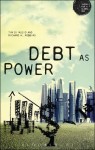
Debt as Power is a timely and innovative contribution to our understanding of one of the most prescient issues of our time: the explosion of debt across the global economy and related requirement of political leaders to pursue exponential growth to meet the demands of creditors and investors.
The book is distinctive in offering a historically sensitive and comprehensive analysis of debt as an interconnected and global phenomenon. Rather than focusing on the historical emergence of debt as a moral obligation, the authors argue that debt under capitalism can be conceived of as a technology of power, intimately tied up with the requirement for perpetual growth and the differential capitalization that benefits ‘the 1%’.
Their account begins with the recognition that the histories of human communities and their natural environment are interconnected in complex spatial and hierarchical relations of power and to understand their development we need to not only examine the particularities of a given case, but more importantly their interconnected, interdependent and international relations. Since debt under capitalism is increasingly ubiquitous at all levels of society and economic growth is now the sole mantra of dominant political parties around the world, the authors argue that tracing the evolution and transformation of debt as a technology of power is crucial for understanding the ‘present as history’ and possible alternatives to our current trajectory.
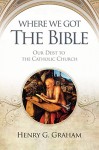
Traces the origin and preservation of sacred Scripture. This book includes the conversion story of the author, who converted from Calvinist ministry to Catholicism.
Product Features
- Used Book in Good Condition
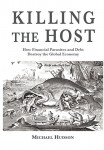
How financial parasites and debt destroy the global economy. Professor Hudson continues the discussion on the financialization of capital and its global effects. KILLING THE HOST exposes how finance, insurance, and real estate (the FIRE sector) have gained control of the global economy at the expense of industrial capitalism and governments. The FIRE sector is responsible for today’s economic polarization (the 1% vs. the 99%) via favored tax status that inflates real estate prices while deflating the “real” economy of labor and production. The Great 2008 Bailout saved the banks but not the economy, and plunged the U.S., Irish, Latvian and Greek economies into debt deflation and austerity. This book describes how the phenomenon of debt deflation imposes austerity on the U.S. and European economies, siphoning wealth and income upward to the financial sector while impoverishing the middle class.
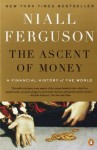
A richly original look at the origins of money and how it makes the world go ?round
Niall Ferguson follows the money to tell the human story behind the evolution of our financial system, from its genesis in ancient Mesopotamia to the latest upheavals on what he calls Planet Finance. What?s more, Ferguson reveals financial history as the essential backstory behind all history, arguing that the evolution of credit and debt was as important as any technological innovation in the rise of civilization. As Ferguson traces the crisis from ancient Egypt?s Memphis to today?s Chongqing, he offers bold and compelling new insights into the rise? and fall?of not just money but Western power as well.
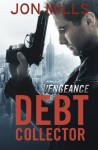
Mobster and hitman Jack Winchester thought he had put his past behind him. When he returns to New York City and finds his friend murdered, and his sister kidnapped, Jack goes to war against the Sicilian Mafia.

Getting Your FREE Bonus
Download this book, read it to the end and see “BONUS: Your FREE Gift” chapter after the conclusion.
Chicken Coop (FREE Bonus Included): Simple Start For Beginners. How To Raise Your Chickens Healthy And Happy
This book is about raising chickens the happier and the healthier way and is ideal for those who are beginning to raise chickens. There’s a chapter on the breeds of chicken, with both descriptions and pictures of both layers and broilers. A clear distinction has also been made between the heritage and the hybrid breeds, making it easier for to choose the breed you want to keep, whether for eggs or for meat.
There’s also a section that talks about the chicken coop, with reasons as well as benefits for making a DIY chicken coop instead of buying a ready-made one.
In this book, you will also learn how to feed your chickens, plus the various foods that you should and those that you should not give your chickens (if you want to get high egg and meat produce).
The author has also listed for you a step to step guide on how to clean a chicken coop and also how to take ultimate care of your chickens. To get you started, the author has included information on how you can raise your chickens the happier and healthier way by ensuring that you have enough space for them. There is also information on the important things to be included in the chicken coop and how to make them.
Heavy with the information you need about raising chickens, you can do yourself justice by getting the copy of this book before it is too late.
Download your E book “Chicken Coop: Simple Start For Beginners. How To Raise Your Chickens Healthy And Happy ” by scrolling up and clicking “Buy Now with 1-Click” button!
Tags: backyard farming, backyard homestead, backyard chickens, homesteader, homestead gardening, homestead survival, homestead guide, mini farming, vertical gardening, indoor gardening, urban gardening, organic gardening, backyard chickens, raising chickens, backyard homesteading, homestead projects mini farming for beginners, Backyard Mini Farm, Organic Food,Growing Your Own Organic Food, Homesteading, Backyard Chickens, Backyard Gardening , Homesteading Essentials, Homesteading Books, Homesteading Gardening, Backyard Beekeeping , Veggies and Herbs