Top Rated Videos

Large 8.5 Inches By 11 Inches Budget Planner.
Get Your Copy Today
No Pockets!
Includes
Debt TrackerSavings TrackerBudget Tracker Including Income, Expenses, Planned, Actual And Difference
Get Your Copy Today
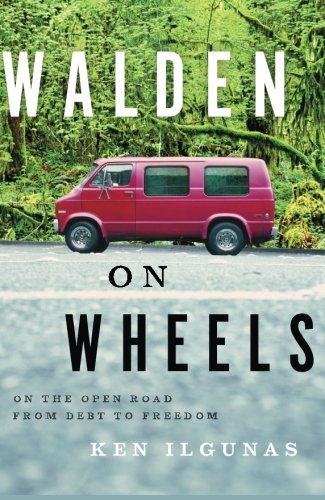
In this frank and witty memoir, Ken Ilgunas lays bare the existential terror of graduating from the University of Buffalo with $32,000 of student debt. Ilgunas set himself an ambitious mission: get out of debt as quickly as possible. Inspired by the frugality and philosophy of Henry David Thoreau, Ilgunas undertook a 3-year transcontinental jour¬ney, working in Alaska as a tour guide, garbage picker, and night cook to pay off his student loans before hitchhiking home to New York.
Debt-free, Ilgunas then enrolled in a master’s program at Duke University, determined not to borrow against his future again. He used the last of his savings to buy himself a used Econoline van and outfitted it as his new dorm. The van, stationed in a campus parking lot, would be more than an adventure—it would be his very own “Walden on Wheels.”
Freezing winters, near-discovery by campus police, and the constant challenge of living in a confined space would test Ilgunas’s limits and resolve in the two years that followed. What had begun as a simple mission would become an enlightening and life-changing social experiment. Walden on Wheels offers a spirited and pointed perspective on the dilemma faced by those who seek an education but who also want to, as Thoreau wrote, “live deep and suck out all the marrow of life.”
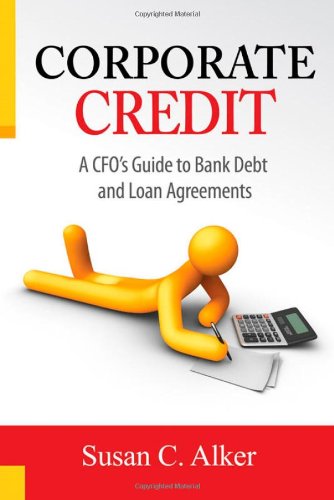
A helpful guide for CFO’s and bankers alike, this book demystifies the contents of a typical corporate loan agreement and helps make the entire loan process easier to deal with. The book outlines the steps involved in getting a loan and explains – in plain and easy-to-understand language – what the terms of the loan agreement mean. CFO’s will learn which terms in the agreement could create problems for the company and how to take steps to prevent that. And corporate borrowers and lenders alike will gain a better understanding of the steps involved in preparing to close the deal and how to make it all go smoothly.
Give your business a successful credit and collections plan with this easy and clear guide
Over 100,000 businesses have slow or non-paying customers. Yet very few actually have a workable plan for claiming the missing revenue that results. This book gives you a complete solution and tool set to ensure your business maximizes its collections while maintaining an effective, profitable credit plan.
You’ll discover how to set up an efficient in-house credit policy that not only lets you collect more debts, but also boost sales, increase cash flow, and grow profits. Step-by-step credit management instructions show you how to weed out bad-paying customers, add more good-paying customers, collect on past-due balances, avoid bad debt, and limit credit risk.Contains all needed forms to set up and implement an effective credit policyAuthor is a popular columnist for several newspapers and national magazines, and appears regularly in the media as a go-to authority on debt
Get Paid enables you to decide what matters most to your business when it comes to billing, payment terms, pricing, cash flow, and more, then set up the systems to meet these goals and increase profitability.
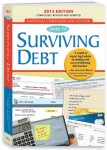
This new fully updated edition of Surviving Debt provides precise, practical, and hard-hitting advice from the nation’s consumer law experts on how to deal with crushing debt affecting millions of Americans.
Surviving Debt tells you what consumers need to know about:
• Dealing with Debt Collectors
• Which Debts to Pay First
• Saving Your Home from Foreclosure
• Credit Card Debt
• Student Loans
• Your Credit Report
• When and When Not to Refinance
• Strategies to Prevent Repossessions
• How to Defend Collection Lawsuits
• How to Find Effective Credit Counseling Agencies
• Your Bankruptcy Rights, and much more.
With glossary explaining an array of financial and legal terms and full index.
Reviews
“A wealth of expert legal advice on dealing with an overwhelming debt burden.”
— Senator Elizabeth Warren, Founder, Consumer Financial Protection Bureau
“Outstanding manual. Seldom is such useful, authoritative information
available for so small a price!”
— Booklist
“A gold mine on topics like how to handle collectors, which debts to pay first, and how collection lawsuits work.”
— U.S. News and World Report
“Great advice, from the nation’s experts, on how to pull yourself out of debt.”
— Jane Bryant Quinn
“The best book available for consumers in financial trouble.”
— Stephen Brobeck, Executive Director, Consumer Federation of America
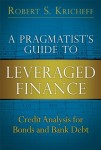
The high-yield leveraged bond and loan market (“junk bonds”) is now valued at $3+ trillion in North America, €1 trillion in Europe, and another $1 trillion in emerging markets. What’s more, based on the maturity schedules of current debt, it’s poised for massive growth. To successfully issue, evaluate, and invest in high-yield debt, however, financial professionals need credit and bond analysis skills specific to these instruments. Now, for the first time, there’s a complete, practical, and expert tutorial and workbook covering all facets of modern leveraged finance analysis. In A Pragmatist’s Guide to Leveraged Finance, Credit Suisse managing director Bob Kricheff explains why conventional analysis techniques are inadequate for leveraged instruments, clearly defines the unique challenges sellers and buyers face, walks step-by-step through deriving essential data for pricing and decision-making, and demonstrates how to apply it. Using practical examples, sample documents, Excel worksheets, and graphs, Kricheff covers all this, and much more: yields, spreads, and total return; ratio analysis of liquidity and asset value; business trend analysis; modeling and scenarios; potential interest rate impacts; evaluating and potentially escaping leveraged finance covenants; how to assess equity (and why it matters); investing on news and events; early stage credit; and creating accurate credit snapshots. This book is an indispensable resource for all investment and underwriting professionals, money managers, consultants, accountants, advisors, and lawyers working in leveraged finance. In fact, it teaches credit analysis skills that will be valuable in analyzing a wide variety of higher-risk investments, including growth stocks.
Article by Irving Fisher (1936), Professor Emeritus of Economics, Yale University, urges Congress to take back the Constitutional money power, redeem the national debt, require banks’ demand deposit to be 100% liquid, to avoiding an inelastic loan structure that bursts, leaving frozen loans behind, and avoid ‘Global Financial Crises’. Includes a brief biography of Irving Fisher.
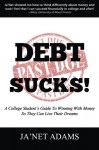
College students are facing many issues today and the main one being student loan debt! Student loan debt is at $1.2 trillion and growing! Debt Sucks! is for the college student who is looking to win with money so they can pursue their dreams! Ja’Net Adams shows the reader step by step how she paid off nearly $50,000 of debt in 2 1/2 years! In Debt Sucks! there are tips on how pay off student loans and other debt quickly while in college and after. The book also encourages college students to stand out from the crowd so that they can land internships while they are in school and valuable careers once they graduate.
If you will live like no one else, later you can live like no one else.
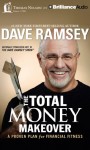
Build up your money muscles with America’s favorite finance coach.
Okay, folks, do you want to turn those fat and flabby expenses into a well-toned budget? Do you want to transform your sad and skinny little bank account into a bulked-up cash machine? Then get with the program, people. There’s one sure way to whip your finances into shape, and that’s with The Total Money Makeover.
By now, you’ve heard all the nutty get-rich-quick schemes, the fiscal diet fads that leave you with a lot of kooky ideas but not a penny in your pocket. Hey, if you’re tired of the lies and sick of the false promises, take a look at this—it’s the simplest, most straightforward game plan for completely making over your money habits. And it’s based on results, not pie-in-the-sky fantasies. With The Total Money Makeover: Classic Edition, you’ll be able to:
•Design a sure-fire plan for paying off all debt—meaning cars, houses, everything
•Recognize the 10 most dangerous money myths (these will kill you)
•Secure a big, fat nest egg for emergencies and retirement!