Top Rated Videos
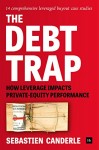
This is the inside story of private equity dealmaking.
Over the last 40 years, LBO fund managers have demonstrated that they are good at making money for themselves and their investors. But when one looks beneath the surface of the transactions they engineer, it is apparent that these deals can, at times, go spectacularly wrong.
Through 14 business stories, all emanating from the noughties’ credit bubble and including headline-grabbing names like Caesars, Debenhams, EMI, Hertz, Seat Pagine Gialle and TXU, The Debt Trap shows how, via controversial practices like quick flips, repeat dividend recaps, heavy cost-cutting and asset-stripping, leveraged buyouts changed, for better or for worse, the way private companies are financed and managed today.
From technological disruption in the worlds of music recording and business-directory publishing to economic turbulence in the gambling, real estate and energy sectors, highly levered corporations are often incapable of handling market corrections when debt commitments start piling up. Behind the historical events and the financial empires erected by some of the elite private equity specialists, these 14 in-depth case studies examine how value-maximising techniques and a short-cut mentality can impact investment returns and portfolio assets.
Whether you are a PE practitioner, investor, business manager, academic or business student, you will find The Debt Trap to be an authoritative and fascinating account.
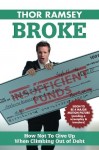
Have you ever struggled with debt? Wait. Let me rephrase that question. Do you live in America? Did you once believe that 90 days was the same as cash? Me, too. Broke chronicles my climb out of the financial hole I dug. (By the way, you should only dig holes if you plan on filling them with treasure.) Along the way, I discovered that my debt didn’t just reflect my bad decisions. It was a spiritual issue, “for where your treasure is there your heart will also be.” Apparently, my heart was in overdraft. Broke will shine some funny hope into your messy money life. This book is for the days you feel like giving up, encouraging you to take a step closer to being debt-free. People want to know if other people are as dumb as they are – and thankfully, I am. And if I can climb out of debt, you can, too.
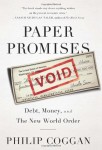
Winner of the Spear’s Best Business Book Award
Longlisted for the 2012 Financial Times and Goldman Sachs Business Book of the Year Award
For the past forty years western economies have splurged on debt. Now, as the reality dawns that many debts cannot be repaid, we find ourselves again in crisis. But the oncoming defaults have a time-worn place in our economic history. As with the crises in the 1930s and 1970s, governments will fall, currencies will lose their value, and new systems will emerge. Just as Britain set the terms of the international system in the nineteenth century, and America in the twentieth century, a new system will be set by today’s creditors in China and the Middle East. In the process, rich will be pitted against poor, young against old, public sector workers against taxpayers and one country against another.
In Paper Promises, Economist columnist Philip Coggan helps us to understand the origins of this mess and how it will affect the new global economy by explaining how our attitudes towards debt have changed throughout history, and how they may be about to change again.