Top Rated Videos
From the chief economic commentator for the Financial Times, a brilliant tour d’horizon of the new global economy and its trajectory
There have been many books that have sought to explain the causes and courses of the financial and economic crisis which began in 2007?8. The Shifts and the Shocks is not another detailed history of the crisis, but the most persuasive and complete account yet published of what the crisis should teach us about modern economies and economics.
The book identifies the origin of the crisis in the complex interaction between globalization, hugely destabilizing global imbalances and our dangerously fragile financial system. In the eurozone, these sources of instability were multiplied by the tragically defective architecture of the monetary union. It also shows how much of the orthodoxy that shaped monetary and financial policy before the crisis occurred was complacent and wrong. In doing so, it mercilessly reveals the failures of the financial, political and intellectual elites who ran the system.
The book also examines what has been done to reform the financial and monetary systems since the worst of the crisis passed. ?Are we now on a sustainable course?” Wolf asks. ?The answer is no.” He explains with great clarity why ?further crises seem certain” and why the management of the eurozone in particular ?guarantees a huge political crisis at some point in the future.” Wolf provides far more ambitious and comprehensive plans for reform than any currently being implemented.
Written with all the intellectual command and trenchant judgment that have made Martin Wolf one of the world’s most influential economic commentators, The Shifts and the Shocks matches impressive analysis with no-holds-barred criticism and persuasive prescription for a more stable future. It is a book no one with an interest in global affairs will want to neglect.
If you had the damned money, you’d have paid it all off by now. I know this. So instead of telling you ways to scrounge up enough money to pay off your debts, I hope to convince you not to pay anything you cannot afford. I want you to keep as much of your stuff as possible while paying as little as possible of your own hard-earned cash. Most books that claim to be about getting out of debt are really just about good old-fashioned financial prudence. This one is not. It’s too late for that now. The Great Recession lingers, and even as our global financial institutions sit atop massive piles of taxpayer-funded bailout dollars, the ordinary people of America continue to struggle. Time for your bailout. Here is very simple, very practical, and most importantly a very realistic guide to the American legal process of enforcing debts. I am a debtor’s lawyer. This is what I do. Everything in this book comes from personal experience. I have helped hundreds of clients solve every sort of financial problem that people can encounter, and I have packed all of these lessons into this book. If you ever wanted to know things like: What happens if you don’t pay a debt? How do you fix broken credit? How can you keep your home from being foreclosed? What can I do about my student loans? Can they take my dog? Is bankruptcy a good idea or a horrible idea? What if I let the bank foreclose on my home? Will I ever be able to buy a car again? This book is for you.
Win the IRS Game: A Step by Step guide to negotiating your IRS tax debt is a comprehensive step by step guide through the minefield that is tax debt. Amanda takes you by the hand and leads you the whole way. From the smallest debt to even those that seem impossible to manage. This book is for the every day person that finds themselves owing the IRS money and is determined to handle it on their own. Amanda breaks the whole process down from the beginning with common IRS notices, to the end of the negotiating process. She completely explains the IRS jargon and what each form is that you will need.
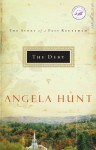
After fleeing a painful and compromising past, Emma Rose Howard settled eagerly into the role of a pastor’s wife. She and her husband, Abel, dedicated themselves to parenting a mega-church and influenced thousands of lives through its related ministries.
But when Emma Rose receives a phone call from a living, breathing remnant of her troubled past, she finds herself wondering if something in her life is woefully out of balance. The presence of this unexpected intruder soon threatens everything Emma Rose has believed about her calling, her marriage, and her relationship with God.
The Debt not only invites readers to embrace the painful heartache and incomparable joy that accompany a soul’s redemption, but it challenges us to follow Christ to new and unexpected places.
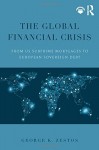
Although banking and sovereign debt crises are not unusual, the crisis that has unfolded across the world since 2007 has been unique in both its scale and scope. It has also been unusual in being both triggered by, and mainly affecting, developed economies. Starting with the US subprime mortgage crisis, and the recession in 2007-2009, the problem soon erupted into financial crisis in Europe. A few of these countries came to the brink of bankruptcy, and were rescued by the EU and the IMF on the condition they adopt austerity measures. The detrimental social effects of the crisis in both the US and Europe are still emerging.
Although there have been several studies published on the US crisis in particular, there has so far been an absence of an accessible comparative overview of both crises. This insightful text aims to fill this gap, offering a critical overview of causes, policy responses, effects and future implications. Starting with the historical context and mutation of the crisis, the book explores the policies, regulations, and governance reforms that have been implemented to cope with the US subprime mortgage crises. A parallel analysis considers the causes of the European sovereign debt crisis and the responses of the European Union (EU), examining why the EU is as yet unable to resolve the crisis. This book is supported with eResources that include essay questions and class discussion questions in order to assist students in their understanding.
This uniquely comprehensive and readable overview will be of interest and relevance to those studying financial crises, financial governance, international economics and international political economy.
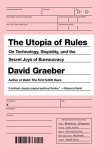
From the author of the international bestseller Debt: The First 5,000 Years comes a revelatory account of the way bureaucracy rules our lives
Where does the desire for endless rules, regulations, and bureaucracy come from? How did we come to spend so much of our time filling out forms? And is it really a cipher for state violence?
To answer these questions, the anthropologist David Graeber—one of our most important and provocative thinkers—traces the peculiar and unexpected ways we relate to bureaucracy today, and reveals how it shapes our lives in ways we may not even notice…though he also suggests that there may be something perversely appealing—even romantic—about bureaucracy.
Leaping from the ascendance of right-wing economics to the hidden meanings behind Sherlock Holmes and Batman, The Utopia of Rules is at once a powerful work of social theory in the tradition of Foucault and Marx, and an entertaining reckoning with popular culture that calls to mind Slavoj Zizek at his most accessible.
An essential book for our times, The Utopia of Rules is sure to start a million conversations about the institutions that rule over us—and the better, freer world we should, perhaps, begin to imagine for ourselves.
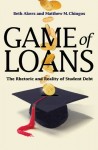
College tuition and student debt levels have been rising at an alarming pace for at least two decades. These trends, coupled with an economy weakened by a major recession, have raised serious questions about whether we are headed for a major crisis, with borrowers defaulting on their loans in unprecedented numbers and taxpayers being forced to foot the bill. Game of Loans draws on new evidence to explain why such fears are misplaced–and how the popular myth of a looming crisis has obscured the real problems facing student lending in America.
Bringing needed clarity to an issue that concerns all of us, Beth Akers and Matthew Chingos cut through the sensationalism and misleading rhetoric to make the compelling case that college remains a good investment for most students. They show how, in fact, typical borrowers face affordable debt burdens, and argue that the truly serious cases of financial hardship portrayed in the media are less common than the popular narrative would have us believe. But there are more troubling problems with student loans that don’t receive the same attention. They include high rates of avoidable defaults by students who take on loans but don’t finish college–the riskiest segment of borrowers–and a dysfunctional market where competition among colleges drives tuition costs up instead of down.
Persuasive and compelling, Game of Loans moves beyond the emotionally charged and politicized talk surrounding student debt, and offers a set of sensible policy proposals that can solve the real problems in student lending.
In “How To Get a Bachelor’s Degree with Little to No Debt”, Sheena Hogue provides practical strategies to obtain a Bachelor’s Degree without all the debt. With Sheena’s insight, you’ll learn how: • Parents can prepare to send their child to college • High school students can get ahead with college courses • Parents & students can pay tuition outside of loans • Students can prepare for life after college As you learn strategies to minimize student loan debt, you’ll discover the joys of the college experience with friends, professors, and connections with employers.
The Money Champ’s Guide to Getting a College Degree Debt Free gives you the blueprint on how to attend college without falling into substantial debt. Through sharing his personal story, tips and strategies, podcast interviews, and other resources, Nick Blair shows you the key to success. In this book, you will discover: • The proper way to prepare financially for college • How to find your area of interest before you graduate high school • Strategies on picking the right classes for your future • How to find and get the best and most advantageous scholarships and grants • Creative ways to generate more income while in college • Money and time-management principles and savings strategies • Real-life scenarios to think through and role play
Kim Darby had never had to work in her entire life. She married her childhood sweetheart at eighteen and at thirty she had three young daughters, a lovely home and was living the dream. Then her husband suddenly passed away, without any insurance cover and a stack of debts. For the first time in her life, Kim needed a job. She had no problem finding a job, but on her first day she realised what the job entailed. Hilarious true stories from the front-line of debt collecting.