Top Rated Videos
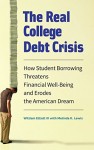
Is it still worth it for low-income students to attend college, given the debt incurred? This book provides a new framework for evaluating the financial aid system in America, positing that aid must not only allow access to higher education, but also help students succeed in college and facilitate their financial health post-college.
• Reveals the inadequacy of the scope of the current educational and economic policy debates, including moves to funnel low-income children toward two-year degrees, structure alternative debt repayment schedules, and constrain increases in college tuition
• Answers the question: “Does the student who goes to college and graduates but has outstanding student debt achieve similar financial outcomes to the student who graduates from college without student debt?”
• Examines an important subject of interest to educators, students, and general readers that is related to the larger topics of education, economics, social problems, social policy, public policy, debt, and asset building
• Provides empirical evidence and theoretical support for a fundamental shift in U.S. financial aid policy, from debt dependence to asset empowerment, including an explanation of how institutional facilitation makes Children’s Savings Accounts potentially potent levers for children’s educational attainment and economic well-being, before, during, and after college
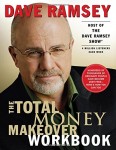
A simple, straight-forward game plan for completely making over your money habits!
Best-selling author and radio host Dave Ramsey is your personal coach in this informative and interactive companion to the highly successful New York Times bestseller The Total Money Makeover. With inspiring real-life stories and thought-provoking questionnaires, this workbook will help you achieve financial fitness as you daily work out those newly defined money muscles. Ramsey will motivate you to immediate action, so you can:
Set up an emergency fund (believe me, you’re going to need it) Pay off your home mortgage?it is possible. Prepare for college funding (your kids will love you for it) Maximize your retirement investing so you can live your golden years in financial peace Build wealth like crazy!With incentive exercises that really do exercise your spending and saving habits, Ramsey will get your mind and your money working to make your life free of fiscal stress and strain. It’s a no-nonsense plan that will not only make over your money habits, but it will also completely transform your life.
Product Features
- Great product!
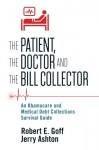
The Patient, The Doctor and Bill Collector reveals the hidden truths behind the crushing wave of medical debt drowning more than 64 million Americans.
Authors Robert E. Goff and Jerry Ashton know the inside story on medical debt. Each offers more than 40 years of experience inside the healthcare and collections industries. They team up to deliver a scathing indictment of America’s healthcare system. In simple and forceful language, they detail how present approaches are rigged to fatten the wallets of big pharmaceutical companies, insurance monopolies, and hospitals. The medical debt collections industry also waits patiently for their turn at the trough.
Beyond simply pointing out the mistakes and the greed, the two authors came up with a simple yet powerful solution: Buy medical debt on the open market, and then abolish it! Their vehicle is RIP Medical Debt, a non-profit established in 2013 for the purpose of locating, buying and then forgiving this debt as a gift to those struggling with unpaid and unpayable bills. One collections industry executive described this debt retirement plan as a “Robin Hood” approach.
The Patient, The Doctor and The Bill Collector will help you keep yourself and your family from being swept away by the tsunami of medical debt endangering our future in America You will learn from industry insiders the shocking truths that the debt collections industry, hospitals and insurance companies do not want you to know.
If you are a patient or a patient’s family member, you will learn:
More than 64 million Americans already struggle to pay medical bills. More than 15 million people will deplete their savings to cover medical bills. Health insurance is no rescue, for 80 percent of those filing bankruptcy had insurance. The security blanket of health insurance is riddled with holes and surrounded by traps.
If you are a health practitioner, hospital or physicians group, you will learn:
Pharmaceutical costs and office visit fees cause patients to skip medication and care. If you believe healthcare reform will reduce your revenue losses, think again.
The United States is the only industrialized nation with a market-based healthcare insurance system. As a result, America is destined to be the only industrialized nation to bring about a widespread debt impoverishment of its citizens.
Whether you are a patent, a doctor or a bill collector, you need this book to survive!
ABOUT THE AUTHORS
Robert E. Goff is an acknowledged expert in healthcare delivery, organization and financing with a career spanning leadership positions as a hospital administrator, regulator, managed care executive, consultant, and association executive. He serves as Executive Director and CEO of University Physicians Network (UPN) in New York City. Robert also is a corporate director and sought-after advisor to healthcare technology and care delivery companies.
Jerry Ashton is a recognized veteran of the credit and collections industry. He’s long been an outspoken critic of industry excesses. Inspired by the Occupy Wall Street movement’s “Rolling Jubilee” campaign against medical debt, he came out of semi-retirement in 2014 to co-found RIP Medical Debt with the goal of removing one billion dollars in unpaid and unpayable personal medical bills from the backs of fellow Americans. Jerry blogs at The Huffington Post and tweets as @RIPMedicalDebt.
The authors maintain a resources website for book readers at NoMoreMedicalDebt.com.
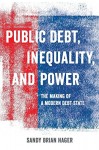
Who are the dominant owners of U.S. public debt? Is it widely held, or concentrated in the hands of a few? Does ownership of public debt give these bondholders power over our government? What do we make of the fact that foreign-owned debt has ballooned to nearly 50 percent today? Until now, we have not had any satisfactory answers to these questions. Public Debt, Inequality, and Power is the first comprehensive historical analysis of public debt ownership in the United States. It reveals that ownership of federal bonds has been increasingly concentrated in the hands of the 1 percent over the last three decades. Based on extensive and original research, Public Debt, Inequality, and Power will shock and enlighten.
At publication date, a free ebook version of this title will be available through Luminos, University of California Press’s open access publishing program for monographs. Visit www.luminosoa.org to learn more.
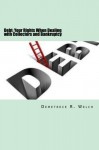
If you are one of the millions of individuals that have outstanding debt, and would like to know what your rights are, this book is for you. In this book, you will get a basic understanding of what your rights are when debt collectors contact you. You will know if that letter you received in the mail is in compliance of with the law. As you read you will learn what your rights are while dealing with the collectors of this debt. When you are finished you will have the knowledge to defend yourself against any unscrupulous collectors. Should all else fail and the debt is overwhelming, you will gain the knowledge and understanding of your rights under the bankruptcy laws. You will gain insight into the applicable chapters of bankruptcy, which chapter is best for your situation. More importantly, you will learn how to navigate through the process without employing a costly attorney.
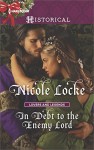
“You have a debt to pay. You owe me your life.”
Anwen, bastard of Brynmor, has fought hard to find her place in the world. But she’s forced to rethink everything when she’s saved from death by her enemy Teague, Lord of Gwalchdu. Instead of releasing her, he holds her captive…
Teague trusts no one. So, with ominous messages threatening his life, he must keep Anwen under his watch, no matter how much her presence drives him wild. And when passionate arguments turn to passionate encounters, Teague must believe that the strength of their bond will conquer all!
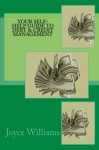
The book reflects the experienced methods that the author used to get herself out of debt, improve her credit reports and increase credit score. It has detailed steps to follow along with actual letters that can be revised to fit your needs. Information on credit agencies, consumer rights and those that governs what a creditor/collection can or cannot do is included. It guides you on ways to handle your creditors and helps take the fear out of dealing with them. Those that are experiencing a lot of debt will find this book very helpful. It will guide you through removing your debt and ways to manage your finances. There is a section on bankruptcy as a last resort. Pick up a copy it is well worth the cost. Each section deals with a specific problem people have when they are in debt. One deals with the credit reporting agency; another with the documents you will need to begin your project. A short summary is given at the end of each section as a reminder of what you read. This book is small in size but full of valuable information that can be used over and over. It can be shared with other family members or friends. If you are having a problem with debt, wanting to know how to improve your credit report, ways to increase your credit score or ideas on managing your finances this is the book for you. It will help you to get out of debt and be well on your way to a debt-free life. What you will save in paying bills will more than pay the cost for this valuable book 10X over. You will want to have this book handy for years to come. You want to be debt-free, have a high credit score and able to purchase the things you want? Then get yourself a copy of “Your Self Help Guide to Debt & Credit Management.” It is now available to help others free themselves of those over bearing debts.
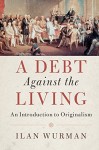
Thomas Jefferson famously wrote that the earth belongs to the living. His letter to James Madison is often quoted for the proposition that we should not be bound to the ‘dead hand of the past’, suggesting that the Constitution should instead be interpreted as a living, breathing document. Less well-known is Madison’s response, in which he said the improvements made by the dead – including the US Constitution – form a debt against the living, who benefit from them. In this illuminating book, Ilan Wurman introduces Madison’s concept of originalism to a new generation and shows how it has shaped the US Supreme Court in ways that are expected to continue following the death of Justice Antonin Scalia, one of the theory’s leading proponents. It should be read by anyone seeking a better understanding of originalism and its ongoing influence on the constitutional jurisprudence of the Supreme Court.
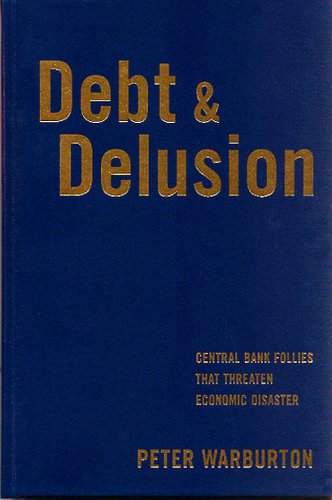
It’s been almost seven years since I wrote Debt and Delusion. So naturally, readers have a right to ask, “Why produce an updated version at this time?” There are at least three reasons, the cheapest of which is that the author is surprised and flattered to find that it is in demand and there has long ceased to be any supply.
More than that, like an abandoned mine, the book stands as a monument to what was already known about the global credit expansion and the strains in the financial system before the halving of equity market prices from the early 2000 peaks. Most importantly, and sad to say, this equity market trauma foreshadows even more disastrous results of the financial folly that has reached proportions unimaginable in the summer of 1998. And so, the primary function of the book — “as a timely warning of the perils that lie ahead” — remains valid.
Debt and Delusion exposes serious flaws in the development of the global financial system starting in the early 1990s, singling out the world’s largest central banks for special criticism. Their negligent oversight has permitted an explosion of corporate and household credit that has fueled a succession of false markets in stocks, bonds, and property. Alarmed by the monster so created, the U.S. Federal Reserve has spent much of the past five years staving off the evil day when foolish lending turns into bad debt.
Far from being the architects of economic stability and low inflation, the world’s central bankers have ushered in a new era of financial fragility and latent instability. Innovations in the use of derivatives, structured products, and other complex financial instruments have been applauded by the central banks on narrow technical criteria. But these supposed bastions of conservatism have failed to comprehend the wider implications for financial stability.
From poorly documented home loans to sub-prime auto loans to subordinated corporate debt and junk bonds, permanently easy access to credit has compromised economic management in the U.S., U.K., and other English-speaking nations and has fostered an illusion of prosperity and well being.
Lamentably, this staggering collective flight from reason has been endorsed by the economics establishment.
The failure of many of the finest economic minds to engage with the rapid evolution of our financial structures and institutions has led to a superficial assessment of this unprecedented credit experiment. Only now, as various credit markets face the inevitable tests of higher interest rates and the realistic pricing of credit risks, is the threat of a pandemic of debt-related distress beginning to be taken seriously. Government budgets, already strained by the weight of social support, have limited scope to respond.
In short, tougher economic times lie ahead, when personal debts will hang more onerously than for 75 years. Debt and Delusion recommends a hasty! reappraisal of the debt requirements of corporations and households alike.
Peter Warburton
September 2005
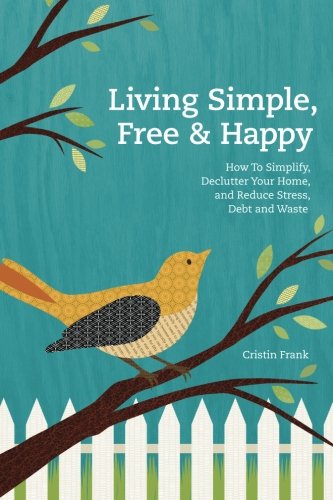
Upcycle Your Life
Get ready to trade in headaches and hassles for life skills, exchange clutter for money, transform eyesores into beautiful focal points in your home, and say goodbye to over-consumption and hello to genuine experiences.
Cristin Frank, the original Reduction Rebel, shows you the freedom and fulfillment you can have when you simplify your life. You’ll learn how to use your talents, time, and space to combat stress, become more efficient, relieve money woes, open up opportunities, and provide unbelievable self-fulfillment.
Inside you’ll find:Simple techniques that eliminate clutter and keep it from returningA personalized plan to help you reclaim your timePractical (and profitable) ways to sell unused items in your homeTips to eliminate debt and curb consumptionStep-by-step upcycling projects that transform old, unwanted furniture into beautiful, customized organizing systemsDozens of exercises that help you identify and honor your talents, values, and goals As Cristin says, “success is getting what we want.” Let this book show you how to let go of what’s holding you back so you can put your energy into your dreams and interests and build your success.