Top Rated Videos
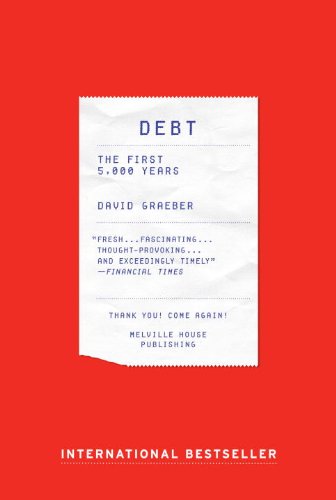
Now in paperback: David Graeber’s “fresh .?.?. fascinating .?.?. thought-provoking .?.?. and exceedingly timely” (Financial Times) history of debt
Here anthropologist David Graeber presents a stunning reversal of conventional wisdom: he shows that before there was money, there was debt. For more than 5,000 years, since the beginnings of the first agrarian empires, humans have used elaborate credit systems to buy and sell goods—that is, long before the invention of coins or cash. It is in this era, Graeber argues, that we also first encounter a society divided into debtors and creditors.
Graeber shows that arguments about debt and debt forgiveness have been at the center of political debates from Italy to China, as well as sparking innumerable insurrections. He also brilliantly demonstrates that the language of the ancient works of law and religion (words like “guilt,” “sin,” and “redemption”) derive in large part from ancient debates about debt, and shape even our most basic ideas of right and wrong. We are still fighting these battles today without knowing it.
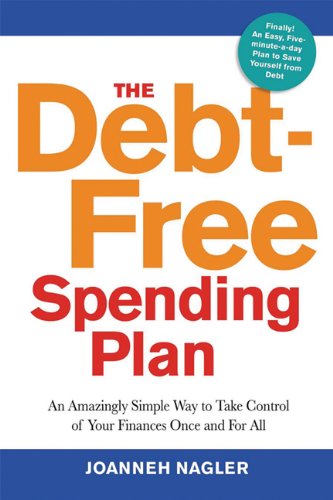
Anyone suffering under the crushing weight of debt knows how impossible it can seem to find a way out. It’s overwhelming – and the more complicated the proposed solution, the harder it is to stick with it. That’s why “The Debt-Free Spending Plan” is simple. It doesn’t require sifting through chapters of high-minded financial advice or digging up your past spending history. It assumes you need help right now, and gives it to you. You will learn to: downsize expenses without feeling deprived; allocate money as it comes in and put together an easy-to-manage bill-paying plan; adjust for inevitable overspending; and, pay off debt without gouging expenses and (believe it or not) start saving. The plan is clear, easy, and takes just five minutes a day-and it doesn’t matter if you make $14,000 or $14 million. With straightforward daily spending strategies and effortless expense tracking tools, you will soon find yourself on the road to financial freedom-all before the next billing cycle.
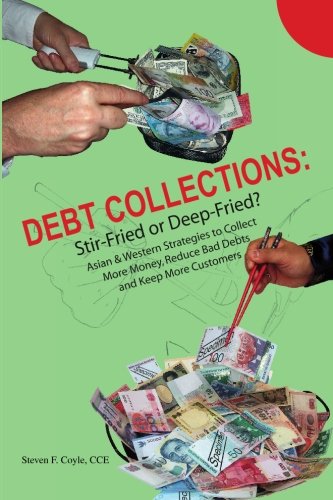
A practical business cookbook on how to creatively collect debts from overdue customers using Asian and Western collection strategies. The author is an American living in Asia since 1995. Accounts receivables are most firms largest asset, and often it’s most unmanageable. This book shares ideas to improve your firm’s processes, people, and systems to reduce bad debts and increase sales and profits. A humorous, ‘how to’ book to put more money in your firm’s pocket while keeping you up-to-date in the field.
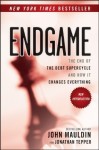
Greece isn’t the only country drowning in debt. The Debt Supercycle—when the easily managed, decades-long growth of debt results in a massive sovereign debt and credit crisis—is affecting developed countries around the world, including the United States. For these countries, there are only two options, and neither is good—restructure the debt or reduce it through austerity measures. Endgame details the Debt Supercycle and the sovereign debt crisis, and shows that, while there are no good choices, the worst choice would be to ignore the deleveraging resulting from the credit crisis. The book:Reveals why the world economy is in for an extended period of sluggish growth, high unemployment, and volatile markets punctuated by persistent recessionsReviews global markets, trends in population, government policies, and currencies
Around the world, countries are faced with difficult choices. Endgame provides a framework for making those choices.
Q&A with Authors John Mauldin and Jonathan Tepper
Author John Mauldin What is the debt supercycle? Over a period of about sixty years, debt levels grew faster than incomes. This increase in debt became particularly pronounced in the 1980s, 90s and finally went parabolic after the Federal Reserve lowered interest rates to 1% after the Nasdaq crash. The increase in debt was not just a US phenomenon. As interest rates fell structurally with the fall in inflation from 1982 onwards, people took on more debt because it became more manageable. However, by 2008 the burden of debt became too much to bear and the debt supercycle came to an end. People started deleveraging and banks started collapsing due to low levels of capital and large losses from loans people couldn’t pay back. How does the sovereign debt crisis play into this? The rapid contraction in debt levels due to default and deleveraging lead to a fall in economic activity as people started saving and cutting spending. Governments immediately stepped in and backed bank debt with explicit guarantees. Governments also started borrowing and spending to transfer money to the private sector, for example via unemployment insurance. So in a very real sense, private borrowing was replaced with public borrowing. Debt was added onto more debt. Rather than free itself of debt, the system now has more debt. The sovereign debt crisis is the recognition that most of this debt will not be paid back, and governments are making promises to pay debt and other obligations, for example general spending and pensions, that they simply lack the ability to fulfill. Author Jonathan Tepper The end of the debt supercycle and the beginning of the sovereign debt crisis present problems and challenges for investors and governments. Governments will need to either 1) inflate, 2) default or 3) devalue, which is similar to inflate. That is the way governments have historically dealt with too much debt. Some countries will experience deflation and others inflation, depending on what choices governments make. Currently governments have only bad and worse choices. Let’s hope they can choose wisely. What do you predict for the next ten years? Central banks globally have shown a predisposition to print money to solve problems. We forsee rising inflation in many parts of the world, reductions in real income as people lose purchasing power due to higher food and fuel prices and more macroeconomic volatility. Some countries that do not control their own money supply or are running pegs may experience deflation as they are forced to delever and cannot increase the money supply to counteract the weight of deleveraging. You cite the events in Greece as an example of a country continuing to run massive deficits. Is there an example of a country making a better choice? The UK is making some of the right steps to control spending, but even the UK could be more draconian. In nominal and real terms, government spending in aggregate will not be cut in the UK. Also, Iceland has made positive steps by defaulting on its debt effectively. Default is a good way to cure too much debt.
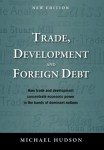
In this survey of international economic thought, Michael Hudson rewrites the history of trade, development and debt theorizing. He shows that mainstream free-trade surveys are censorial in excluding the protectionist logic that has guided the trade policy of Europe and the United States, especially by leaving out discussion of the transfer problem and payment of international debts. He points out that most economists throughout history have focused as much on war financing as on trade and development. Free-trade ideology and IMF-style financial austerity under today’s rules, rather than benefiting all parties and maximizing welfare, leave “client” nations severely indebted. By excluding dynamics that used to be central to trade theory such as emigration and technology transfer, today’s global production and financial policies tend to concentrate economic and political power in the hands of dominant nations. Prof. Michael Hudson (Economics Department, University of Missouri, Kansas City) is a frequent contributor to The Financial Times, Counterpunch, and Global Research.
Product Features
- ISBN13: 9783980846691
- Condition: New
- Notes: BRAND NEW FROM PUBLISHER! 100% Satisfaction Guarantee. Tracking provided on most orders. Buy with Confidence! Millions of books sold!
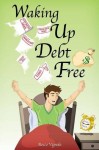
Learning how to handle Money Too many people do not know how to handle their money. From budgeting to savings to investing people just do not know what to do. They let their money control them instead of them controlling their money. Do you see yourself living from paycheck to paycheck? Have you let investment opportunities pass you by? Why has this happened to you? It has happened and will continue to happen until you learn how to handle money. If you are ready to take control of your financial life and take charge of your money, then now is the time to read this book and change your financial life forever. Welcome to the road of financial freedom and independence.
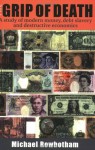
A lucid and original account of where money comes from and why most people and businesses are so heavily in debt. It explodes more myths than any other book this century, yet it’s all about subjects very close to home: mortgages, building societies and banks, agriculture, transport, global poverty, and what’s on the supermarket shelf. The author proposes a new mechanism for the supply of money, creating a supportive financial environment and a decreasing reliance on debt.
Product Features
- Used Book in Good Condition
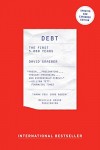
Now in paperback, the updated and expanded edition : David Graeber’s “fresh .?.?. fascinating .?.?. thought-provoking .?.?. and exceedingly timely” (Financial Times) history of debt
Here anthropologist David Graeber presents a stunning reversal of conventional wisdom: he shows that before there was money, there was debt. For more than 5,000 years, since the beginnings of the first agrarian empires, humans have used elaborate credit systems to buy and sell goods—that is, long before the invention of coins or cash. It is in this era, Graeber argues, that we also first encounter a society divided into debtors and creditors.
Graeber shows that arguments about debt and debt forgiveness have been at the center of political debates from Italy to China, as well as sparking innumerable insurrections. He also brilliantly demonstrates that the language of the ancient works of law and religion (words like “guilt,” “sin,” and “redemption”) derive in large part from ancient debates about debt, and shape even our most basic ideas of right and wrong. We are still fighting these battles today without knowing it.
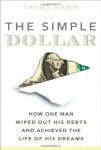
Struggling with debt?
Frustrated about work?
Just not satisfied with life?
“Trent Hamm set out to boost his happiness by freeing himself from debt. This account of how he succeeded, and how he was able to construct the life he’d always wanted, will inspire readers to put his ideas to work in their own lives.”
–Gretchen Rubin, author of the #1 New York Times best seller, THE HAPPINESS PROJECT
“The Simple Dollar paves the way to an uncluttered financial and richly rewarding life. Trent’s experiential advice prepares readers for the expected–and most importantly the unexpected–complexities of the modern economic world. Live debt free, mind the gap, and find a framework to get the secure and happy life you desire.”
–Erin Rooney Doland, author of Unclutter Your Life in One Week and Editor-in-Chief, Unclutterer.com
“If you feel like your finances are out of control, read The Simple Dollar. Trent Hamm burns with the unforgettable fire of someone who has gone from debt to wealth, and this book can inspire you to do the same.”
–J.D. Roth, author of Your Money: The Missing Manual and editor of GetRichSlowly.org
The Simple Dollar can change your life.
Trent Hamm found himself drowning in consumer debt, working in a job he couldn’t stand… and figured out how to escape that debt and build the fulfilling career he’d always dreamt about, all at the same time.
Hamm shared his experiences at TheSimpleDollar.com—and built it into one of America’s top personal finance websites. Now, The Simple Dollar is a book: packed with practical tips, tools, and lessons you can use to transform your life, too.
This isn’t just “another” personal finance book: it’s profoundly motivating, empowering, practical, and 100% grounded in today’s American realities. Trent Hamm will show you how to rewrite the rules, creating healthier relationships with money… and with your loved ones, too. With his help, you can get out of debt, start moving forward, and build the strong personal community that offers true happiness—no matter what happens to the economy.
· Escape the plastic prison, and stop running to stand still
5 simple steps to eliminate credit card debt… and 5 more to start moving forward
· Shift your life’s balance towards more positive, stronger relationships
Learn how to put the golden rule to work for you
· Discover the power of goals in a random world
Then, learn how to overcome inertia, and transform goals into reality
· Navigate the treacherous boundaries between love and money
Move towards deeper communication, greater honesty, and more courage
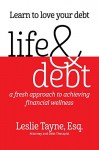
Life & Debt is not your typical “get debt free” book. It’s about learning to love and embrace your debt because in today’s world, it is practically impossible to be debt free. Life & Debt is not about teaching life without debt, or to be free of debt, but learning to live with debt and embracing it to the extent that you manage it and take on debt that makes sense for your life. The key lesson from the book is learning to love your debt is one of the first steps of being able to properly manage it. For anyone who wants to live their life with debt happily – college students, grads, parents, grandparents, and those on fixed incomes, business owners and heads of households – the concepts can be fit into any lifestyle on different levels from basic income to complicated budgets. Also suitable for people going through life transitions (marriage, divorce, widow, retirement), as well as most of the middle class who are struggling to keep up with the Joneses.