Top Rated Videos
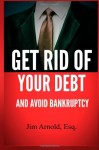
A POWERFUL GUIDE ON TO HOW TO GET RID OF YOUR DEBT AND AVOID BANKRUPTCY
***Updated October 2013 to include the new HUD change on getting a FHA loan***
Learn How to Get Rid of Your Credit Card and Other Debt by Yourself
Are you drowning in a sea of debt because of job loss, a divorce or separation, a disability or medical problem?
Whatever your circumstances or financial hardship, Attorney Jim Arnold has many years of debt settlement experience and he will show you exactly how to get rid of your debt and avoid bankruptcy using proven debt settlement techniques. He has a track record over many years of settling several million dollars in debt for individuals and businesses while at the same time teaching people how to do it themselves.
This short and power packed book will give you a roadmap and step by step instructions on how to get out of debt without having to declare bankruptcy.
This Book Provides You with Forms, Telephone Scripts, Letters, and Settlement Agreements to Use With Your Creditors
You will be guided through the process of how to get rid of your debt and you will be given the specific instructions as to what to say on the telephone to your creditors, bill collectors and collection agencies. After you settle the debt, Mr. Arnold then gives you the letters and settlement agreements to send to your creditors along with advice as to what to write on the check.
Have You Heard About Debt Settlement and Debt Negotiation Companies but Are Not Sure Whether You should Use them and Pay Them a Fee?
Financial authors Dave Ramsey and Suze Orman and the Federal Trade Commission recommend that you negotiate directly with your credit card companies and other creditors to settle your debt and to not use a debt settlement company. The FTC and many state attorney generals have brought law suits against debt settlement companies. This book tells you exactly how to do it yourself.
How does bankruptcy work?
You will learn:
The difference between a Chapter 7 and Chapter 13 bankruptcy and what they typically cost.The top 5 reasons why people go bankrupt.Why you should not undertake to do a bankruptcy by yourself without an experienced bankruptcy lawyer.How to locate a bankruptcy lawyer in your area and learn what qualities to look for in a bankruptcy lawyer.
The goal of this book is to teach you how to settle and reduce your own debts to avoid bankruptcy. However, should you consider declaring bankruptcy this book will also teach you what you need to know.
Here are some of the Debt Settlement Secrets that you will learn:
What are Debts? Secured versus Unsecured Debts?What Debts Are Worth Settling?Why would a Creditor or Credit Card Company want to take a lesser amount than what is owed?What is the Best Way to Get Rid of Debt While Avoiding Bankruptcy?What should be said on the Telephone to Your Creditors or the Collection Agency?What Objections are You Likely to Hear from the Creditor, and How Should You Respond?What is a Restrictive Endorsement and when is it Not Recommended to put it on the Back of Your Personal Check?What Happens to Your Credit After Settlement?What is the Recent Study which found that Worrying about your Debt Lowers your IQ?What is the New August 2013 U.S. Department of Housing & Urban Development Policy on Getting a New FHA Loan a Year after a Foreclosure?
…and more
Don’t miss out on this incredibly valuable, concise guide on how to get out of debt. Find out the debt settlement secrets that will help you get rid of your debt while avoiding bankruptcy to help you get back on your financial feet. Your investment in this book is less than a large latte at Starbucks yet it can save you thousands of dollars if you buy it now.
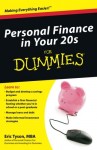
The easy way to avoid early pitfalls on the road to financial success
A little money and a little time is all that’s needed to lay a strong financial foundation for today and the future. And starting sooner rather than later is the smartest thing you can do when it comes to protecting your financial future.
If you’re in college or enjoying your twenties, Personal Finance in Your 20s For Dummies cuts to the chase, providing you with the targeted financial advice you need to establish a firm financial footing as you work your way through school and the post-graduation years.Advice on paying off student loans, managing debt, and creating a solid pathway to financial successInvesting strategies for young investorsOther titles by Tyson: Personal Finance For Dummies, Investing For Dummies, and Mutual Funds For Dummies
If you’re looking for sound, reliable advice on how to make smart financial choices in the real world, Personal Finance in Your 20s For Dummies has you covered.
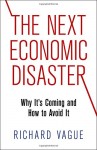
Current debates about economic crises typically focus on the role that public debt and debt-fueled public spending play in economic growth. This illuminating and provocative work shows that it is the rapid expansion of private rather than public debt that constrains growth and sparks economic calamities like the financial crisis of 2008.
Relying on the findings of a team of economists, credit expert Richard Vague argues that the Great Depression of the 1930s, the economic collapse of the past decade, and many other sharp downturns around the world were all preceded by a spike in privately held debt. Vague presents an algorithm for predicting crises and argues that China may soon face disaster. Since American debt levels have not declined significantly since 2008, Vague believes that economic growth in the United States will suffer unless banks embrace a policy of debt restructuring.
All informed citizens, but especially those interested in economic policy and history, will want to contend with Vague’s distressing arguments and evidence.
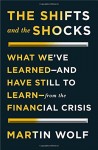
From the chief economic commentator for the Financial Times, a brilliant tour d’horizon of the new global economy and its trajectory
There have been many books that have sought to explain the causes and courses of the financial and economic crisis which began in 2007?8. The Shifts and the Shocks is not another detailed history of the crisis, but the most persuasive and complete account yet published of what the crisis should teach us about modern economies and economics.
The book identifies the origin of the crisis in the complex interaction between globalization, hugely destabilizing global imbalances and our dangerously fragile financial system. In the eurozone, these sources of instability were multiplied by the tragically defective architecture of the monetary union. It also shows how much of the orthodoxy that shaped monetary and financial policy before the crisis occurred was complacent and wrong. In doing so, it mercilessly reveals the failures of the financial, political and intellectual elites who ran the system.
The book also examines what has been done to reform the financial and monetary systems since the worst of the crisis passed. ?Are we now on a sustainable course?” Wolf asks. ?The answer is no.” He explains with great clarity why ?further crises seem certain” and why the management of the eurozone in particular ?guarantees a huge political crisis at some point in the future.” Wolf provides far more ambitious and comprehensive plans for reform than any currently being implemented.
Written with all the intellectual command and trenchant judgment that have made Martin Wolf one of the world’s most influential economic commentators, The Shifts and the Shocks matches impressive analysis with no-holds-barred criticism and persuasive prescription for a more stable future. It is a book no one with an interest in global affairs will want to neglect.
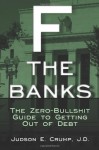
If you had the damned money, you’d have paid it all off by now. I know this. So instead of telling you ways to scrounge up enough money to pay off your debts, I hope to convince you not to pay anything you cannot afford. I want you to keep as much of your stuff as possible while paying as little as possible of your own hard-earned cash. Most books that claim to be about getting out of debt are really just about good old-fashioned financial prudence. This one is not. It’s too late for that now. The Great Recession lingers, and even as our global financial institutions sit atop massive piles of taxpayer-funded bailout dollars, the ordinary people of America continue to struggle. Time for your bailout. Here is very simple, very practical, and most importantly a very realistic guide to the American legal process of enforcing debts. I am a debtor’s lawyer. This is what I do. Everything in this book comes from personal experience. I have helped hundreds of clients solve every sort of financial problem that people can encounter, and I have packed all of these lessons into this book. If you ever wanted to know things like: What happens if you don’t pay a debt? How do you fix broken credit? How can you keep your home from being foreclosed? What can I do about my student loans? Can they take my dog? Is bankruptcy a good idea or a horrible idea? What if I let the bank foreclose on my home? Will I ever be able to buy a car again? This book is for you.
This original study concerns itself with the manumission laws of Exodus 20, Deuteronomy 15 and Leviticus 25. It begins with the social background to debt slavery and the socioeconomic factors encouraging the rise of debt slavery in Mesopotamia. After a comparative analysis of the Mesopotamian and biblical material Chirichigno examines the social background to debt slavery in Israel, the various slave laws in the Pentateuch (in order to delimit the chattel-slave laws from the debt-slave laws), and the biblical manumission laws themselves.
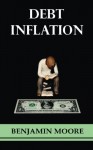
The United States monetary system is complex.
Money is not what you think it is.
Debt Inflation provides the clarity that is needed.
Why should you care about the monetary system?
The monetary system is like a game. As a participant of the economy you are a player in this game. A clear understanding of how the game works will provide you a significant strategic advantage.
In these pages the monetary system game is deconstructed. Difficult economic concepts are addressed with remarkable clarity. Page after page compelling points pile up, one upon the other, until two extraordinary benefits emerge:
ECONOMIC BREAKTHROUGH: An accurate method for determining the true inflation rate of the dollar is devised. Reliance on “official government inflation numbers” is no longer necessary. The numbers are real, and the conclusions are surprising.
FINANCIAL TRIUMPH: A clever plan for winning the monetary system game is exposed. Incredibly, you will learn how to identify when an economic downturn is lurking around the corner. With this information, you can sell investments and prepare your personal finances months before asset values tumble and recessions develop.
Inside you will discover original ideas and perspectives that are not found in any other book.
Debt Inflation is not a restatement or reorganization of the same old ideas and catch-phrases.
These are new ideas. This is a fresh perspective.
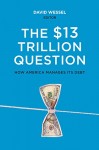
The underexamined art and science of managing the federal government’s huge debt.
Everyone talks about the size of the U.S. national debt, now at $13 trillion and climbing, but few talk about how the U.S. Treasury does the borrowing even though it is one of the world’s largest borrowers. Everyone from bond traders to the home-buying public is affected by the Treasury’s decisions about whether to borrow short or long term and what types of bonds to sell to investors.
What is the best way for the Treasury to finance the government’s huge debt? Harvard’s Robin Greenwood, Sam Hanson, Joshua Rudolph, and Larry Summers argue that the Treasury could save taxpayers money and help the economy by borrowing more short term and less long term. They also argue that the Treasury and the Federal Reserve made a huge mistake in recent years by rowing in opposite directions: while the Fed was buying long-term bonds to push investors into other assets, the Treasury was doing the opposite selling investors more long-term bonds.
This book includes responses from a variety of public and private sector experts on how the Treasury does its borrowing, some of whom have criticized the way the Treasury has been managing its borrowing.
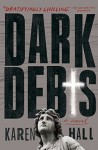
In Dark Debts, Karen Hall masterfully combines southern gothic, romantic comedy, and mystery in a wildly original theological thriller that has become a cult favorite since being published twenty years ago. In this new anniversary edition, the author has reimagined her work. The result is a suspenseful, irreverent, and deeply spiritual novel that captivates from the very beginning and doesn’t let go.
When Randa, a reporter for an alternative newspaper in Los Angeles, receives an urgent phone call from her estranged lover, Cam, she rushes to his apartment. She arrives to discover that he’s leapt from the building to his death. Police believe that before committing suicide, Cam also murdered someone in a convenience store, but Randa does not believe Cam is capable of such an act. She seeks out Cam’s brother, Jack, who is living off the grid, somewhere near Atlanta, in hope of figuring out what really happened.
Meanwhile, a Jesuit priest named Michael Kinney has been exiled from New York City to the boondocks of Georgia after making controversial public statements. He has said things that educated people of faith are not supposed to express. Even more problematically, he has fallen in love with a woman, and the last surviving member of his family has kept a shocking family secret from him.
How these characters converge is part of the thrilling mystery of Dark Debts, a cult favorite first published twenty years ago. In this new edition, author Karen Hall has re-imaged her southern gothic tale and the result is a work of even greater power—a brilliantly realized and suspenseful evocation of the conflict between good and evil.An unspeakable curse has consumed a poor Southern family and Michael Kinney, a fallen priest, represents their only hope for salvation. In his struggles to save them from total ruin, Kinney also wages a personal battle to clear his name from a past injustice. As he investigates a deadly hotel fire and sifts through accounts of demonic possession, satanic ritual, and sightings of Jesus, Kinney comes to terms with his own personal demon, an unrivaled terror determined to bring the priest to death before he can find redemption.
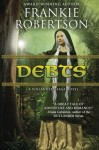
“A great tale of adventure and romance, beautifully imagined and deeply engaging from beginning to end!”
~Diana Gabaldon, bestselling author of Outlander
LOVE vs. HONOR
Son of an Oathbreaker, Aren is desperate to restore his family’s honor, and leaps at the chance Lord Fender offers. His task seems simple enough for a Tracker: bring in a young woman accused of a vile crime. Simple, until his duty to the Jarl conflicts with a debt he owes to the Elves.
Fey-marked and friendless, Annikke flees the wrath of a vengeful lord. When Aren intercepts her, Annikke must choose: trust a stranger with warm brown eyes who promises justice, or protect her daughter–and remain a fugitive forever.
Book Three in the Vinlanders’ Saga, a fantasy adventure series inspired by Norse mythology. It features elves, magic, and the descendants of Viking warriors.
DEBTS follows DANGEROUS TALENTS and FORBIDDEN TALENTS, but can be enjoyed out of order.