Top Rated Videos
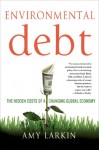
For decades, politicians and business leaders alike told the American public that our most important challenge was growing the economy, and that environmental protection could be left to future generations. Now, in the wake of billions of dollars in costs associated with coastal devastation from Hurricane Sandy, rampant wildfires across the West, and groundwater contamination from reckless drilling, it’s increasingly clear that yesterday’s carefree attitude about the environment has morphed into a fiscal crisis of epic proportions. Environmental Debt argues that the costs of global warming, extreme weather, pollution, and other forms of “environmental debt” are wreaking havoc on the economy. To combat these trends, author Amy Larkin proposes a new framework for twenty-first century commerce, based on three principles: 1) Pollution can no longer be free; 2) All business decision making and accounting must incorporate the long view; and 3) Government must play a vital role in catalyzing clean technology and growth while preventing environmental destruction. Profiling the multinational corporations that are transforming their operations with downright radical initiatives, Larkin presents smart policy choices that would actually unleash these business solutions to many global financial and environmental problems.
Ann Harris, an ace debt collector, thought she had it all figured out – money in the bank, a promising career at a law firm, and an unwavering view of what it meant to be a success. Her values are challenged when suddenly she is outperformed by the demons inside her and coerces Thomas Moore, a man at the end of his rope, to become a victim of her anger and conviction against people like her father who were the irresponsible deadbeats of the world. When her law firm forces her into a paid leave of absence, Ann is faced with life-threatening depression which begs her to find her soul again, and slowly, the coldness inside Ann melts when she begins to learn the truth about David, her dying father, and the effect of her damaging ideals upon those who loved her most – such as her younger sister Kate and her devoted ex-boyfriend Paul. Debt is a journey into the heart to explore pride, self-reliance, and our own values which give us the illusion of what it means to survive in a world where one man’s misfortune often becomes another man’s profit.

It began with a ghost in his bedroom. A tormented soul hungry for vengeance. The sort of nocturnal visitation that even a five-hundred-year-old vampire like Henry Fitzroy found tiresome. It would lead Vicki Nelson, PI into her most deadly investigation yet. The wraith is determined that Henry and Vicki track down its killer – and is prepared to use a little persuasion by way of the innocent inhabitants of Toronto to ensure their support. Forced to investigate, Vicki discovers a host of souls in desperate torment and evidence to suggest that trailing the killer will only lead to further deaths – starting with her own.
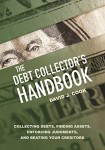
Winning your case in court is only half the battle. It’s a fact that some people hide their assets to avoid paying debts and judgments. This truly unique book will show you how to find and reach that hidden money.
Author David J. Cook is a veteran collections attorney who has been chasing down debtors for over 39 years. This colorfully written book will teach you the basics of civil remedies, real estate, finance, and sleuthing. The author outlines for you the power of the bluff and the outer parameters of threat, when a threat becomes extortion, and when you need to walk away from a situation.
This book is about collecting debts, finding assets, enforcing judgments against difficult people, or, should you be so inclined, beating out your creditors.
A milestone of storytelling set in the world of The Sword of Truth, Debt of Bones is the story of young Abby’s struggle to win the aid of the wizard Zedd Zorander, the most important man alive.
Abby is trapped, not only between both sides of the war, but in a mortal conflict between two powerful men. For Zedd, who commands power most men can only imagine, granting Abby’s request would mean forsaking his sacred duty. With the storm of the final battle about to break, both Abby and Zedd are caught in a desperate fight to save the life of a child…but neither can escape the shadow of an ancient betrayal.
With time running out, their only choice may be a debt of bones. The world-for Zedd, for Abby, for everyone-will never again be the same.
Discover why millions of readers the world over have elevated Terry Goodkind to the ranks of legend.
Product Features
- Great product!
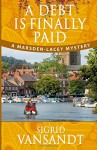
“We’ve got gypsies!” Old Grimsy, Marsden-Lacey’s cantankerous town gossip, warns the patrons of The Traveller’s Inn one golden autumn afternoon. Soon, the quaint Yorkshire village is playing host to a family of exotic Romanis, three colorful narrowboats, and a rough bunch of Russian mafiosos who’ll stop at nothing to get their hands on a royal treasure lost to time. Martha Littleword and Helen Ryes find themselves up two their necks in chasing mobsters, running from Russians, inciting ghostly visitations and wreaking havoc in their love lives. Chief Johns has his work cut out for him keeping the villagers from rioting, corralling two adventure loving Southern girls and investigating the frightful deaths of two innocent women who knew too much. For good measure, Martha and Helen will throw in some sassiness, mix well with laughter, and add three heaping helpings of love from two cats and one fearless canine hero, Amos. It’s mystery and high jinks that only two Southern women, can pull off with fun, flair and the occasional bowl of jambalaya served cajun style.
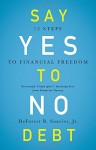
Drawing on his personal experience and years as a pastor, public policy maker, and community leader, DeForest “Buster” Soaries, Jr. shares the twelve steps to achieving financial freedom in this groundbreaking, life-changing book—Say Yes to No Debt.
“The idea that debt is actually slavery is offensive to all of our sensibilities,” says Soaries, “but when we continue to spend what we don’t have, charge what we don’t need, and borrow more than we can repay, then we must call the problem what it is: slavery. Eliminating debt is the first step toward financial freedom. And we can do it.”
This is not another financial literacy program assuming that all people need is information. Soaries believes living in debt is an emotional, spiritual, and psychological problem as much as it is an educational and informational one.
Here, Soaries shares the twelve steps to financial freedom that have helped families in hundreds of churches. By replacing the “get more money” mentality with a “get out of debt” approach to financial freedom, not only were thousands of people able to become debt free, church’s that have used the dfree® strategy have experienced increased giving by their members.
Find out how you can leave a financial legacy of your own by saying yes to no debt.
Says Soaries: “There may be no greater need than to understand that debt-free living is the first step toward financial freedom. And the result is that we can enjoy life and leave a real legacy for our children.”
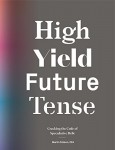
The debut book publication by the New York Society of Security Analysts, a not-for-profit professional society dedicated to professional excellence and ethics in financial markets, High Yield, Future Tense: Cracking the Code of Speculative Debt presents the outlook for high yield bonds and predicts profound changes in the marketplace. Its four sections contain 18 contributions by 29 experts from finance and academe. PART 1: Market Dynamics Three contributions explore whether a crisis will follow today’s low default rates and narrow yield spreads. Four others examine whether high yield spreads over-compensate for risk, uphold classic criticisms of underwriting practices, analyze market liquidity, and detail leveraged loans’ evolution in a bond-like direction. PART 2: Active Management This section sheds light on non-standard leading indicators of high yield performance; the relationship between high yield and equity returns and distressed debt managers’ response to the current, unusual credit cycle. PART 3: Analytical Innovation Successful high yield investing depends on accurate estimation of risks other than default probability. New methodologies that address them include: systematic scoring of the quality of covenant packages of new issues and a monthly index of covenant quality; solutions to problems in measuring performance, quality, and valuation that may lead to investment errors and quantification of issue-level liquidity, enabling investors to make explicit tradeoffs between spread and liquidity. PART 4: Benchmarking This section’s chapters address intrinsic flaws in market indices. The authors predict further specialization of subindices to accommodate specialized strategies, address challenges of high yield index construction from the portfolio manager’s perspective, and show the advantages of non-market-cap-weighted indices. Contains 168 exhibits, including 111 charts and graphs and 57 tables, plus 31 mathematical formulae.
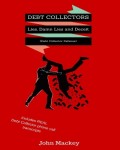
Have you ever listened to real debt collection calls from real debt collectors telling lies? I have a lot of them and here are three that show the lies and deceit. And I confront them on it. They are within this book. This book is about how to defend yourself, using transcripts from conversations I have had with debt collectors. It shows you the collection process, how the collector must proceed, and what to do if they do not. It shows how to hold conversations with them, what paperwork to file and even an example of how to respond to a lawsuit. Yes, you can do that yourself. What I want to do is show you the rules of the game and how they are applied. If you are aware and know the rules of the game, it is much easier to defend yourself.
Debt Free or Die Trying is the sometimes serious, most-times amusing story of how I buried myself in over $30,000 in debt. This book will help you stop living the lifestyle of the fast and the financially frivolous and develop a sustainable plan based on proven tools that allowed me to become debt free. I believe you can become debt free, too. This book will show you: •How I buried myself in over $30,000 in debt before age 30 •How and why I reached “rock bottom” and decided to become debt free •The four Debt Free or Die Trying keys to success and the five payment strategies I used to pay off all of my debts For more information and other helpful tips, visit DebtFreeOrDieTrying.com.