Top Rated Videos
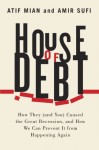
The Great American Recession resulted in the loss of eight million jobs between 2007 and 2009. More than four million homes were lost to foreclosures. Is it a coincidence that the United States witnessed a dramatic rise in household debt in the years before the recession?that the total amount of debt for American households doubled between 2000 and 2007 to $14 trillion? Definitely not. Armed with clear and powerful evidence, Atif Mian and Amir Sufi reveal in House of Debt how the Great Recession and Great Depression, as well as the current economic malaise in Europe, were caused by a large run-up in household debt followed by a significantly large drop in household spending.
Though the banking crisis captured the public’s attention, Mian and Sufi argue strongly with actual data that current policy is too heavily biased toward protecting banks and creditors. Increasing the flow of credit, they show, is disastrously counterproductive when the fundamental problem is too much debt. As their research shows, excessive household debt leads to foreclosures, causing individuals to spend less and save more. Less spending means less demand for goods, followed by declines in production and huge job losses. How do we end such a cycle? With a direct attack on debt, say Mian and Sufi. More aggressive debt forgiveness after the crash helps, but as they illustrate, we can be rid of painful bubble-and-bust episodes only if the financial system moves away from its reliance on inflexible debt contracts. As an example, they propose new mortgage contracts that are built on the principle of risk-sharing, a concept that would have prevented the housing bubble from emerging in the first place.
Thoroughly grounded in compelling economic evidence, House of Debt offers convincing answers to some of the most important questions facing the modern economy today: Why do severe recessions happen? Could we have prevented the Great Recession and its consequences? And what actions are needed to prevent such crises going forward?
This book explains the significant variation that has emerged over time and across cases in international debt rescheduling during the past one hundred and seventy years. Based on a novel situational theory of bargaining, Professor Aggarwal’s study provides a method to deduce actors’ payoffs in different bargaining situations to develop “debt games,” which are then used to predict negotiating outcomes. This integrated political-economic approach to analyze bargaining episodes goes beyond simple economic models or purely descriptive studies. In doing so, it contributes to international political and economic theory, game theory, and historical research on debt negotiations.
Product Features
- Used Book in Good Condition
In 2013, student loan debt in the US passed $1 trillion. That’s more than our total amount of credit card debt and automobile debt. Graduates are starting out with poor employment prospects, obscene levels of debt, and few tools to help. Adam S. Minsky is a leading expert in student loan debt. He is renowned as a pioneer in student loan law as the founder of one of the first law firms in the country devoted entirely to helping student borrowers. With few resources available for student borrowers navigating byzantine repayment systems, he wrote this book as a practical, easy-to-read guide for managing your student debt. Whether your loans are federal or private, in good standing or in default, this guide identifies your options and helps you determine the best way forward.
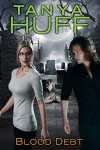
It began with a ghost in his bedroom. A tormented soul hungry for vengeance. The sort of nocturnal visitation that even a five-hundred-year-old vampire like Henry Fitzroy found tiresome. It would lead Vicki Nelson, PI into her most deadly investigation yet. The wraith is determined that Henry and Vicki track down its killer – and is prepared to use a little persuasion by way of the innocent inhabitants of Toronto to ensure their support. Forced to investigate, Vicki discovers a host of souls in desperate torment and evidence to suggest that trailing the killer will only lead to further deaths – starting with her own.
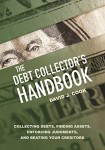
Winning your case in court is only half the battle. It’s a fact that some people hide their assets to avoid paying debts and judgments. This truly unique book will show you how to find and reach that hidden money.
Author David J. Cook is a veteran collections attorney who has been chasing down debtors for over 39 years. This colorfully written book will teach you the basics of civil remedies, real estate, finance, and sleuthing. The author outlines for you the power of the bluff and the outer parameters of threat, when a threat becomes extortion, and when you need to walk away from a situation.
This book is about collecting debts, finding assets, enforcing judgments against difficult people, or, should you be so inclined, beating out your creditors.
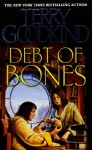
A milestone of storytelling set in the world of The Sword of Truth, Debt of Bones is the story of young Abby’s struggle to win the aid of the wizard Zedd Zorander, the most important man alive.
Abby is trapped, not only between both sides of the war, but in a mortal conflict between two powerful men. For Zedd, who commands power most men can only imagine, granting Abby’s request would mean forsaking his sacred duty. With the storm of the final battle about to break, both Abby and Zedd are caught in a desperate fight to save the life of a child…but neither can escape the shadow of an ancient betrayal.
With time running out, their only choice may be a debt of bones. The world-for Zedd, for Abby, for everyone-will never again be the same.
Discover why millions of readers the world over have elevated Terry Goodkind to the ranks of legend.
Product Features
- Great product!
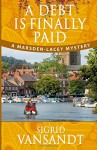
“We’ve got gypsies!” Old Grimsy, Marsden-Lacey’s cantankerous town gossip, warns the patrons of The Traveller’s Inn one golden autumn afternoon. Soon, the quaint Yorkshire village is playing host to a family of exotic Romanis, three colorful narrowboats, and a rough bunch of Russian mafiosos who’ll stop at nothing to get their hands on a royal treasure lost to time. Martha Littleword and Helen Ryes find themselves up two their necks in chasing mobsters, running from Russians, inciting ghostly visitations and wreaking havoc in their love lives. Chief Johns has his work cut out for him keeping the villagers from rioting, corralling two adventure loving Southern girls and investigating the frightful deaths of two innocent women who knew too much. For good measure, Martha and Helen will throw in some sassiness, mix well with laughter, and add three heaping helpings of love from two cats and one fearless canine hero, Amos. It’s mystery and high jinks that only two Southern women, can pull off with fun, flair and the occasional bowl of jambalaya served cajun style.
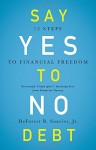
Drawing on his personal experience and years as a pastor, public policy maker, and community leader, DeForest “Buster” Soaries, Jr. shares the twelve steps to achieving financial freedom in this groundbreaking, life-changing book—Say Yes to No Debt.
“The idea that debt is actually slavery is offensive to all of our sensibilities,” says Soaries, “but when we continue to spend what we don’t have, charge what we don’t need, and borrow more than we can repay, then we must call the problem what it is: slavery. Eliminating debt is the first step toward financial freedom. And we can do it.”
This is not another financial literacy program assuming that all people need is information. Soaries believes living in debt is an emotional, spiritual, and psychological problem as much as it is an educational and informational one.
Here, Soaries shares the twelve steps to financial freedom that have helped families in hundreds of churches. By replacing the “get more money” mentality with a “get out of debt” approach to financial freedom, not only were thousands of people able to become debt free, church’s that have used the dfree® strategy have experienced increased giving by their members.
Find out how you can leave a financial legacy of your own by saying yes to no debt.
Says Soaries: “There may be no greater need than to understand that debt-free living is the first step toward financial freedom. And the result is that we can enjoy life and leave a real legacy for our children.”
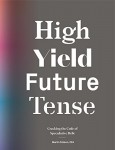
The debut book publication by the New York Society of Security Analysts, a not-for-profit professional society dedicated to professional excellence and ethics in financial markets, High Yield, Future Tense: Cracking the Code of Speculative Debt presents the outlook for high yield bonds and predicts profound changes in the marketplace. Its four sections contain 18 contributions by 29 experts from finance and academe. PART 1: Market Dynamics Three contributions explore whether a crisis will follow today’s low default rates and narrow yield spreads. Four others examine whether high yield spreads over-compensate for risk, uphold classic criticisms of underwriting practices, analyze market liquidity, and detail leveraged loans’ evolution in a bond-like direction. PART 2: Active Management This section sheds light on non-standard leading indicators of high yield performance; the relationship between high yield and equity returns and distressed debt managers’ response to the current, unusual credit cycle. PART 3: Analytical Innovation Successful high yield investing depends on accurate estimation of risks other than default probability. New methodologies that address them include: systematic scoring of the quality of covenant packages of new issues and a monthly index of covenant quality; solutions to problems in measuring performance, quality, and valuation that may lead to investment errors and quantification of issue-level liquidity, enabling investors to make explicit tradeoffs between spread and liquidity. PART 4: Benchmarking This section’s chapters address intrinsic flaws in market indices. The authors predict further specialization of subindices to accommodate specialized strategies, address challenges of high yield index construction from the portfolio manager’s perspective, and show the advantages of non-market-cap-weighted indices. Contains 168 exhibits, including 111 charts and graphs and 57 tables, plus 31 mathematical formulae.